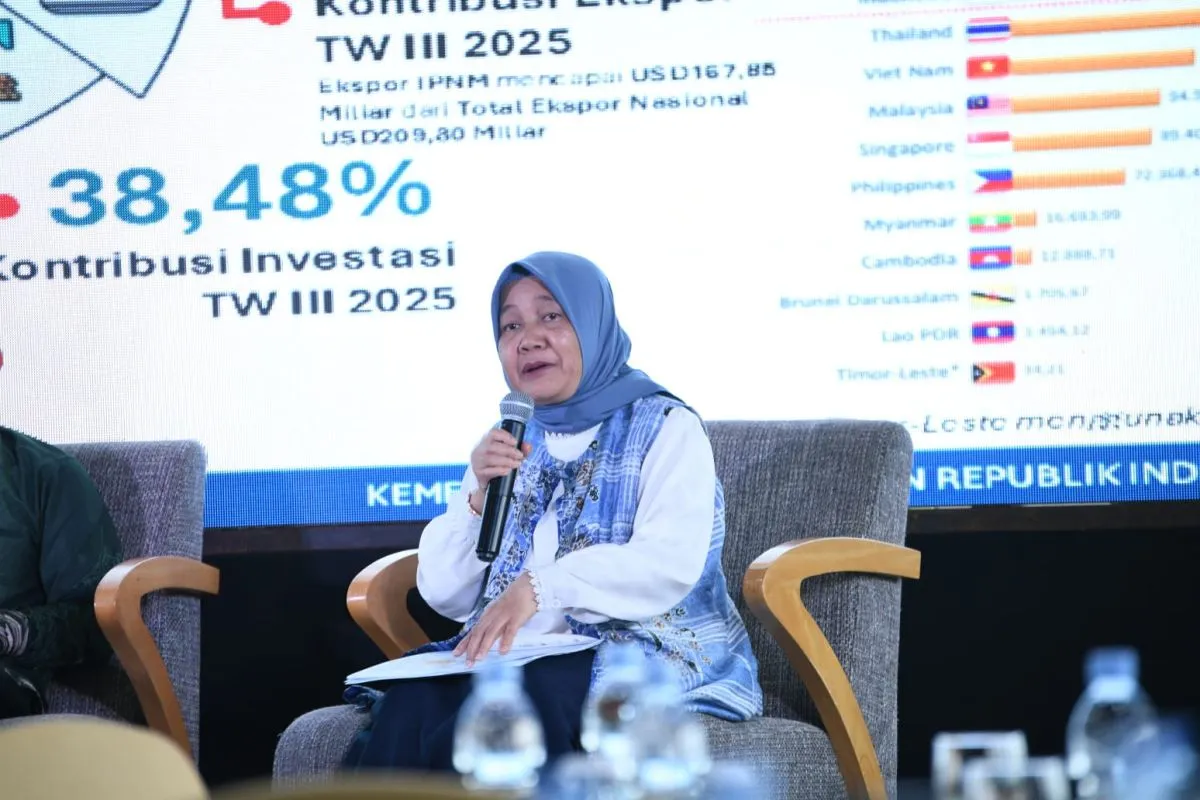
Director of Upstream Chemical Industry at the Directorate General of Chemical, Pharmaceutical and Textile Industries, Wiwik Pudjiastuti, said here Friday the proposal is under review by the Ministry of National Development Planning (Bappenas) and the Coordinating Ministry for Economic Affairs.
Indonesia faces a persistent gap between domestic petrochemical production and demand, especially for key commodities that support downstream industries.
For olefins like ethylene and propylene, plant utilization stands at 75 percent, yet supply remains inadequate. Ethylene alone has a shortfall of 800,000 tons, requiring continued imports.
Aromatic products such as p-xylene show even lower utilization at 44 percent, with a supply gap of 500,000 tons. P-xylene is essential for producing Purified Terephthalic Acid, used in polyester and PET.
Mono Ethylene Glycol (MEG), another vital input for polyester-based textiles, faces a deficit of 400,000 tons.
The plastic raw material sector also struggles to meet demand. Of the national requirement of 4,879 KTA, only 2,957 KTA is supplied domestically, leaving a gap of 1,922 KTA.
In 2024, imports of polymers like polyethylene and polypropylene reached US$2.9 billion.
Wiwik highlighted structural challenges, including reliance on imported raw materials such as naphtha and LPG, and limited integration between refineries and petrochemical plants.
To address these issues, the ministry is advancing long-term policies to improve raw material access, revise trade regulations, and propose the removal of import duties.
Additional measures include industrial protection through antidumping and safeguard duties, gas subsidies, Industry 4.0 acceleration, and green industry standards.
Strengthening upstream-downstream integration and expanding domestic content remain top priorities.
Translator: Ahmad Muzdaffar Fauzan, Primayanti
Editor: Aditya Eko Sigit Wicaksono
Copyright © ANTARA 2025