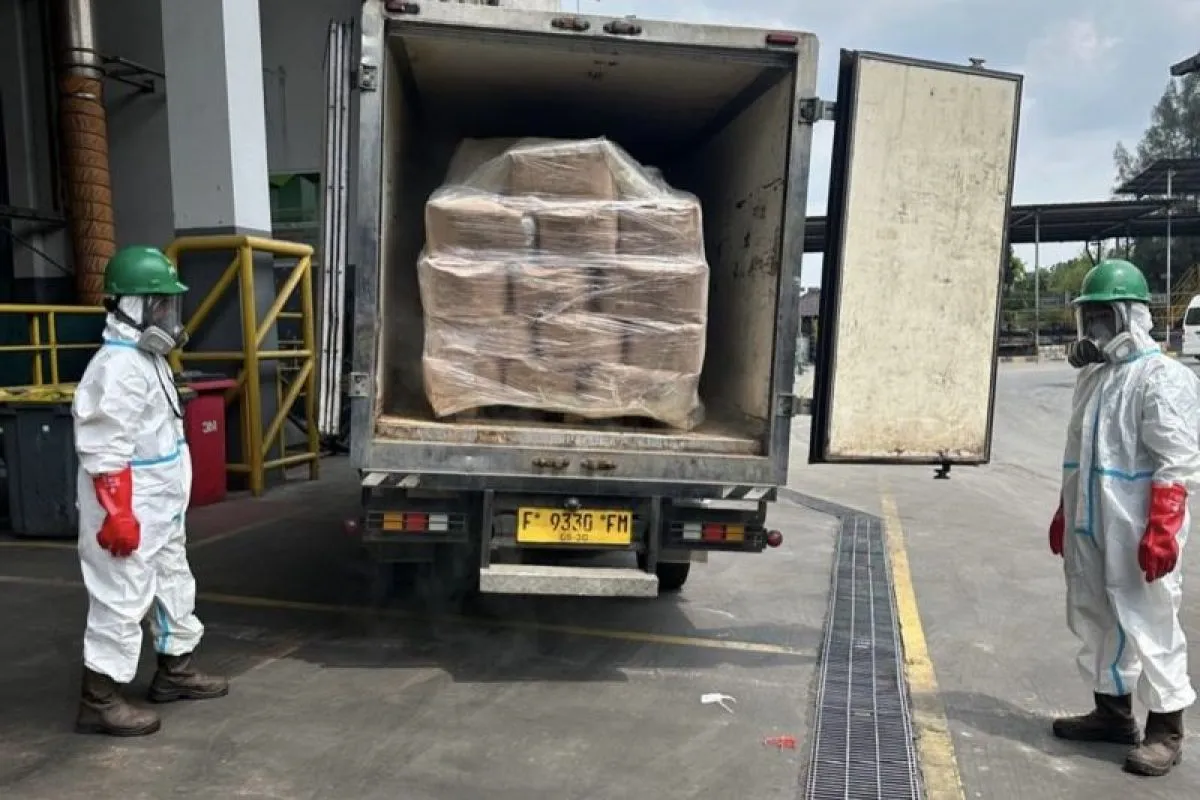
The shrimp, packed in 494 boxes across two containers, tested positive for Cesium-137 (Cs-137) contamination on their outer packaging.
The Nuclear Energy Regulatory Agency (Bapeten) conducted the tests, revealing radiation levels of 10.8 becquerels (Bq) per kilogram—well below the 100 Bq/kg threshold considered safe for environmental release.
Despite the low readings, the contaminated shrimp were destroyed in line with recommendations from Bapeten and the Indonesian Quarantine Agency (Barantin).
“As instructed by Environment Minister Hanif Faisol Nurofiq, this process must follow the precautionary principle,” said Deputy for Pollution and Environmental Damage Control Rasio Ridho Sani here, Saturday.
The shrimp were incinerated at 800–900°C using a facility equipped with advanced air emission controls and continuous monitoring systems.
The resulting ash was solidified in HDPE containers and disposed of in a Class 1 hazardous waste landfill operated by PT PPLI/DOWA.
“This destruction followed strict radiation and environmental safety protocols,” Sani emphasized.
The operation was supervised by Bapeten, the National Research and Innovation Agency (BRIN), Barantin, and the Ministry of Environment.
Sani added that decontamination efforts in the Cikande area—where the shrimp originated—are ongoing and being carried out intensively by the task force.
Related news: Indonesia ensures food safety amid Cesium-137 contamination reports
Related news: Ministry develops radioactive testing labs to protect fishery products
Translator: Prisca, Kenzu
Editor: Aditya Eko Sigit Wicaksono
Copyright © ANTARA 2025


