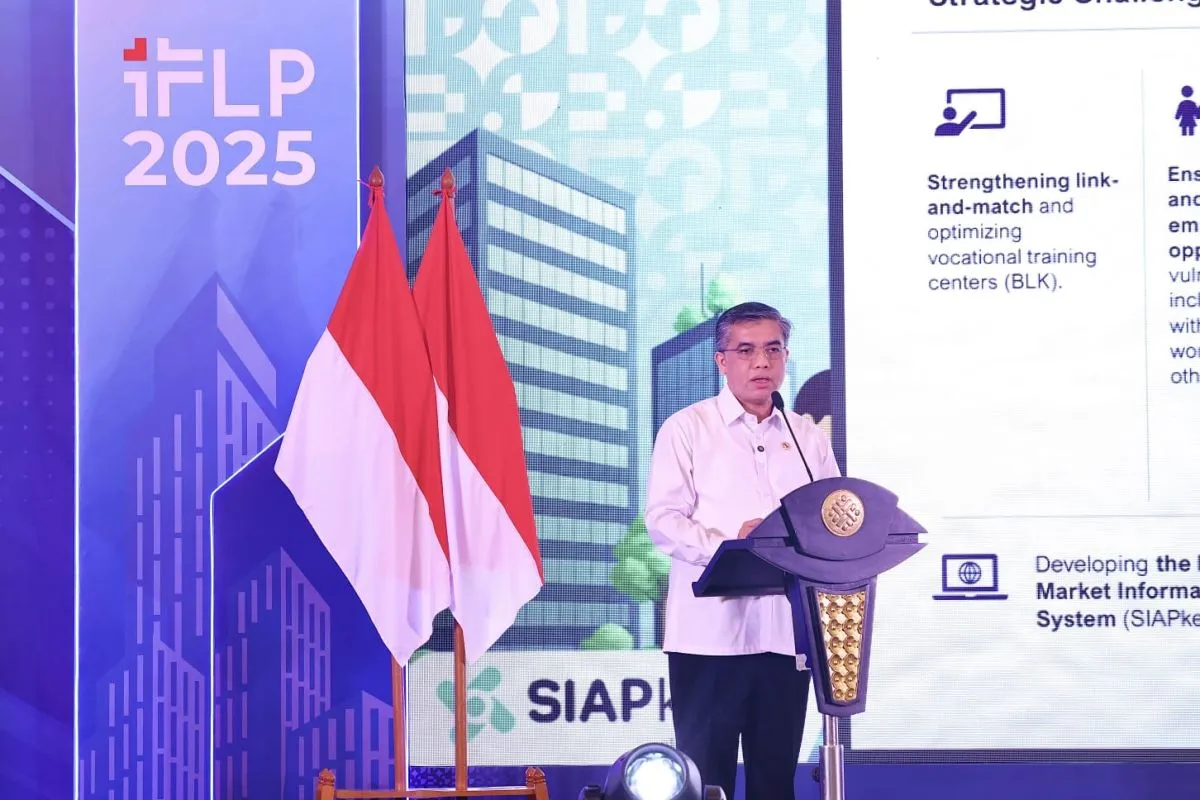
"Behind the flexibility of the gig economy, workers face vulnerabilities that cannot be ignored. The state is responsible for ensuring they receive adequate protection," Yassierli said in a statement in Jakarta on Tuesday.
He revealed that the gig economy has become a new force in the Indonesian labor market, with approximately 4.4 million workers in the transportation, logistics, creative services, and various digital platforms sectors.
However, he acknowledged that the rapid growth is accompanied by various forms of vulnerability.
Gig workers, Yassierli explained, are a type of informal or part-time work based on digital platforms, allowing companies to utilize temporary or freelance workers for short periods.
Types of gig workers include online transportation driver partners, content writers, graphic designers, software developers, and couriers.
Therefore, the Minister agreed to propose that gig workers be included as part of the discussion on revising Law No. 13 of 2003 concerning Manpower.
The proposed regulations include basic rights equal to those of formal workers, such as social security (health, pensions, work accident insurance), fair wages, and transparent work agreements.
Furthermore, the regulations also include the fair resolution of disputes between workers and platforms, including those concerning rates, service quality, and working conditions.
"Digital platforms are also proposed to assume responsibilities, such as providing health insurance, training, income transparency, and timely payment systems," he said.
Related news: RI Govt unveils 2025 stimulus package to boost jobs, growth
Related news: Economic stimulus targets freelancers, online motorcycle taxi drivers
Related news: BPJS Ketenagakerjaan pushes social security for informal workers
Translator: Arnidhya Nur Zhafira, Cindy Frishanti Octavia
Editor: Arie Novarina
Copyright © ANTARA 2025


