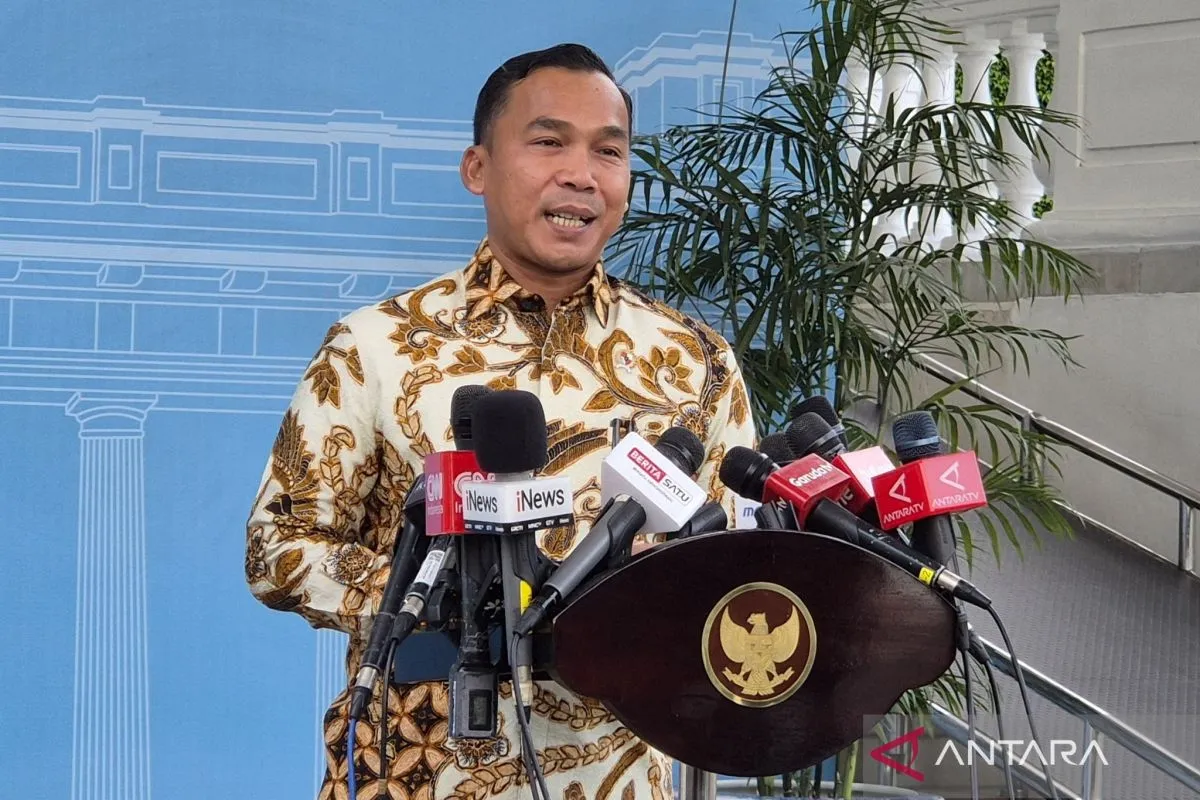
This was conveyed by Population and Family Development Minister Wihaji after a meeting with President Prabowo at the Presidential Palace Complex, Jakarta, on Tuesday.
Currently, Indonesia has a Total Fertility Rate (TFR) of 2.1, indicating that, on average, every Indonesian woman gives birth to two children.
However, this condition is not evenly distributed across all regions, with some having a lower fertility rate than the national average, such as Jakarta, which stands at 1.8.
Conversely, the percentage of married women currently using contraceptives only reached 56.26 percent in 2024.
To this end, Wihaji stated that the government will prioritize regions that need attention in managing population growth.
"It is my ministry's task to control it. We need to prevent having too many children, or falling below the target. That will be the priority," he remarked.
The minister further said that educating the community is crucial to ensuring balanced birth control.
He also emphasized that population issues will be a major challenge for Indonesia in the future, thereby requiring family planning to be carried out in a directed manner.
According to data from the Ministry of Population and Family Development, the unmet need for family planning in Indonesia stood at 11.1 percent in 2024, yet to achieve the desired target of 7.4 percent.
Furthermore, the country's modern contraceptive prevalence rate (mCPR) stood at 61.7 percent, lower than the target of 63.41 percent.
For its 2025–2029 strategic plan, the Ministry of Population and Family Development has set a policy direction focused on enhancing the accessibility and quality of comprehensive family planning and reproductive health services.
Related news: RI Govt adds Rp330 bln for expanding contraception access: Minister
Related news: Indonesia links family planning to economic, health goals
Translator: Maria C, Andi F, Raka A
Editor: Arie Novarina
Copyright © ANTARA 2025


