The Food and Drug Monitoring Agency (BPOM) issued approval for this clinical trial in August 2025.
"The clinical trial of the V181-005 vaccine has the potential to introduce innovations to improve compliance and accelerate protection for children," said BPOM Head Taruna Ikrar in a statement in Jakarta on Wednesday.
The advanced clinical trial was continued due to the high number of dengue cases in Indonesia.
Data from the World Health Organization (WHO) in 2024 recorded more than 257,000 cases and 1,400 deaths due to dengue in Indonesia.
Meanwhile, a study found that dengue infections in Indonesia caused an economic burden of US$381.15 million in 2015.
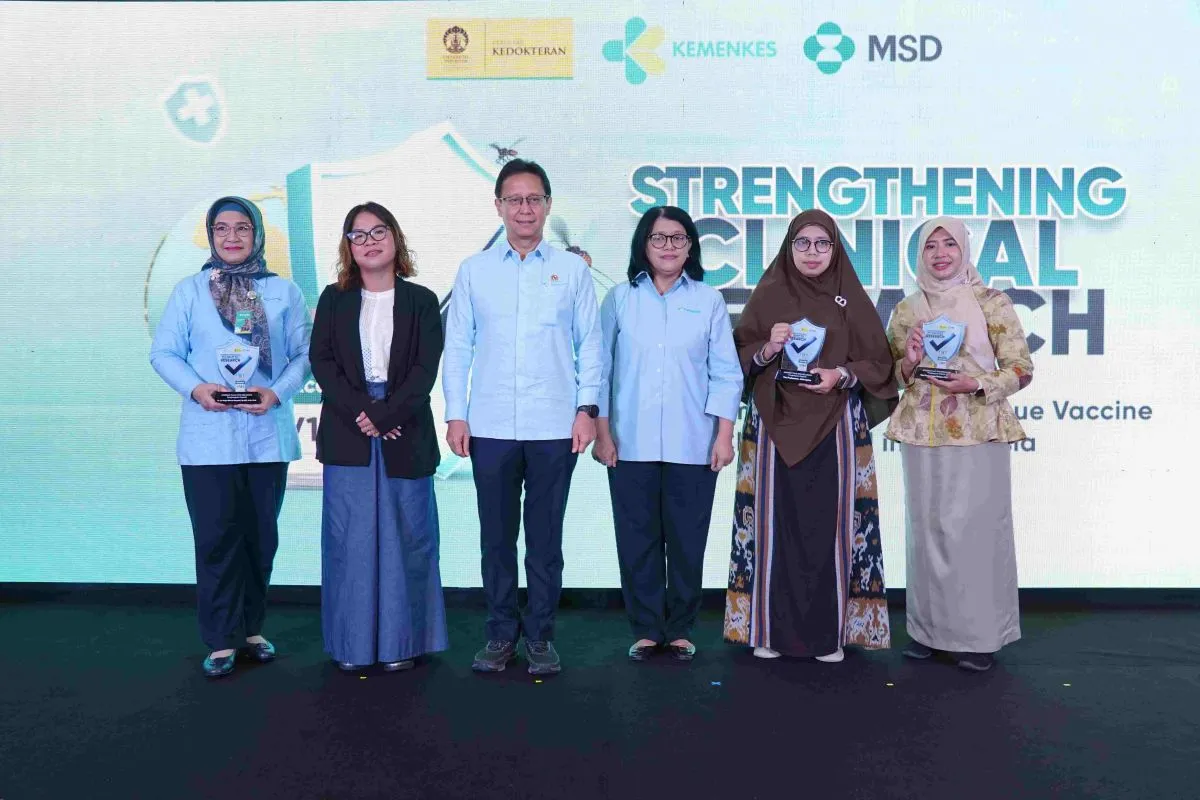
Therefore, Dr. Cipto Mangunkusumo General Hospital (RSUPN) and a team from the Faculty of Medicine, University of Indonesia, are collaborating to initiate advanced clinical trials to develop a dengue vaccine.
They are supported by the Ministry of Health, BPOM, and MSD. The trial covers ages starting at 2 years and requires only one dose.
The V181-005 clinical trial aims to evaluate the safety, immunogenicity, and efficacy of the dengue vaccine to provide more relevant and efficient protection against dengue infection in the long term.
BPOM will oversee the implementation of this clinical trial through inspections based on Good Clinical Trial Practices (CUKB).
BPOM is also committed to supporting research and development of drugs and raw materials, including vaccines, through collaboration between academia, business, and the government.
It also oversees the acceleration of downstream research product development and the availability and independence of national drugs to realize national self-reliance in the Indonesian health sector.
This clinical trial, led by Dr. dr. Mulya Rahma Karyanti, Sp.A(K), M.Sc., Ph.D., as Principal Investigator, underwent rigorous research stages, starting with phases 1 and 2 in adult subjects to assess safety, determine dosage, and assess the immune response.
The clinical trial is currently entering phase 3, which will involve more than 10,000 healthy participants in various countries, including children aged 2–17, for a five-year duration.
In this phase, researchers will assess the vaccine's safety, immunogenicity, and long-term efficacy. The entire process is conducted in accordance with Good Clinical Trial Practices and is overseen by regulators and an ethics committee to ensure data security and integrity.
"In the third phase in Indonesia, 1,000 respondents will participate through a rigorous selection process, with informed consent from participants and parents, and ongoing medical monitoring," she said.
Furthermore, this clinical trial represents a significant scientific step in obtaining valid data on the safety, immune response, and efficacy of the dengue vaccine.
MSD Indonesia Managing Director George Stylianou said dengue infection is a growing public health threat, and his team is working with urgency to advance clinical trials and innovations aimed at helping protect the millions of people at risk of dengue infection.
Related news: RI strengthens commitment to zero dengue deaths by 2030
Translator: Arie Novarina
Editor: M Razi Rahman
Copyright © ANTARA 2025


