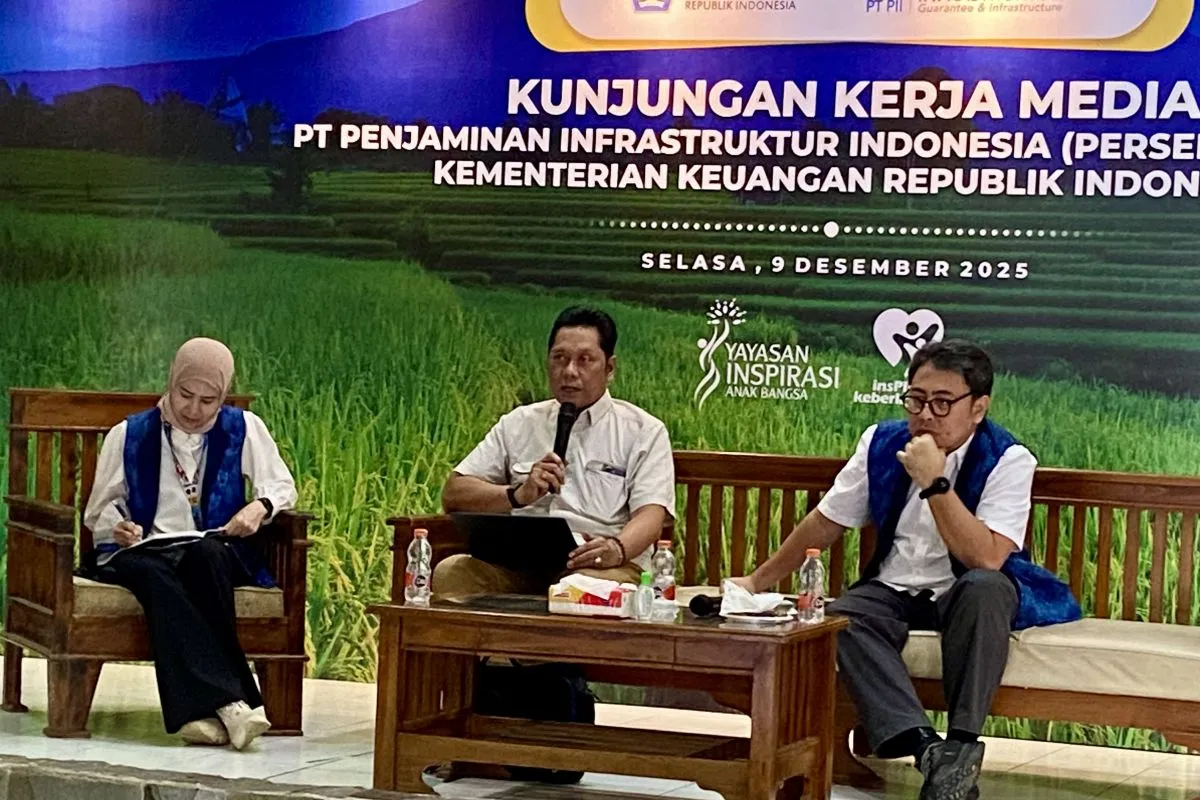
Indonesia will boost its 2026 food security budget by 31.7 percent to Rp210.4 trillion (US$13.6 billion), sharpening its push for national food self-sufficiency, the Finance Ministry said on Tuesday.
The increase from a 2025 outlook of Rp159.7 trillion signals a stronger commitment to raising output, stabilizing prices and improving incomes for farmers and fishers, said Tri Budhianto, Director for Budgeting of Economic and Maritime Affairs at the ministry’s Directorate General of Budget.
The 2026 allocation is built around three pillars: strengthening food distribution and reserves, boosting domestic production and supporting consumption to keep food affordable.
"In 2026, we aim to continue boosting productivity, ensuring price stability and improving the welfare of farmers and fishers," Tri said in Karawang, West Java, on Tuesday.
About Rp27.8 trillion is allocated for distribution and reserves, including construction of five environmentally oriented outermost fishing ports, upgrades to port infrastructure and food stock management by state logistics agency Bulog, which is targeting reserves of 3 million tonnes.
Roughly Rp162.4 trillion — the largest share — is earmarked for boosting production through fertilizer subsidies of 8.8 million tonnes, development of food barns and other programs aimed at expanding production capacity.
Another Rp6.2 trillion is set aside for consumption support, including the government’s food supply and price stabilization scheme and low-cost food initiatives to protect consumer purchasing power.
Food security spending will remain a core priority, Tri said, with the larger 2026 budget also backing downstream food processing programs led by the Agriculture Ministry, including horticulture and other commodities.
Spending on food security has risen steadily in recent years, reflecting the government’s sustained focus on the sector.
The higher budget has helped lift farmer welfare, reflected in the farmer's exchange rate (NTP), which rose from just above 100 in 2019 to the 120 range in 2024 and climbed again in November 2025. A reading above 100 indicates farmers earn more than their production costs, while levels below 100 signal deficit conditions.
Tri warned that structural challenges, particularly shrinking farmland, could weigh on production capacity, prompting the government to focus on sustaining output to keep farmer welfare improving.
Related news: Indonesia to declare food self-sufficiency on December 31: minister
Related news: Bulog speeds food aid to flood-hit communities in Sumatra
Translator: Rizka Khaerunnisa, Martha Herlinawati Simanjuntak
Editor: M Razi Rahman
Copyright © ANTARA 2025