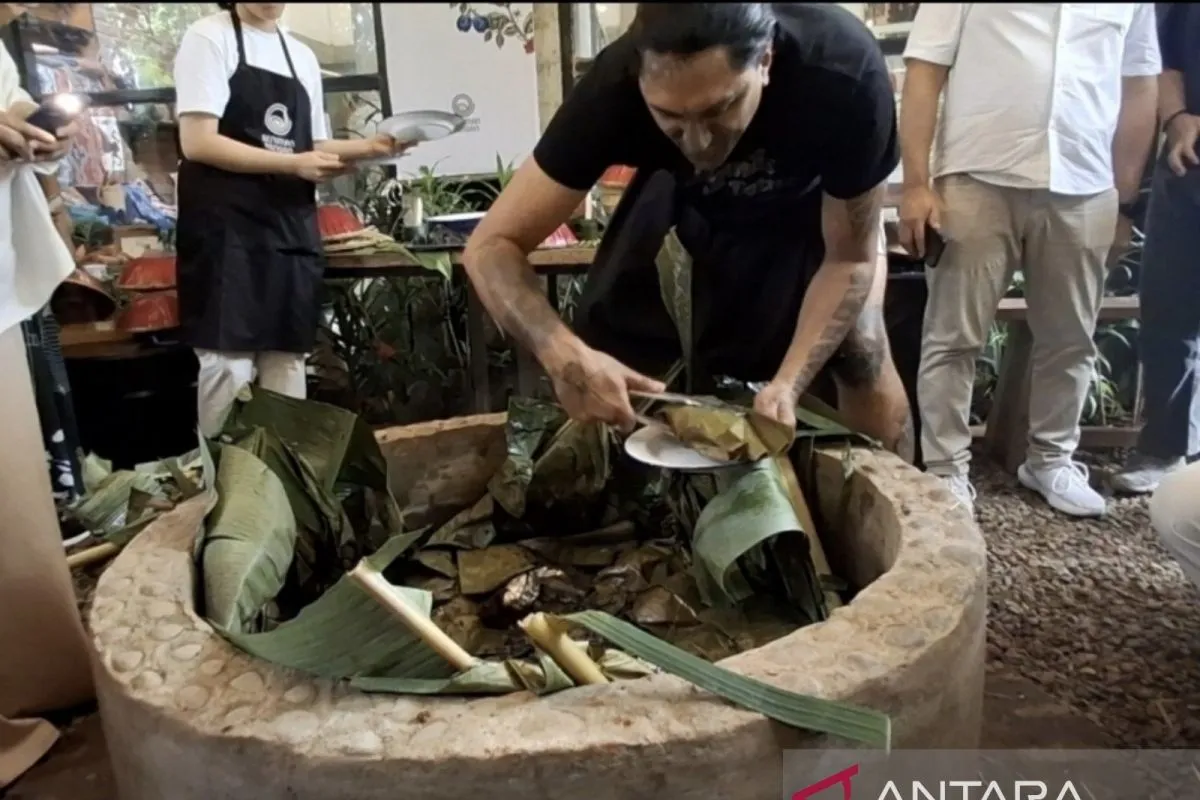
Taula presented hāngī, a Maori technique that uses heated stones buried in the ground to slow-cook food, at a cultural event in Bekasi, West Java.
He said the demonstration aimed to highlight long-standing affinities in cooking traditions and cultural practices.
“The message we want to convey is partnership, cooperation and the close relationship between Indonesia and New Zealand, from cooking styles to cultural and linguistic similarities,” Taula told reporters at the event.
He said both nations share traditions rooted in indigenous communities that use earth-oven methods to infuse dishes with smoke and heat.
Those parallels, he added, offer opportunities to deepen people-to-people links and expand culinary exchanges.
Taula said the event was designed to give Indonesians a firsthand taste of Maori food culture while encouraging New Zealanders to explore Indonesia’s diverse regional cuisines, particularly those shaped by indigenous heritage.
He said he hoped the encounter would inspire chefs and food producers in both countries to experiment with new combinations of ingredients.
Joint culinary projects, he added, could strengthen bilateral ties and widen commercial cooperation in agriculture and food technology.
“Maybe New Zealand beef or other meats combined with Indonesian spices.That can create new flavours and elevate traditional dishes,” he said.
Hāngī is a staple at Maori gatherings and celebrations. It involves wrapping meat and vegetables, placing them over hot stones inside a pit, covering the pit with earth and allowing the food to steam slowly until tender.
Papua’s bubigi, also known as bakar batu, uses a similar process.
Families layer tubers, vegetables and chicken over heated stones in a shallow pit, then seal the pile with leaves and soil to trap heat and smoke.
Both methods allow spices to penetrate deeply, producing rich flavours and a communal dining experience that reinforces social bonds.
Related news: Indonesia, New Zealand sign LoI to enhance carbon governance
Related news: Culture Minister Fadli Zon calls for reviving traditions in Raja Ampat
Translator: Katriana
Editor: Rahmad Nasution
Copyright © ANTARA 2025


