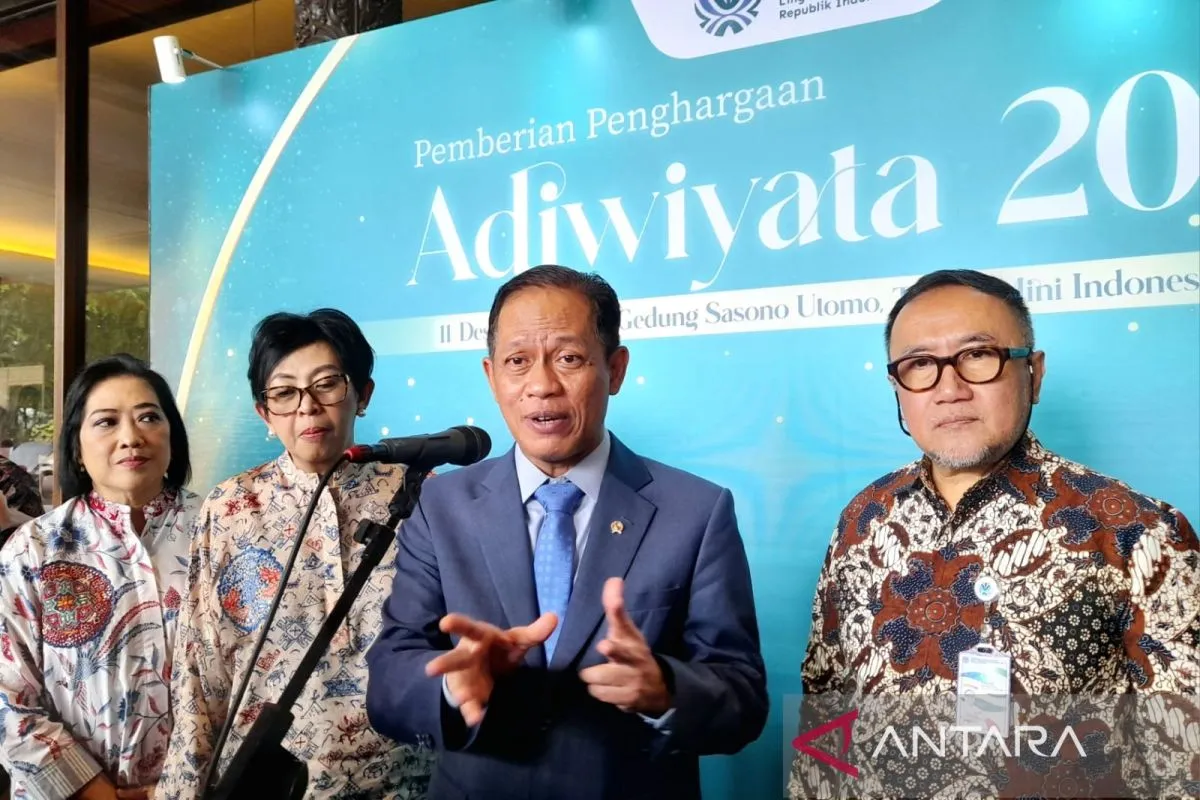
“We are conducting an evaluation. Starting today, experts from major universities in these three provinces are assisting in drafting the designs. Hopefully, it will not take too long,” the minister said here on Thursday.
Regarding the distinction between point source and non-point source, he explained that point source refers to units controlled by the Environment Ministry, while non-point source is managed by local communities.
For point sources, the Ministry is reviewing all environmental approvals and documents to align them with Indonesia’s rainfall baseline.
“Our rainfall baseline has increased nearly 18 times from normal conditions. In North Sumatra, the average annual rainfall is 2,900–3,000 mm. Divided by around 8 mm per day, recent rainfall reached 450 mm in three days, approximately 18 times the natural conditions,” Nurofiq said.
He continued, environmental provisions must be included in all approval documents, including for concession holders. If these documents no longer meet environmental standards, the ministry will revoke permits.
Nurofiq added that eight companies, mostly in Batang Toru, Tapanuli Selatan, have been ordered to conduct environmental audits due to limited land and protected status.
“Two steps are being taken: first, activities are halted, and environmental audits are conducted as quickly as possible until completion. Second, we have deployed teams to conduct environmental assessments regarding the extent of damage and recovery costs," he said.
According to him, if legal action is required, the ministry will take the necessary steps.
Related news: Indonesian govt's accelerates recovery efforts after Sumatra disasters
Related news: 11 companies under investigation for role in North Sumatra floods
Translator: Lintang, Kenzu
Editor: Arie Novarina
Copyright © ANTARA 2025


