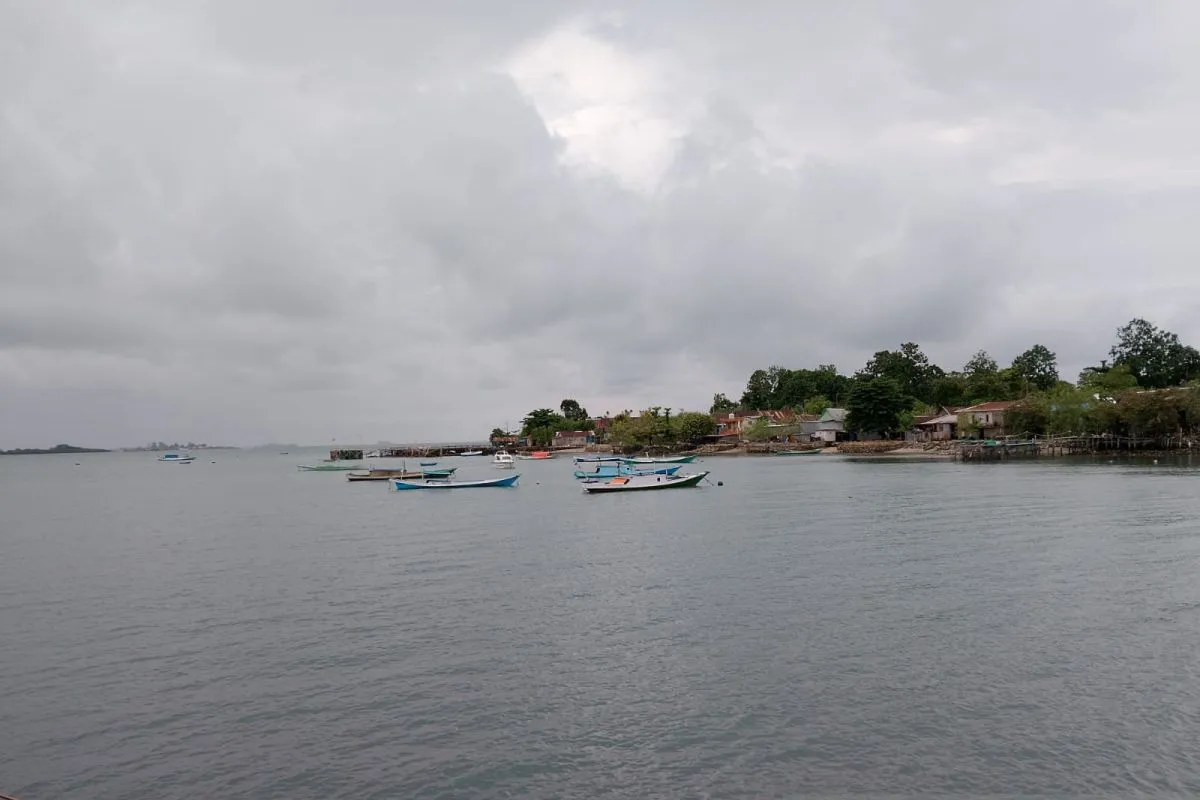
Weather patterns have become increasingly unpredictable, waves are getting higher, and marine harvests are no longer guaranteed. Yet across the hundreds of islands in the district, women refuse to remain passive. They are learning to adapt to the changing conditions, even while acknowledging that the process is far from easy.
A spirit of resilience, strengthened after the COVID-19 pandemic, is gradually taking root as communities face the ongoing effects of climate change.
Support from the Community Empowerment Study Foundation (YKPM) and the Office of Population Control, Family Planning, Women's Empowerment, and Child Protection (DP2KBP3A) of the Pangkajene and Islands District has helped many island women build confidence.
They are now more empowered to support their families, especially as fishing becomes increasingly uncertain.
According to Nurhayati, a member of YKPM’s Advocacy and Organizing Team, island women and children face a range of issues, including stunting, poverty, school dropouts, and child marriage.
These problems often lead to rising cases of violence against women and children, as well as divorce.
Alongside these internal challenges are external threats, particularly the impacts of climate change. Rising sea levels and tidal flooding continue to endanger communities living on the islands.
Sabariah, a 42-year-old resident of Sabutung Island, said mothers in the community have built makeshift embankments using sacks filled with sand and stacked them along the shoreline behind their homes.
During extreme weather, when strong winds drive high waves, seawater can reach residents’ kitchens. The threat worsens during full moons, when tidal flooding becomes more severe.
She recalled that during last year’s rainy season, floodwaters reached the middle of the island. Previously, only homes along the shoreline were affected.
Iqra, Head of Village Development at the Community and Village Empowerment Office of the Pangkajene and Islands District, said disaster mitigation programs in villages, including those on islands, are among the priority initiatives funded through village funds.
In 2025, Rp25 billion (approximately US$1.49 million) in village funds was allocated primarily for family welfare and climate change mitigation efforts.
To support these programs, the office, working with various agencies across the district, continues to provide field assistance for disaster mitigation and community empowerment. These efforts particularly target women in fishing households who face increasingly vulnerable living conditions.
The district is also encouraging villages to become more self-reliant. At least 18 of the 65 villages in the Pangkajene and Islands District have already achieved Independent Village status.
Building resilience
Despite the social problems and ecological threats, women on Sabutung Island and the surrounding islands persistently build their resilience collectively through collaboration in addressing tidal flooding.
Amid the challenges, they ensure their children can go to school during bad weather, manage food supplies amid declining marine yields, and take on new roles when fishing income drops.
For example, Sahariah Daeng Kerra (41 years old), in addition to owning a corner store, also makes salted fish from unsold fish at the fish auction center in Pangkajene and Islands District or Makassar City.
The salted and dried ponyfish is then sold in the market or to island visitors for Rp25 thousand (around US$1.50) per small bucket, which is equivalent to 1.5 kilograms.
From the sales of salted fish and her corner store, the single-parent woman is able to send her three children to school, with one of them already holding a bachelor's degree.
In the face of climate challenges, her children and the children of other fishers are growing up as a generation inheriting the wisdom of adaptation. They learn to read the wind, the waves, and weather signs with more sensitivity.
District Head of Pangkajene and Islands Muhammad Yusran Lalogau affirmed that the government has taken intervention steps for island communities. However, due to budget limitations, the development of several infrastructure, such as breakwaters, sanitation facilities, and electricity infrastructure, has not been fully optimal.
Nevertheless, there has been some forms of assistance provided, such as the ready-to-drink water facilities supported by the South Sulawesi Provincial Government and floating community health centers from the local district government.
However, the aid still falls short to the hundreds of islands in Pangkajene and Islands, which are inhabited by half of the district's total population of 360,004 people, according to Statistics Indonesia (BPS) data in 2024.
The conditions of women and children in Sabutung Island represent the general conditions of island communities in Indonesia; they are on the frontlines of climate change, while men are in the open seas that get more ferocious as climate change persists.
It is only fitting that to address climate change, the voices of women in coastal areas and islands become the center of policy-making. At the end of the day, Indonesia's climate resilience is inseparable from the hands of women who play a key role in shaping the future of children on islands.
Related news: Ministry emphasizes commitment to strengthening women's empowerment
Related news: Minister, WSI unite to protect Indonesian women & children
Editor: Primayanti
Copyright © ANTARA 2025


