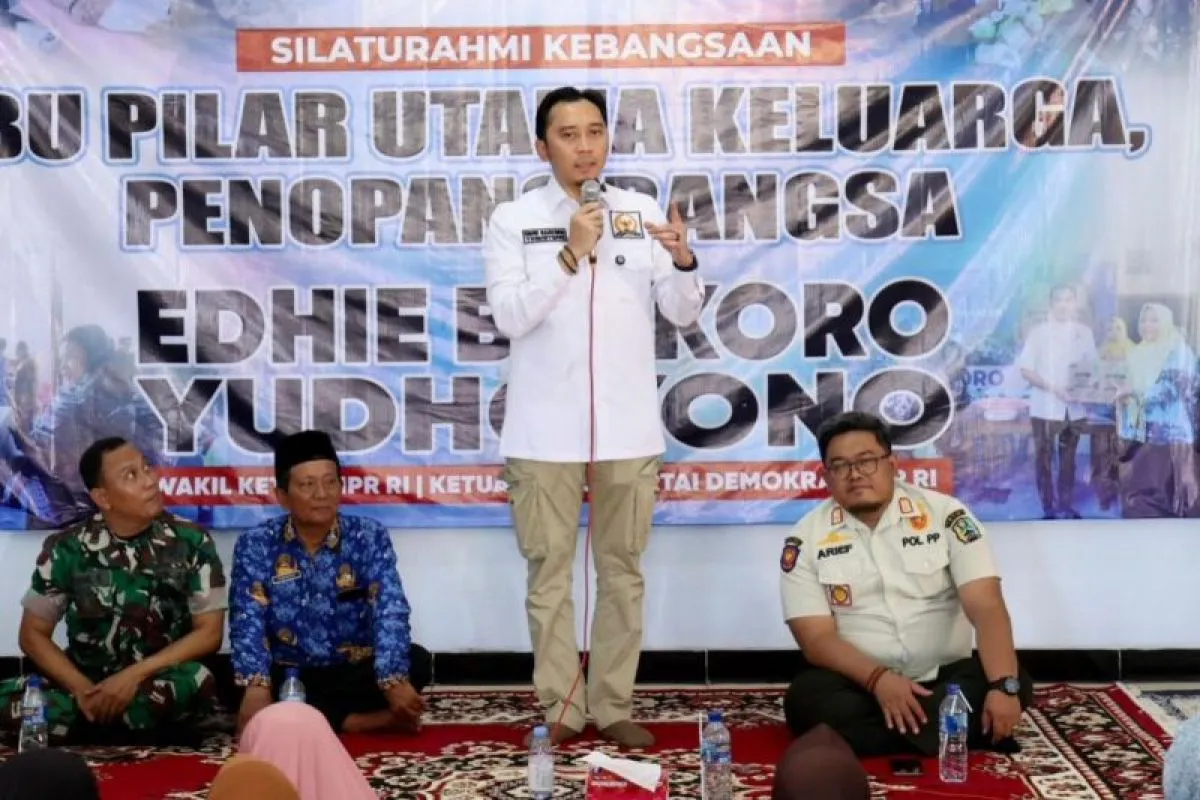
He said it is essential for the state’s presence to be felt fairly at the village level through stronger infrastructure, improved education, accessible healthcare, and food security.
“We must collectively strive for equitable development. Well-maintained, paved, and interconnected village roads are part of social justice,” he said in a written statement received on Thursday.
Yudhoyono noted that Indonesia is a large nation comprising 38 provinces, 514 districts and cities, and a population of more than 280 million people. He added that the state ideology, Pancasila, serves as the primary guide for national life, particularly its fifth principle, social justice for all Indonesians.
“The state must be present at the central, provincial, and regional levels to build a society that is more prosperous, advanced, and happy,” he said.
In the education sector, Yudhoyono stressed that no Indonesian child should be forced to drop out of school because of economic constraints.
He encouraged the public to actively convey concerns over obstacles in education, including access to scholarships, so they can be addressed collectively.
“Education is the path to justice. Our children and grandchildren must attend school and have a better future,” he said.
He also highlighted the importance of health as a key factor in happiness and productivity, and encouraged the public to take part in the government’s Free Health Screening (CKG) program.
According to Yudhoyono, early detection plays a crucial role in disease prevention and in maintaining families’ quality of life.
In addition, he affirmed his commitment to overseeing the government’s Free Nutritious Meals (MBG) program to ensure it genuinely benefits children.
He emphasized that the program is not merely about distributing food, but also aims to ensure balanced nutrition while helping to reduce household expenses.
Related news: Indonesia steps up village development for equitable economy
Related news: Indonesia taps villages to drive global SDGs through ISCN pact
Translator: Bagus Ahmad, Raka Adji
Editor: Primayanti
Copyright © ANTARA 2025


