Energy independence is not an end goal, but the foundation for regional development that is resilient, sovereign, and sustainable within the framework of the Republic of Indonesia.Mataram (ANTARA) - The lights at the West Nusa Tenggara (Nusa Tenggara Barat/NTB) Governor's Office are now on without interruption, even the slightest disruption is immediately switched to a backup feeder within milliseconds.
For some, this may appear to be a purely technical matter. For NTB, however, uninterrupted electricity symbolizes a broader ambition: breaking free from energy dependence and achieving energy independence.
For years, the electricity system in eastern Indonesia, including NTB, has often been positioned as the “end user” of the larger Java-Bali grid. When loads increase or disruptions occur at the center, the impact is felt most acutely in the regions.
In this context, NTB Governor Lalu Muhammad Iqbal’s statement that the province no longer wants to be a burden on Java carries strategic weight. Electricity independence is not merely about supply, but about NTB’s position in Indonesia’s national development landscape.
This issue matters because electricity is more than an energy concern, it is a fundamental prerequisite for public services, economic growth, and investor confidence. Without reliable and sustainable electricity, ambitious regional development plans risk fading before they ever take shape.
Geographically, NTB is endowed with substantial energy potential.
Data from the NTB Energy and Mineral Resources Office show that renewable energy potential exceeds 13,500 megawatts.
That figure far surpasses the combined electricity demand of Bali, NTB, and East Nusa Tenggara (NTT), which currently stands at around 1.2 gigawatts.
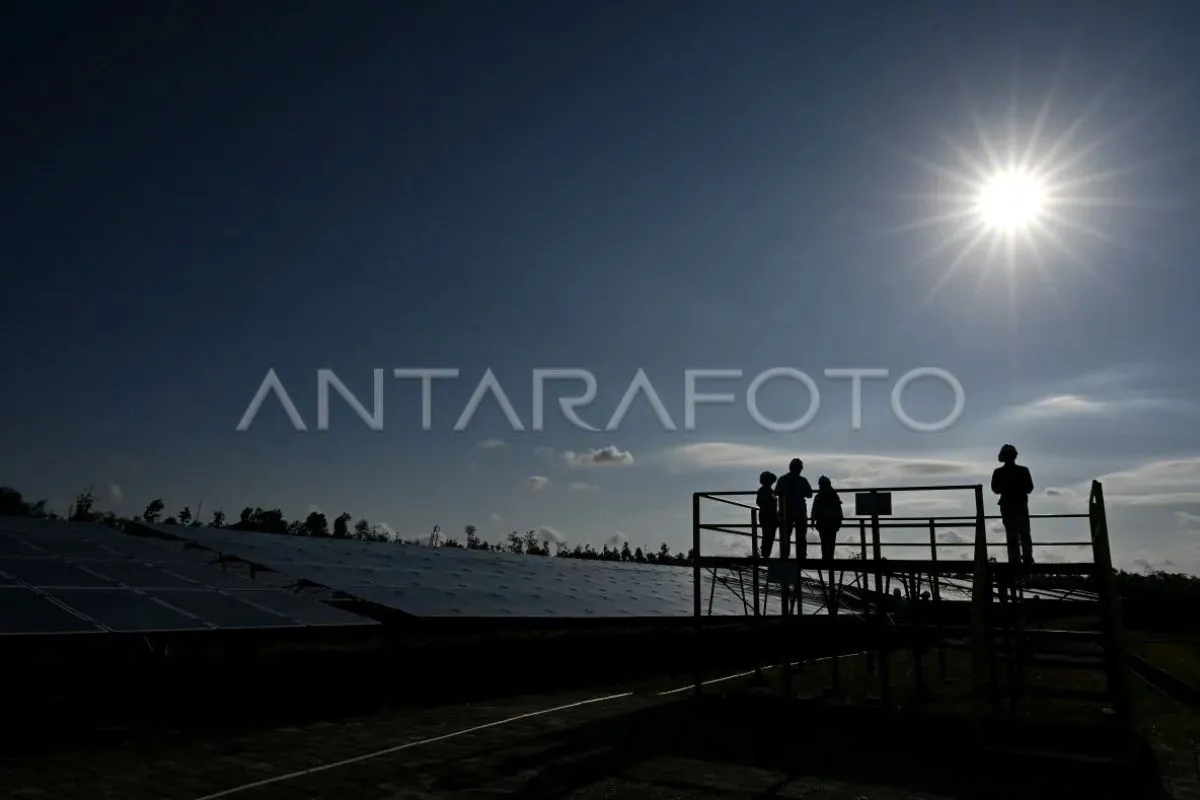
Sunlight is available almost year-round, winds blow steadily along the southern and eastern coasts, strong ocean currents flow through the Lombok and Alas straits, while biomass and municipal waste are generated daily.
Yet this vast potential remains largely untapped. New and renewable energy contributes only around 5 percent of NTB’s total electricity capacity. The remainder still relies on fossil-fuel power plants and interconnection networks dependent on systems outside the region.
This gap between potential and realization explains why energy independence is often dismissed as a slogan rather than a tangible goal.
At the same time, state electricity company PLN has shown serious efforts in recent years to improve power reliability. Integrated network maintenance, better distribution quality, and zero-downtime services in strategic government areas reflect ongoing technical progress.
The results are visible in fewer feeder disruptions and improved reliability indicators. However, today’s reliability does not automatically translate into tomorrow’s energy independence.
Related news: Indonesia eyes 80 percent energy independence by 2029
Energy independence
Electricity reliability and energy independence are closely linked, but they are not the same. Reliability concerns how stable power supply is today. Independence concerns where that electricity comes from and how much control the region has over it.
The proposal to build a super grid across the Lesser Sunda Islands opens a new chapter.
Under this scheme, NTB and NTT would no longer function solely as consumers, but as producers of green energy supplying the wider region, including Bali.
The logic is straightforward. Bali faces land constraints for power generation, while NTB has ample space and abundant natural resources.
However, the path forward is far from simple. The energy transition requires massive investment, regulatory certainty, and well-prepared transmission infrastructure.
Large-scale solar plants, tidal power facilities, and biomass projects using municipal waste must be integrated into a system capable of delivering stable electricity.
Without strong transmission networks and energy storage systems, renewable energy risks remaining fragmented, isolated projects.
This reality underscores the need to treat energy independence as a cross-sector initiative, extending beyond technical considerations to include spatial planning, licensing, workforce readiness, and community acceptance around power plant sites.
Related news: Freedom from darkness: Indonesia's renewables lights up remote regions
Equitable access
Energy independence cannot be separated from the question of justice. NTB’s free electricity connection program for underprivileged households demonstrates that the energy transition must reach society’s most vulnerable groups.
Electricity should not benefit only large industries or VVIP areas, but also small homes in remote villages that have long faced energy scarcity.
When electricity becomes available, the impact is immediate: household economic activity expands, children study longer, and overall quality of life improves.
In this sense, energy independence must be understood as an effort to ensure that all citizens feel the benefits of development, not merely as a grand narrative of green energy.
Waste-to-energy initiatives offer another compelling example. As landfills approach capacity, biomass energy provides a dual solution—reducing environmental pressure while increasing electricity supply.
If managed consistently, this approach could evolve into a development model that simultaneously addresses environmental and energy challenges.
Despite promising policy directions, significant hurdles remain. Renewable energy is inherently intermittent, dependent on weather and natural conditions.
Without storage technologies such as large-scale batteries, system stability remains vulnerable. Investment in such technology is substantial and requires long-term policy commitment.
There are also project-level risks. Green energy facilities may become symbolic monuments if they are not integrated into distribution systems or aligned with the actual community needs.
Experience across regions shows that energy projects lacking institutional strength and sustainable management tend to lose effectiveness over time. Human resource development is another often-overlooked factor.
Energy independence requires local technicians, planners, and innovators who understand regional characteristics. Without serious investment in human capital, regions will remain dependent on external expertise—even when energy resources originate locally.
Related news: Indonesia to pick most competitive partner for nuclear power push
Maintaining direction
Electricity independence in NTB aligns with national priorities: advancing clean energy, empowering regions through local potential, guiding long-term development, and strengthening Indonesia’s overall energy security.
However, independence does not emerge from a single policy or project. It grows through consistency, long-term decision-making, and the ability to balance economic growth, environmental protection, and social justice.
The uninterrupted electricity at the governor’s office is a positive starting point.
True independence, however, will only be proven when the entire province enjoys reliable, clean, and affordable power.
NTB has ample sunlight, wind, ocean resources, and human potential. The challenge now is ensuring that this promise is not dimmed by half-measures.
Energy independence is not an end goal, but the foundation for regional development that is resilient, sovereign, and sustainable within the framework of the Republic of Indonesia.
Related news: Fueling Indonesia's drive for energy security and green agenda
Related news: Indonesia's path to 2030: Building toward a climate utopia
Editor: M Razi Rahman
Copyright © ANTARA 2025


