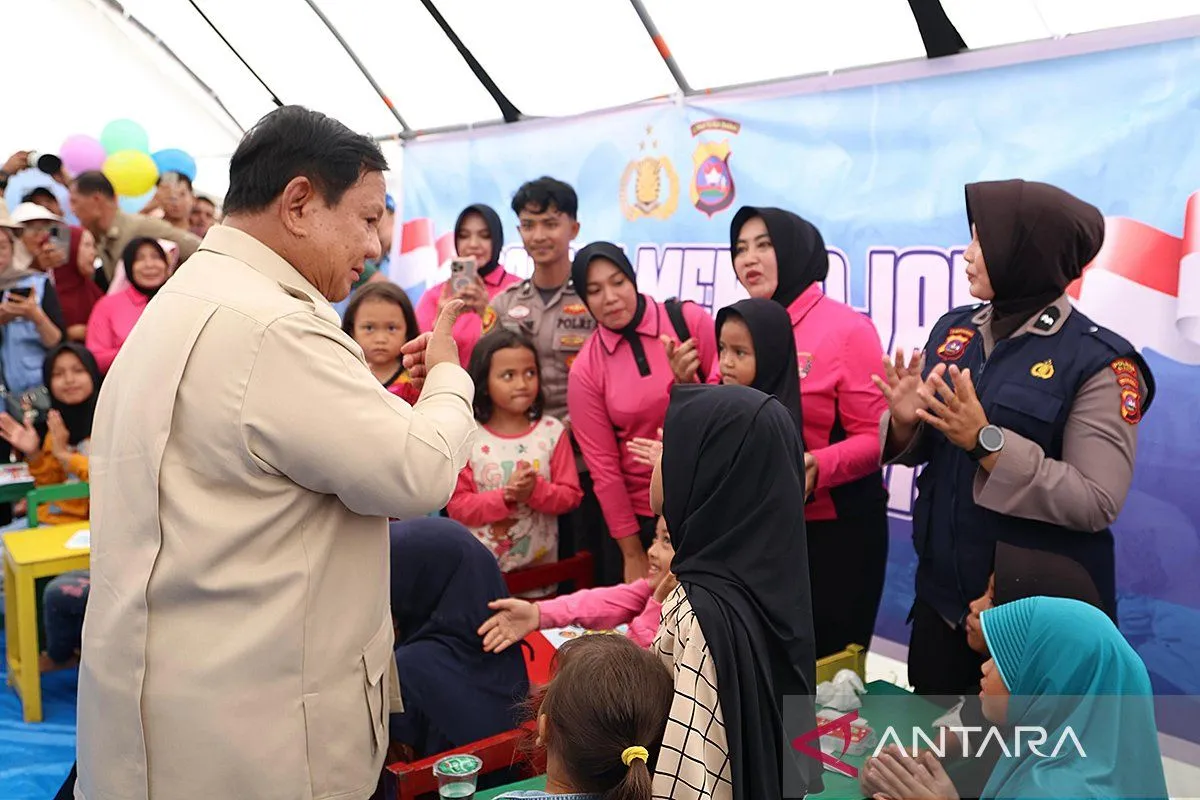
It is that interpretation of the disasters that President Prabowo Subianto drew from his repeated visits to Sumatra to directly lead emergency measures.
An investigation by the government’s Forestry Regulation Enforcement (PKH) Task Force and the Bandung Institute of Technology (ITB) confirmed forest degradation in river headwaters as the chief factor behind the tragedy, as evidenced by the large logs left by the floods, which were clearly cut with machine saws rather than broken naturally.
Those behind it must be feeling the heat, as mounting evidence points to the destruction they instigated. Satellite imagery clearly captured massive deforestation in catchment areas, a harmful trend that weakens the soil’s capacity to absorb rainwater and ultimately exposes citizens to flood risks.
Investigations into 27 companies reportedly active in disaster-hit areas concluded that deforestation and the deadly hazards it brought were most likely caused by corporations or individuals.
The Attorney General’s Office (AGO) has vowed to ensure stern law enforcement against the culprits, in collaboration with the Ministry of Forestry and the National Police (Polri), to prevent future disasters through deterrence.
“We must protect our environment, our nature, and avoid illegal logging. I want all regional governments to enhance vigilance and step up environmental monitoring,” President Prabowo affirmed at an evacuation post in Aceh Tamiang District on December 12, signaling the start of a war against environmental crime rings.
The sovereignty test
Prabowo’s war cry did not stop at words. He directly instructed Polri Chief General Listyo Sigit Prabowo and National Armed Forces (TNI) Commander General Agus Subiyanto to deploy personnel not only to evacuate residents but also to crack down on those involved in unlawful mining and logging activities.
This move aims to convince the public of his administration’s determination to eradicate the long-suspected practice of security officers backing corporations in environmentally harmful projects.
The president has made it clear that he views environmental criminals as just as vicious as foreign forces trying to undermine Indonesia’s sovereignty.
One month into the post-disaster period, the Indonesian government stepped up efforts to thoroughly reform natural resource management and governance to shield the nation from future tragedies.
These steps include confiscating heavy equipment concealed in forests, mobilizing TNI personnel to support understaffed forest police in combing protected areas for encroachers, and revoking business permits for palm oil, lumber, and mining companies spanning millions of hectares across Sumatra.
Still, the toughest test is not to punish small-time loggers but to confront and hold accountable the powerful corporations behind deforestation in Sumatra and beyond.
Through ongoing stern measures, President Prabowo has issued an ultimatum, threatening deviant parties with permit annulment. His genuine concern for the safety of his people far outweighs the risks of economic repercussions that such a policy may bring.
The president’s anti-deforestation resolve has led to Indonesia generating Rp2.34 trillion (US$138 million) from administrative penalties imposed by the PKH Task Force on forestry regulation offenders.
The money collected from these penalties formed part of the 1.5-meter stacks of Rp100,000 bills showcased before the head of state at the AGO complex in Jakarta on December 24.
Reports indicated that the penalty funds displayed were collected during Phase V of the PKH Task Force’s repossession of forest areas covering approximately 896,969 hectares.
Prabowo’s firm stance on deforestation in fact predated the Sumatra disasters, as reflected in the task force’s success in regaining control of 4,081,569 hectares of plantation land—representing more than 400 percent of the initial target—since he founded it on January 21, 2025. The recovered area is estimated to be worth over Rp150 trillion (around US$9 billion).
The task force has handed over the recovered land to relevant ministries, with state-run plantation company PT Agrinas Palma Nusantara obtaining rights to manage 1,708,033 hectares. Additionally, 688,427 hectares of conservation land are set for ecological recovery, while 81,793 hectares within Tesso Nilo National Park in Riau are designated for reforestation.
President Prabowo has also urged the Ministry of Forestry to reject permits for all activities that contradict Article 33 of the 1945 Constitution, which states, “Land, water, and the natural resources contained therein are controlled by the state and used for the greatest prosperity of the people.”
Seeds of renewal
The Sumatra disasters are not merely a story of the government making every effort to aid affected residents with logistics and new homes; they also led the state to go full throttle in reforestation and sharpen blame toward those deemed responsible.
Greenpeace Indonesia reported that most river basins in Sumatra have fallen into critical condition, with forest cover shrinking to just 10-14 million hectares—less than 30 percent of the island’s total area.
One striking example is the Batang Toru River basin in North Sumatra, which has lost 70 thousand hectares of catchment area to deforestation since 1990. On top of that, 94 thousand hectares have been converted for industrial use—from mining and palm oil to power generation.
The alarming situation has set the stage for worsening erosion—31.6 million tonnes each year—as dry farmlands spread across the upstream, plantations and industry infest the downstream, and only a fragile strip of natural forest remains in the middle stretch.
Before the United Nations General Assembly in New York last September, President Prabowo echoed Indonesia’s ambitious target of reforesting 12 million hectares of land nationwide over the next few years to beef up the country’s resilience against climate change.
In this vein, the Ministry of Forestry has embraced a strategy to turn forests into a marketplace of ecological riches—nurturing a mix of plant species to weave economic benefits for local communities into every reforestation effort.
Seedlings of rain tree (Samanea saman), mahogany (Swietenia mahagoni), garlic tree (Scorodocarpus borneensis), and even durian are now starting to grow well in the Tesso Nilo National Park nursery center. Yet the government’s hope rests on ironwood (Eusideroxylon zwageri), whose deep roots promise resilience against erosion—a stark contrast to oil palms, often blamed for floods as they weaken the soil’s ability to absorb water.
For people still struggling to reconfigure their lives after the disasters, President Prabowo’s strong will for environmental protection may have given them new hope—hope for safety, for a future where heavy rainfall brings only joy rather than sounding like a harbinger of calamity.
Related news: PMI prepares 2,500 tons of educational equipment aid for Sumatra
Related news: Prabowo urges cooler roofs for Aceh flood survivors' temporary homes
Related news: Adequate aid reaches Sumatra flood victims without emergency status
Translator: Andi Firdaus, Tegar Nurfitra
Editor: Azis Kurmala
Copyright © ANTARA 2026


