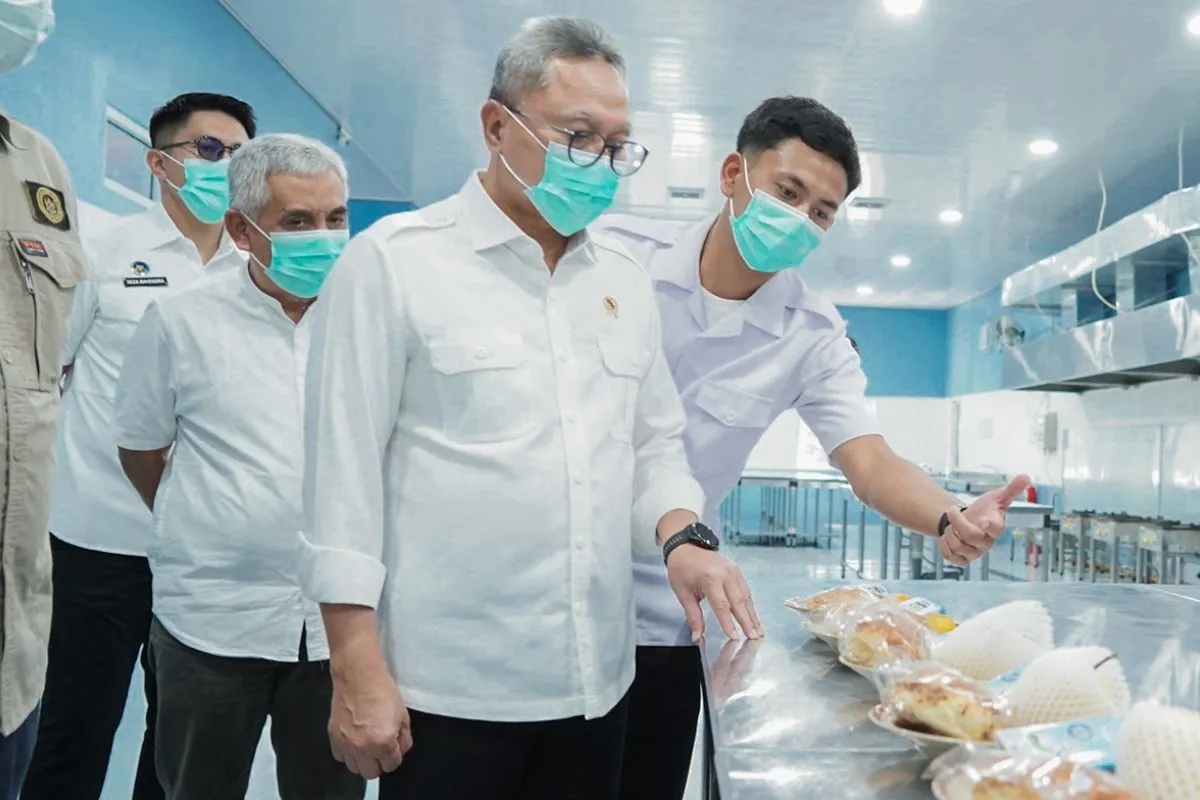
The inspection focused on the operational readiness of the SPPG as a meal service kitchen, including food production and distribution processes, as well as adherence to hygiene, sanitation, and halal standards.
“This program is not merely about distributing food, but about ensuring that nutrition, safety, and accurate targeting are properly maintained on the ground,” Hasan said in a ministry statement issued on Saturday.
The SPPG in Kalikajar sub-district, which has been operating since October 13, 2025, currently serves 2,222 beneficiaries, including school students as well as pregnant and breastfeeding women in surrounding areas.
During the visit, the SPPG distributed nutritious meals to 1,584 students and 133 pregnant and breastfeeding women, with menus adjusted to meet the nutritional needs of each beneficiary group.
Hasan said the SPPG must function as a quality control point, covering the entire process from raw material selection and food processing to delivery to beneficiaries.
Regarding operational requirements, he added that the Kalikajar SPPG has obtained both a Hygiene and Sanitation Eligibility Certificate and a halal certificate, which are mandatory for operating a kitchen under the Free Nutritious Meal program.
Hasan emphasized that regular supervision and evaluation at the SPPG level are essential to ensure consistent and sustainable implementation of the program, in line with Presidential Decree Number 28 of 2025.
“Continuous evaluation is conducted to ensure there is no decline in quality, whether in nutrition, food safety, or distribution,” he said.
The government expects the program to directly contribute to improving nutritional quality, public health, and human resource readiness from early school age.
Related news: Health Ministry reports sharp drop in MBG food poisoning cases
Related news: Free Nutritious Meal to reach all villages in 2026, Prabowo says
Translator: Aria, Kenzu
Editor: Primayanti
Copyright © ANTARA 2026


