In a statement received on Wednesday, Director of BRIN’s Research Vessel Fleet Management Nugroho Dwi Hananto said the availability of robust scientific data is essential to support government efforts in designing effective and targeted conservation interventions.
“In marine scientific research, the availability of research vessels equipped with advanced instruments is crucial for collecting data on Indonesia’s marine biodiversity and resources,” he said.
“The collaboration involving researchers from BRIN, Konservasi Indonesia, and universities, using OceanX’s RV OceanXploration, has now produced important findings with significant implications,” he added.
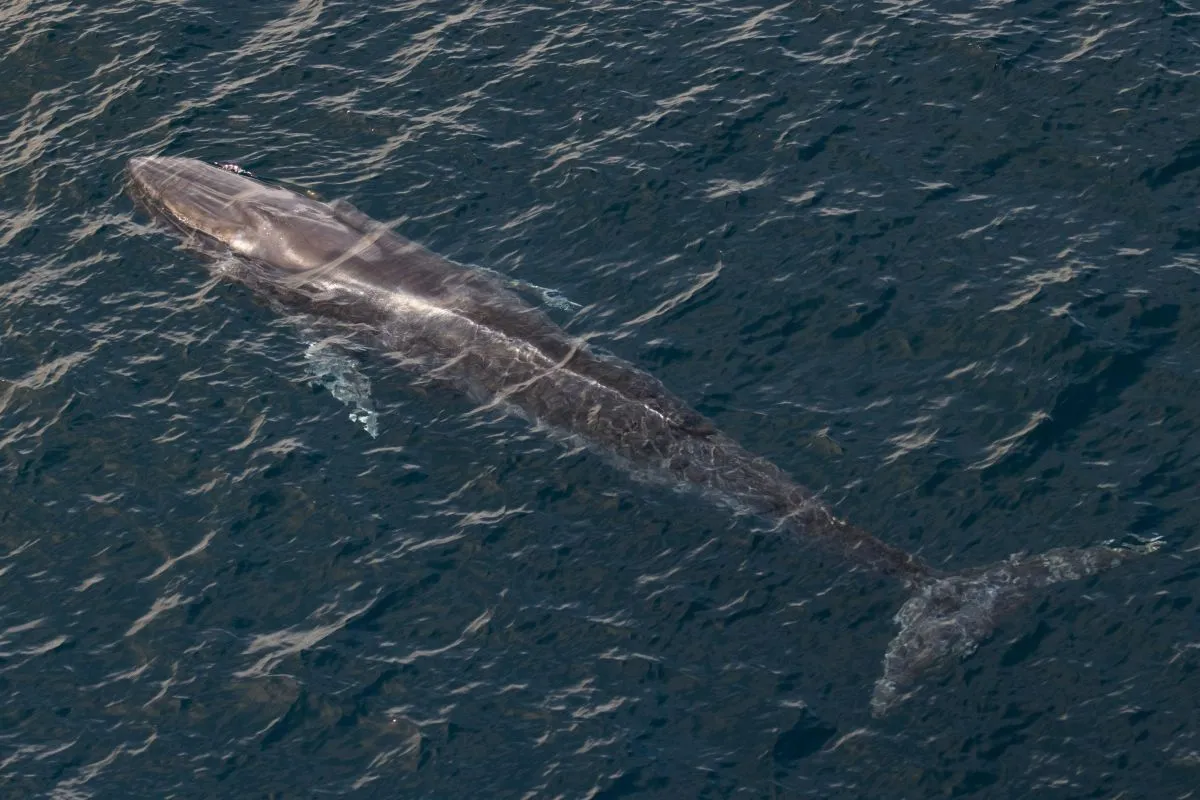
Conducted between May and July 2024, the OceanX Indonesia Mission covered a survey distance of 15,043 kilometers and recorded 77 sightings of 10 cetacean species. These included the first aerial confirmations of killer whales (Orcinus orca) and pygmy killer whales (Feresa attenuata) in western Indonesia.
The findings of the expedition have recently been published in Frontiers in Marine Science. By integrating historical data, the total number of documented cetacean species in the region has now reached 23, representing 68 percent of all known cetacean species in Indonesian waters.
High-density hotspots—dominated by spinner dolphins (Stenella longirostris) and striped dolphins (Stenella coeruleoalba)—were identified mainly outside existing conservation areas.
The study found that 93 percent of these hotspots are located beyond current or proposed marine protected areas.
Researchers identified this as evidence of a mismatch between the existing network of protected areas and the actual distribution of key cetacean habitats, particularly in offshore waters. Spatial modeling also revealed significant overlap between cetacean habitats and intensive fishing activities, as well as maritime traffic.
This overlap increases the risk to several species, including killer whales, Omura’s whales (Balaenoptera omurai), and sperm whales (Physeter macrocephalus), which are classified as endangered.
“This survey fills a critical data gap that has long constrained cetacean management in Indonesia’s high seas,” said Iqbal Herwata, Focal Species Conservation Senior Manager at Konservasi Indonesia and lead author of the study.
“The scale and quality of the data enable truly evidence-based conservation planning,” he added.
Konservasi Indonesia, which collaborated with OceanX and BRIN on this expedition, assessed that the findings emphasize the need for targeted spatial protection, adaptive marine spatial planning, and species-specific mitigation measures to complement efforts to expand Indonesia's marine conservation areas towards the 30×45 target.
The results also support the implementation of the national Blue Halo S initiative, which aims to strengthen fisheries governance, protect critical marine habitats, and promote a sustainable blue economy in waters west of Sumatra.
Related news: RI says whale shark protection key to ocean health, blue food security
Related news: Newborn whale shark found in Indonesia marks research breakthrough
Related news: Indonesia to block coal ships in Mahakam to protect endangered dolphin
Translator: Prisca Triferna Violleta, Katriana
Editor: M Razi Rahman
Copyright © ANTARA 2026


