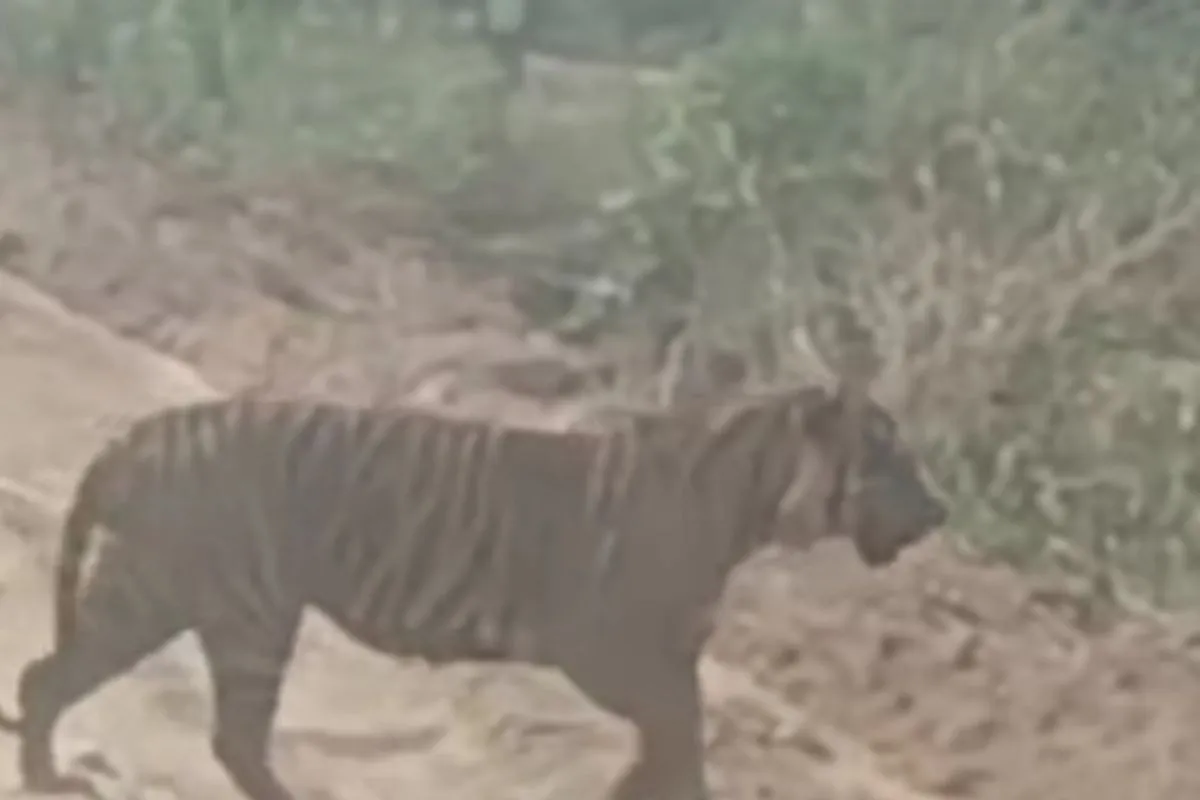
The agency responded immediately by conducting field checks following the report of the protected animal’s appearance near the industrial site, BBKSDA Riau Technical Chief Ujang Holisudin said.
A response team was dispatched from the BBKSDA post inside Zamrud National Park, located about 1.3 kilometers from the reported sighting, to verify conditions on the ground, Ujang said.
“Our team from BBKSDA Riau is currently conducting direct confirmation at the location,” Ujang told reporters in Pekanbaru on Thursday.
The tiger was first reported on Wednesday afternoon near the front of the Zamrud Water Injection Plant, part of an oil pipeline network, close to a bridge serving as a main access route for vehicles.
Video footage circulating on social media showed the protected animal crossing the road before retreating into nearby bushes, briefly alarming motorists passing through the area.
The sighting was recorded by an operations department foreman identified as Khaidir, accompanied by a driver named Dedi. The tiger appeared to be fully grown, based on the video images.
Ujang urged residents and motorists to remain vigilant when traveling through the Zamrud WIP route, noting the area lies along the edge of a conservation zone that forms part of the tiger’s natural habitat.
The Zamrud WIP facility is an upstream oil and gas installation that directly borders protected forest, increasing the likelihood of encounters between wildlife and human activity, authorities said.
Indonesia’s Sumatran tiger is critically endangered, with habitat loss and human encroachment driving occasional sightings near industrial and residential areas, prompting conservation agencies to prioritize monitoring and public safety.
ANTARA noted that Sumatran tigers are the only surviving tiger species in Indonesia, following the extinction of the Bali tiger in 1937 and the Javan tiger in the 1970s.
The Sumatran tiger, the smallest tiger subspecies, is critically endangered and found only on Sumatra Island, Indonesia's second-largest island.
Its survival is threatened by deforestation, poaching, and increasing human-wildlife conflict caused by shrinking natural habitats.
Estimates place the wild Sumatran tiger population at fewer than 300 to around 500 individuals across 27 locations, including Kerinci Seblat, Tesso Nilo, and Gunung Leuser national parks.
The World Wildlife Fund (WWF) said the population has declined from about 1,000 individuals in the 1970s.
A 2009 Forestry Ministry report identified human conflict as the primary threat, noting an average of five to 10 tigers killed annually since 1998.
Related news: Endangered Sumatran tiger tracks found after close encounter in Riau
Related news: Four Sumatran tigers spotted as Bukit Tigapuluh ecosystem thrives
Related news: Sumatran tiger mauls farmer in Lampung's national park
Translator: Bayu AA, Rahmad Nasution
Editor: Azis Kurmala
Copyright © ANTARA 2026