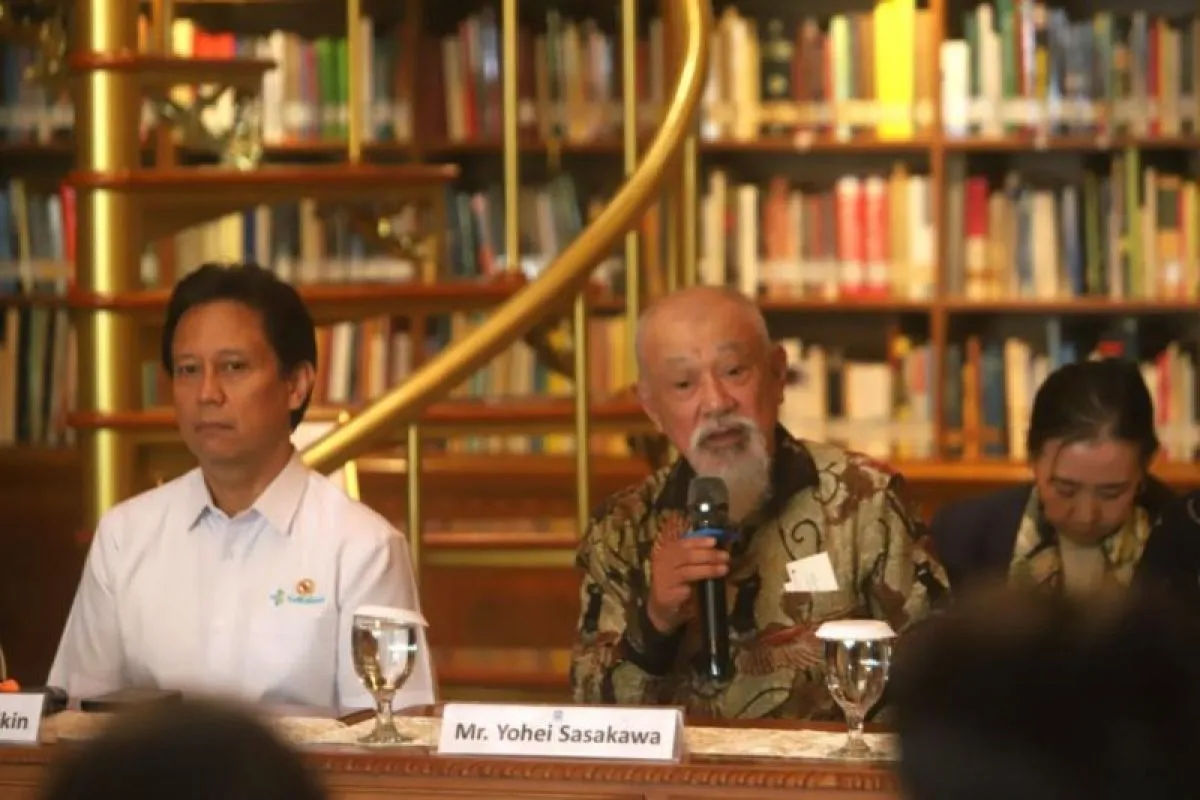
He stressed that leprosy should not be viewed as a curse and requires support from all members of society.
“The most important thing is to treat and free patients from discrimination while showing sympathy. I hope all parties, including the government and community organizations, can work together to eliminate leprosy in Indonesia,” Sasakawa said in a statement received in Jakarta on Thursday.
Sasakawa expressed concern about the spread of leprosy in Indonesia. The country ranks among the top three globally with the highest number of sufferers.
He noted that the disease’s spread is worsened by the lack of public knowledge that leprosy is curable and not highly contagious.
“Leprosy has medical symptoms and also faces stigma due to misinformation. Public education is crucial to improve understanding and encourage cross-sector collaboration in efforts to eliminate this disease,” Sasakawa said.
Health Minister Budi Gunadi Sadikin welcomed Sasakawa’s commitment.
He hopes that leprosy eradication can be conducted comprehensively and sustainably, supported by proper public education to eliminate stigma and misconceptions.
“If friends or relatives isolate leprosy patients, that is false information. Scientific evidence shows that after infection, a short course of antibiotics stops transmission. Science-based education is essential to remove misunderstandings,” Minister Budi said.
Chairman of the Board of Trustees of the Habibie Center, Ilham Akbar Habibie, stated his readiness to cooperate with the Sasakawa Foundation and the Ministry of Health to combat leprosy and improve public understanding of the disease.
“Habibie Center focuses on democracy, which includes the political system, quality of life, freedom, welfare, health, and justice. Health is a key aspect for those who care about democracy because it directly affects the lives of every citizen,” ilham said.
Related news: Indonesia includes leprosy screening in free health checks
Reporter: Azis Kurmala
Editor: M Razi Rahman
Copyright © ANTARA 2026