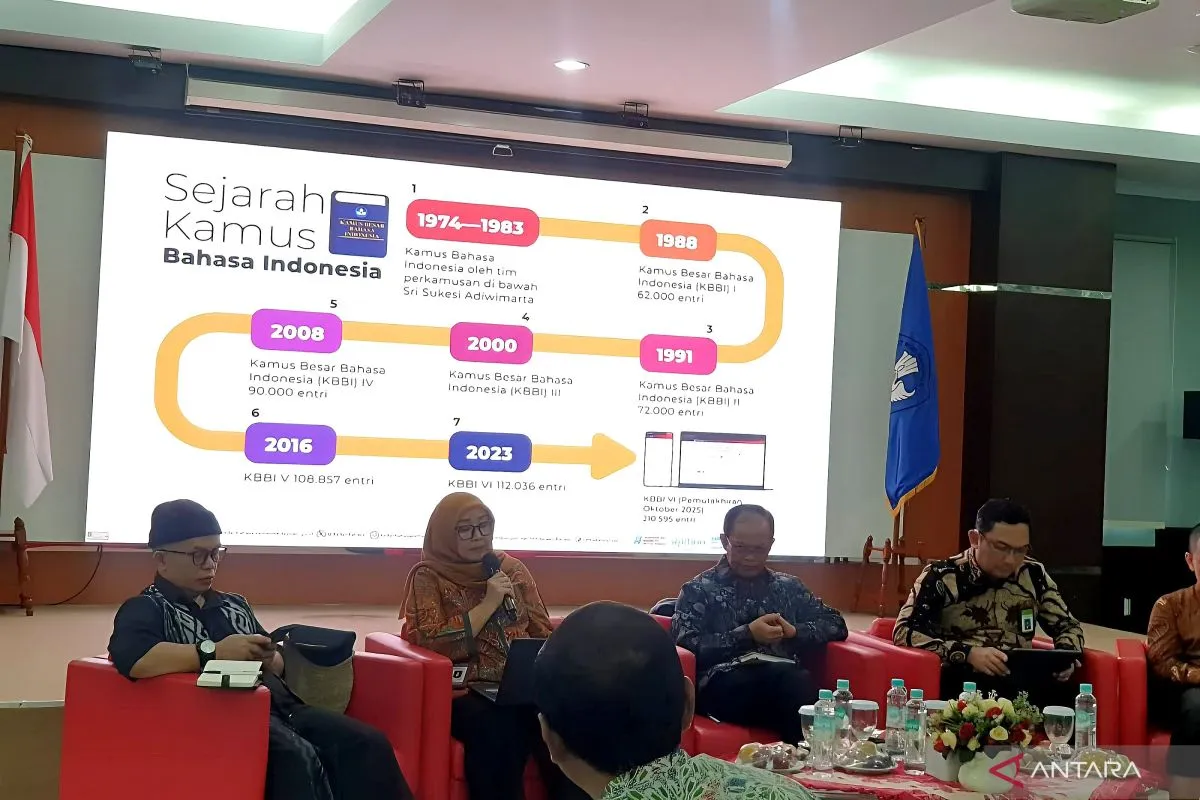
Head of the Center for Language and Literature Development and Protection at the agency, Dora Amalia, said the institution regularly holds editorial meetings to review proposals for updating the KBBI, including those submitted by the public.
“The KBBI, particularly the online version, accepts proposals for new entries, revisions of meanings, and even the deletion of existing entries. We routinely conduct editorial meetings to ensure all proposals are carefully reviewed,” she said during a gathering with the Education Journalists Forum in Bogor, West Java, on Friday.
She explained that members of the public who wish to submit proposals must first create an account to register their personal data as contributors. Once registered, users can submit proposed revisions or new entries by selecting the “propose a new entry” option through the KBBI application.
Currently, the agency has recorded 256,692 proposed words, including newly coined terms submitted by the public. Of that total, around 124,479 proposals have been edited, approved, and incorporated into official KBBI entries.
Amalia said that before a new word is formally recognized, the editorial team gathers evidence of its usage from language corpora, mass media, and various digital sources.
The team then evaluates the distribution and stability of the word’s meaning in both written and spoken usage.
“The key determining factor is repeated and consistent usage within a verifiable context,” she said.
Editors also assess connotations and potential socio-cultural interpretation risks. Once a proposal is considered acceptable, usage information is assigned, followed by a validation process before inclusion in the next KBBI update.
Related news: Indonesia revitalizes 120 regional languages to strengthen identity
Related news: Govt to provide book assistance to schools in 2026
Translator: Hana, Kenzu
Editor: Primayanti
Copyright © ANTARA 2026