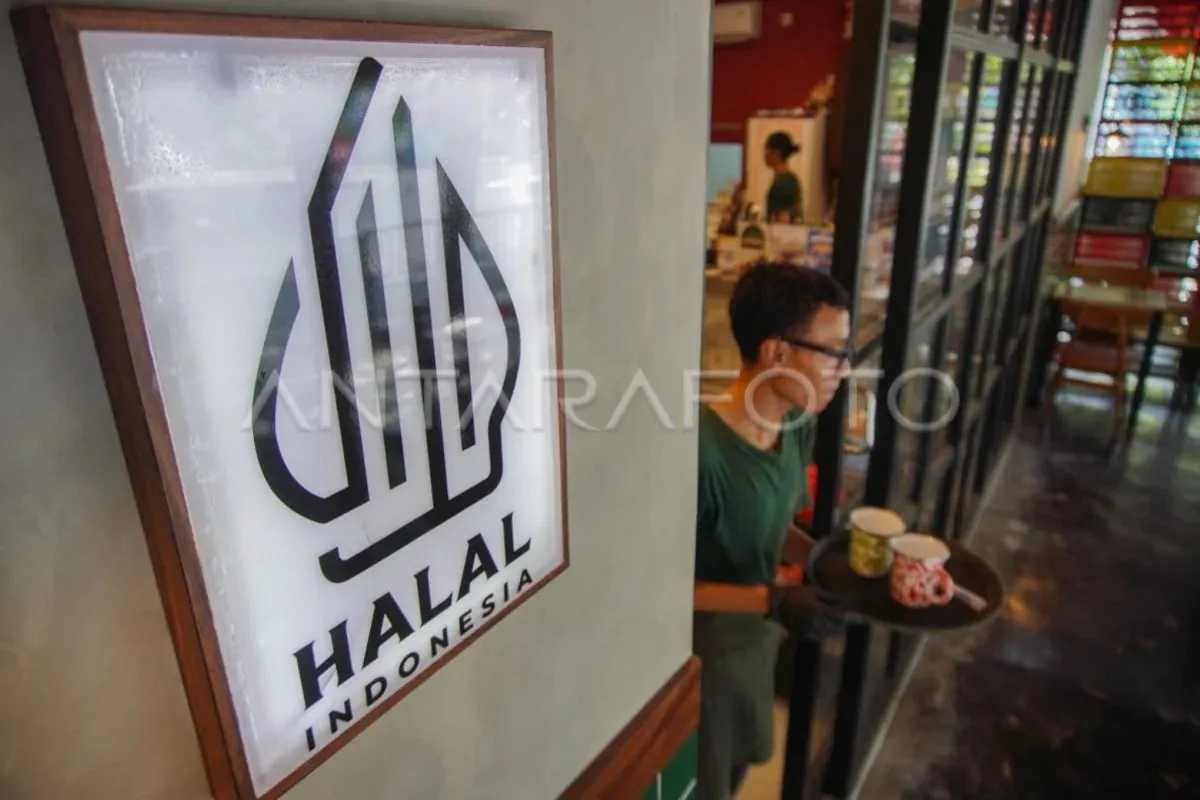
Fuad Nasar, Director of Halal Product Assurance at the Ministry of Religious Affairs, said the requirement will also apply to food and beverages, cosmetics, consumer goods, and product packaging.
"Beyond administrative obligations, this policy reflects our shared commitment to developing the halal industry as a driver of the national economy," Nasar said on Sunday.
He explained that under the policy, the Ministry of Religious Affairs will accommodate stakeholder interests, the Halal Product Assurance Agency (BPJPH) will enforce halal compliance, and the Indonesian Ulema Council (MUI) will issue religious rulings on products.
Nasar said the ministry is also working to strengthen halal literacy and public awareness through education, dissemination, collaboration, and ecosystem development.
He added that the ministry is committed to empowering the Islamic economy, particularly micro, small, and medium enterprises (MSMEs), through cooperation with the Directorate of Waqf and Zakat.
"Strengthening the Muslim economy, especially MSMEs, is part of our eight priority missions," he said, noting efforts to assist businesses in obtaining halal certificates, including through the self-declare scheme.
Nasar said BPJPH has launched a Free Halal Certification program with an annual quota of more than one million certificates, with 60–70 percent of the agency's budget allocated to support MSMEs.
Related news: Indonesia pushes halal industry as D-8 Chair for 2026–2027
Related news: Indonesia to enforce mandatory halal certification from Oct 2026
Translator: Asep F, Tegar Nurfitra
Editor: Anton Santoso
Copyright © ANTARA 2026


