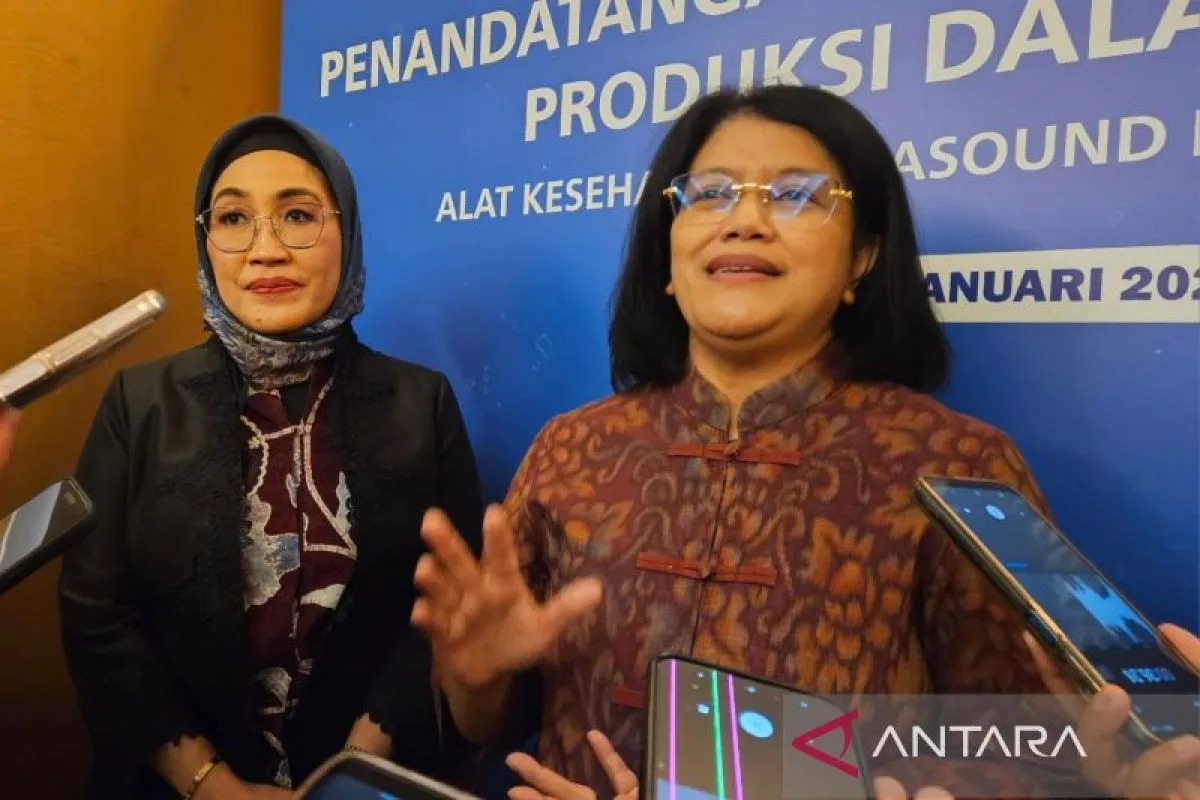
The ministry's director for pharmaceuticals and medical devices, Lucia Rizka Andalusia, said here on Monday that the high technology transfer initiative among Philips, Graha Teknomedika, and Panasonic Healthcare Indonesia aligns with the health transformation agenda and quick win programs.
Under the initiative, Philips’ ultrasound devices and patient monitors are included in the technology transfer. Andalusia said that by 2026, the government aims for the participation of 130 million people in CKG, a program aimed at catastrophic diseases prevention and care.
"Of course, the success of the free health screening must be supported by adequate diagnostic facilities at every primary healthcare. One of which is ultrasound equipment," she said.
Furthermore, another important presidential quick win agenda is to improve the capability and competency of 66 regional hospitals, from grade D to grade C. She highlighted the importance of the upgrade in providing treatment for prioritized diseases, which include cancer, heart disease, neural disorders, as well as urology and nephrology diseases.
To achieve the goal, it requires a significant boost in infrastructure and facilities, particularly through the local production of advanced medical devices, she said, adding that local manufacturing helps ensure the availability of more effective diagnostic tools at an affordable price.
"As we advance toward our national goals Indonesia Emas 2045, the Ministry of Health views the growth of the medical device industry not merely as a business expansion, but as a critical driver for Indonesia's transition into a high technology innovation-based economy," she added.
She expected that the partnership can inspire other manufacturers and investors to localize their production in Indonesia, further driving the growth of the high technology medical devices industry.
"Last but not least, by establishing this partnership, we are contributing to a more stable and reliable healthcare ecosystem in Indonesia," Andalusia noted.
On the same occasion, President Director of Philips APAC Stephanie Sievers stated that they combined the company’s global-tier innovation with local expertise to deliver solutions that will make a positive impact on healthcare in Indonesia.
"Local manufacturing allows us to shorten delivery times, strengthen supply resilience, and build up local medical device capabilities. Most importantly, this serves the needs of patients across the nation," Sievers said.
She said that their ultrasound product offers features such as high resolution, real-time imaging, and AI-enabled tools allowing for broad clinical applications, including cardiology and women's health.
Whereas their patient monitor product is trusted globally for its accuracy, intelligent alarms, advanced analytics, and system integration within hospital systems, she added.
President Director of Philips Indonesia Astri Ramayanti Dharmawan expressed hope that her company’s initiative can support the national health transformation agenda while strengthening the domestic industry by creating employment through local manufacturing.
Related news: At WEF 2026, Prabowo highlights Indonesia's Free Health Check program
Related news: West Papua taps public spaces to boost Free Health Check uptake
Related news: Indonesia includes leprosy screening in free health checks
Reporter: Mecca Yumna Ning Prisie
Editor: Azis Kurmala
Copyright © ANTARA 2026


