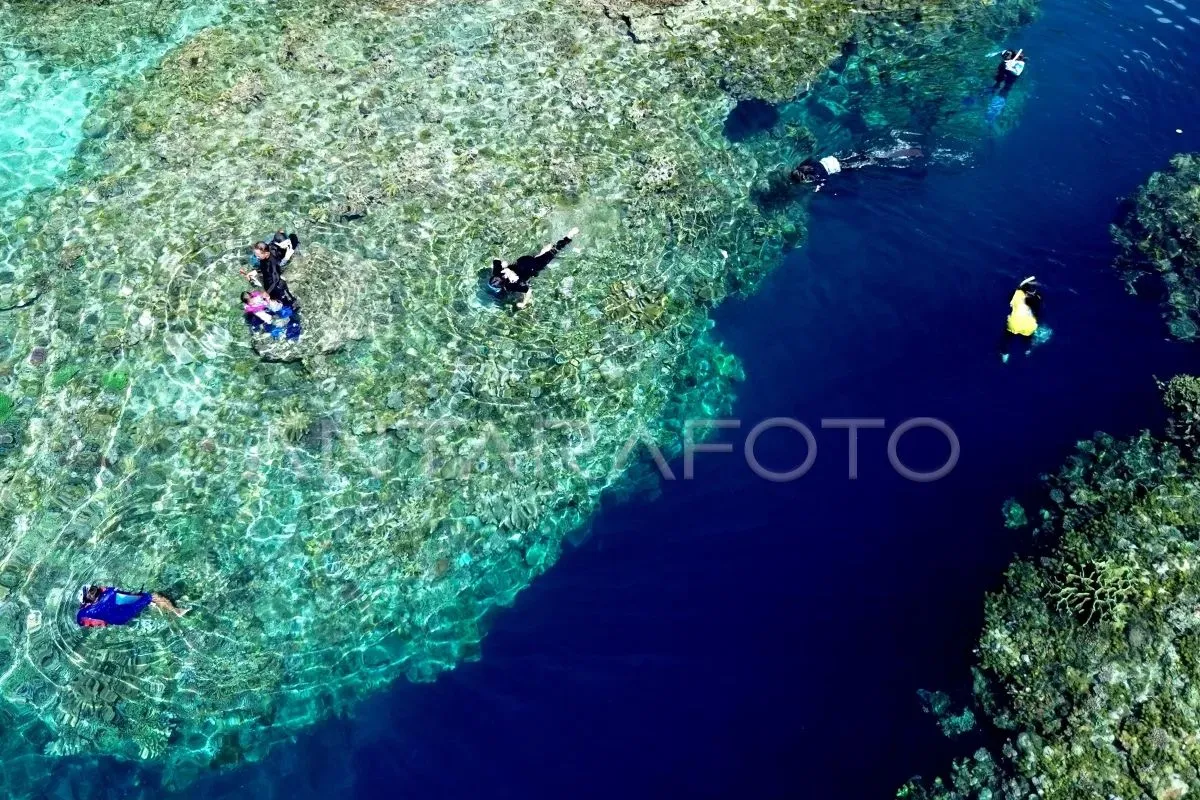
Director of Marine Conservation and Biodiversity at the Ministry of Marine Affairs and Fisheries, Firdaus Agung Kurniawan, explained that under the scheme, funds originally allocated for debt repayment are instead redirected to support conservation activities in Indonesia.
He noted that the initiative is based on the US law Tropical Forest and Coral Reef Conservation Act (TFCCA), which is designed to help preserve biodiversity in partner countries through innovative debt-swap mechanisms.
The debt-swap agreement under TFCCA, valued at US$35 million (around Rp588 billion), between Indonesia and the US was first announced in July 2024.
The initiative is further supported by contributions from Conservation International and Konservasi Indonesia amounting to US$3 million, and from The Nature Conservancy and Yayasan Konservasi Alam Nusantara (YKAN) US$1.5 million.
“Indonesia is the first country in the world to implement TFCCA specifically for coral reefs. This is the largest program of its kind and will serve as a benchmark for future TFCCA initiatives in other countries,” Kurniawan said during the launch.
Grant recipients include local communities, indigenous groups, civil society organizations, and legally recognized universities committed to coral reef conservation.
The first cycle of TFCCA in Indonesia will focus on three priority seascapes with high biodiversity: Bird’s Head in West Papua , Lesser Sunda (Bali, NTB, NTT), and Banda (Maluku).
A total of 58 local organizations and initiatives have been selected to carry out the program.
To mark the start of implementation, seven representatives of grant recipients signed agreements today.
Chargé d’Affaires ad Interim of the US Embassy in Indonesia Peter M. Haymond emphasized that the program represents more than just a signing ceremony.
“This moment represents a shared commitment by our two countries, our two peoples, to reefs, but beyond that, to communities, and to a resilient, productive, growing, sustainable future,” he said.
He highlighted Indonesia’s unique connection to the ocean as a nation of islands, noting the importance of protecting reefs and coastal ecosystems from overfishing and overuse.
He further noted that the grants under TFCCA convert debt into long-term investments in Indonesia’s natural capital, supporting local organizations and community-based conservation efforts.
“Protecting reefs is a strategic investment in shared prosperity and global stability that benefits both of our countries,” Haymond said.
“The grants will support local organizations and community-based conservation efforts driven by science, practical solutions that strengthen governance while also respecting local knowledge, wisdom, and experience,” he added.
Indonesia is home to around 16 percent of the world’s coral reef areas and nearly 60 percent of global coral species. Coral reefs provide food, livelihoods, and coastal protection for almost half of the world’s population, yet about 75 percent of reefs worldwide are under threat.
Related news: RI Govt, communities restore coral reefs in Sumatra's Pieh Island
Related news: Jakarta's Kepulauan Seribu transplants coral reefs
Translator: Shofi Ayudiana
Editor: M Razi Rahman
Copyright © ANTARA 2026


