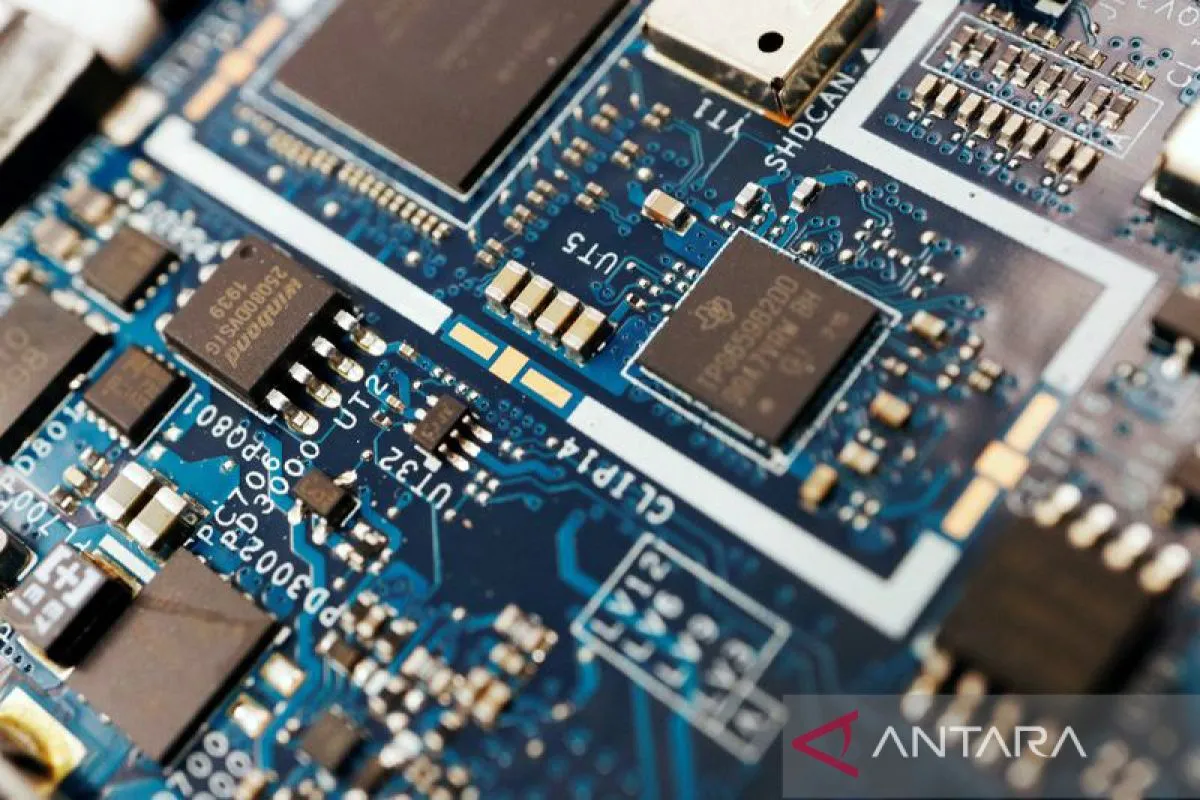
Indonesia is accelerating the development of a national semiconductor ecosystem in a bid to capture high-tech market opportunities, reduce reliance on imports, and strengthen the global competitiveness of its manufacturing industry, an official said.
Industry Minister Agus Gumiwang Kartasasmita emphasized that semiconductors are a strategic cornerstone of Indonesia’s industrial transformation. They underpin critical sectors such as electronics, automotive manufacturing, renewable energy, and industrial digitalization.
“With Indonesia’s vast domestic market for semiconductor-based products, developing a strong national ecosystem is essential to reduce imports and enhance industrial competitiveness,” Agus said in a statement from Jakarta.
Demand for semiconductors is rising in step with the country’s manufacturing growth.
Indonesia produces more than one million vehicles annually and has set ambitious targets for electric vehicle development, aiming for hundreds of thousands of units by 2030.
These trends are driving the need for reliable and sustainable supplies of critical components.
At present, Indonesia’s semiconductor industry remains modest, with one assembly and testing facility located in Batam, Riau Islands, and several integrated circuit design firms.
The ministry acknowledged that significant gaps remain, particularly in skilled human resources, research and innovation capacity, and integration into global supply chains.
To address these challenges, the government has launched a chip design development program valued at US$16.2 million, included in Indonesia’s 2025–2029 Blue Book of medium-term foreign loan plans.
The initiative is designed to cultivate national talent in chip design, provide shared infrastructure for research and prototyping, and strengthen collaboration between industry, universities, and international partners.
Indonesia’s push has gained further momentum through cooperation with the Asian Development Bank.
During recent talks with ADB Indonesia Country Director Bobur Alimov, the bank pledged support in the form of project readiness criteria, feasibility studies, and preparation to meet Green Book financing requirements.
Minister Agus welcomed the backing, stressing that the partnership aligns with Indonesia’s priorities to strengthen human capital, advance technological capabilities, and increase value-added across the country’s high-tech manufacturing sector.
Related news: Indonesia to set up new state-owned textile firm with US$6 billion
Related news: Indonesia urged to join global chip supply chain to boost AI ambitions
Translator: Ahmad Muzdaffar Fauzan, Martha Herlinawati Simanju
Editor: Aditya Eko Sigit Wicaksono
Copyright © ANTARA 2026


