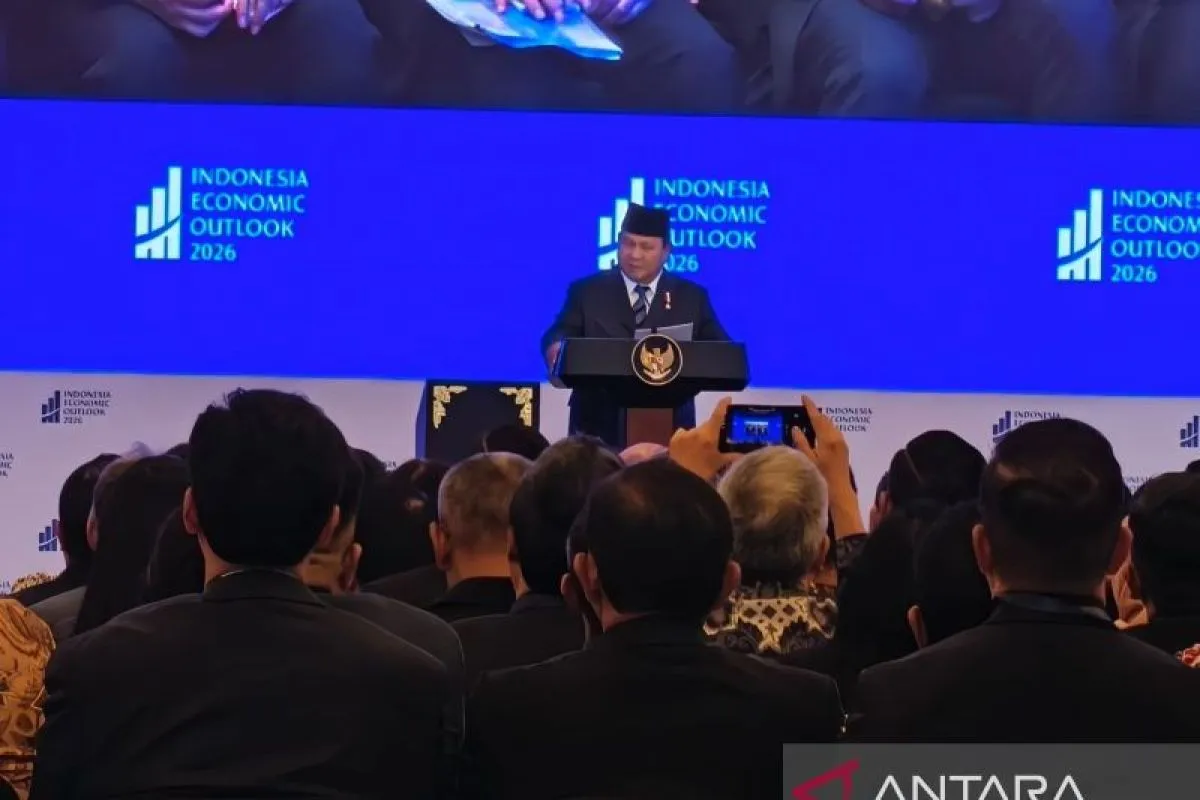
Speaking at the Indonesia Economic Outlook 2026 event in Jakarta on Friday, he said several regional leaders had reported tangible improvements in community welfare resulting from government policies.
“I have received reports from governors and district heads who are now witnessing real and measurable impacts from our policies,” he said while discussing the MBG program.
According to the president, the reports are supported by industry and trade leaders from the Indonesian Employers Association (Apindo), who recorded an increase in household consumption in January.
Prabowo attributed the rise to the MBG program, which he said has stimulated economic activity down to the village and sub-district levels.
He expressed optimism that Indonesia will post strong economic performance this year, emphasizing that the government remains committed to prioritizing public welfare despite skepticism from certain quarters.
In addition to stronger consumption, Prabowo noted that regional leaders had also reported declines in poverty and open unemployment rates in their respective areas.
President Prabowo outlined that the MBG program has now reached approximately 60.2 million beneficiaries, including children, pregnant women, and older adults living alone without caregivers.
The program is considered a primary driver for equitable welfare and the strengthening of the national economic foundation.
Statistics Indonesia (BPS) earlier recorded Indonesia’s economic growth at 5.11 percent year-on-year (yoy) in 2025, driven mainly by household consumption, which expanded 4.98 percent.
For 2026, the government has set a growth target of 5.4 percent, supported by strategic programs such as MBG and the Red and White Village Cooperatives initiative.
Related news: President Prabowo says free meal program to create 1.5 million jobs
Translator: Andi Firdaus, Raka Adji
Editor: M Razi Rahman
Copyright © ANTARA 2026


