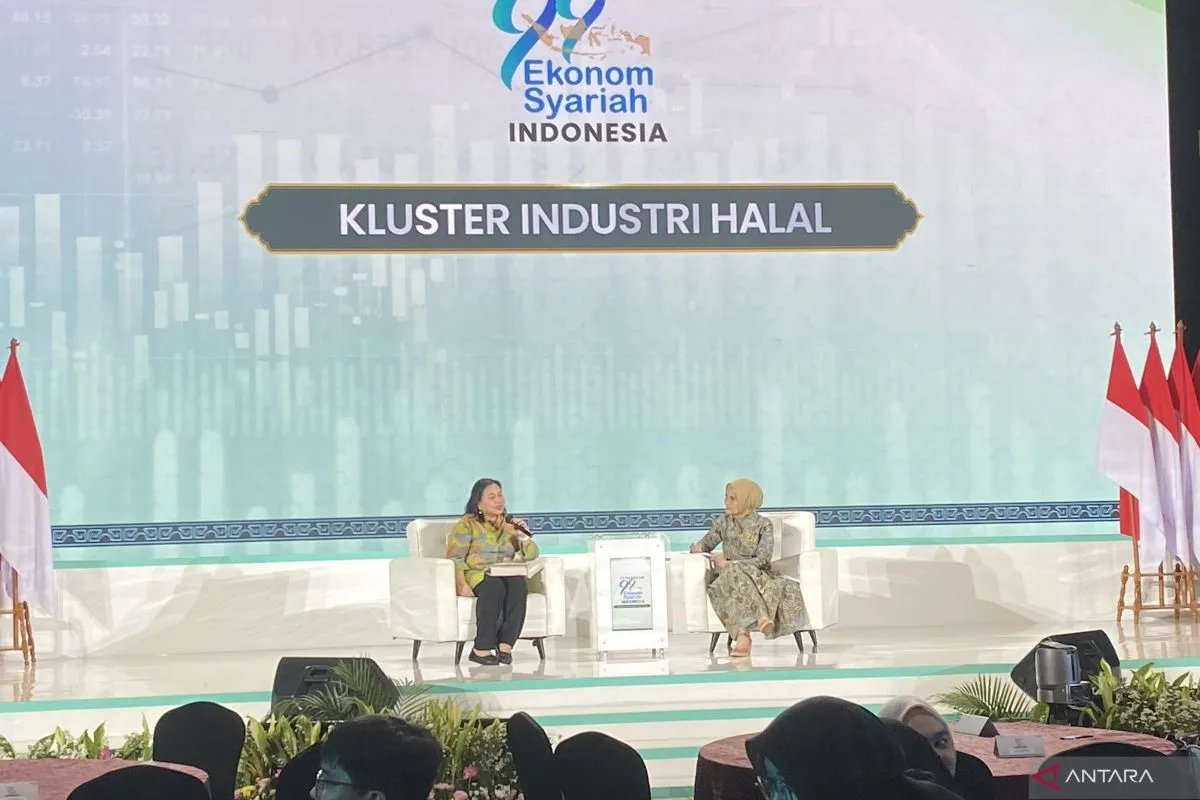
Head of the Standardization and Industrial Services Policy Agency (BSKJI) at the Ministry of Industry Emmy Suryandari said halal certificates issued by foreign halal institutions (LHLN) in the United States can be recognized in Indonesia, provided that the institutions are registered with the Halal Product Assurance Organizing Agency (BPJPH).
“Products from America must still be halal certified. Certification can be carried out in the country of origin and then registered in Indonesia,” she said in Jakarta on Tuesday.
Head of the Halal Industry Center at the Ministry of Industry Kris Sasono added that five foreign halal institutions in the United States are currently recognized by the Halal Product Assurance Organizing Agency.
Under the MRA mechanism, products that have obtained halal certification in their country of origin do not need to repeat the full certification process in Indonesia. They are only required to undergo a registration process.
“They use their own foreign halal institution’s logo. When the products arrive here, our halal logo is also affixed. That has been the practice so far,” Kris said.
He stressed that periodic supervision remains in place, as Mutual Recognition Agreements have a limited validity period of between two and four years.
Kris noted that Indonesia has established MRA with around 38 countries, involving 102 foreign halal institutions.
In the United States, five halal institutions are recognized by the Halal Product Assurance Organizing Agency, while China has eight and Australia has 13 recognized halal institutions.
Under the Indonesia–United States trade agreement, the Indonesian government has also committed to addressing various non-tariff barriers.
These include exempting US companies and products from local content requirements, accepting US federal motor vehicle safety and emission standards, recognizing Food and Drug Administration standards for medical devices and pharmaceuticals, removing burdensome certification and labeling requirements, and eliminating pre-shipment requirements.
Related news: RI Govt denies easing halal rules for US goods
Related news: Indonesia's BPJPH stresses clear labeling for non-halal products
Translator: Shofi Ayudiana, Primayanti
Editor: M Razi Rahman
Copyright © ANTARA 2026


