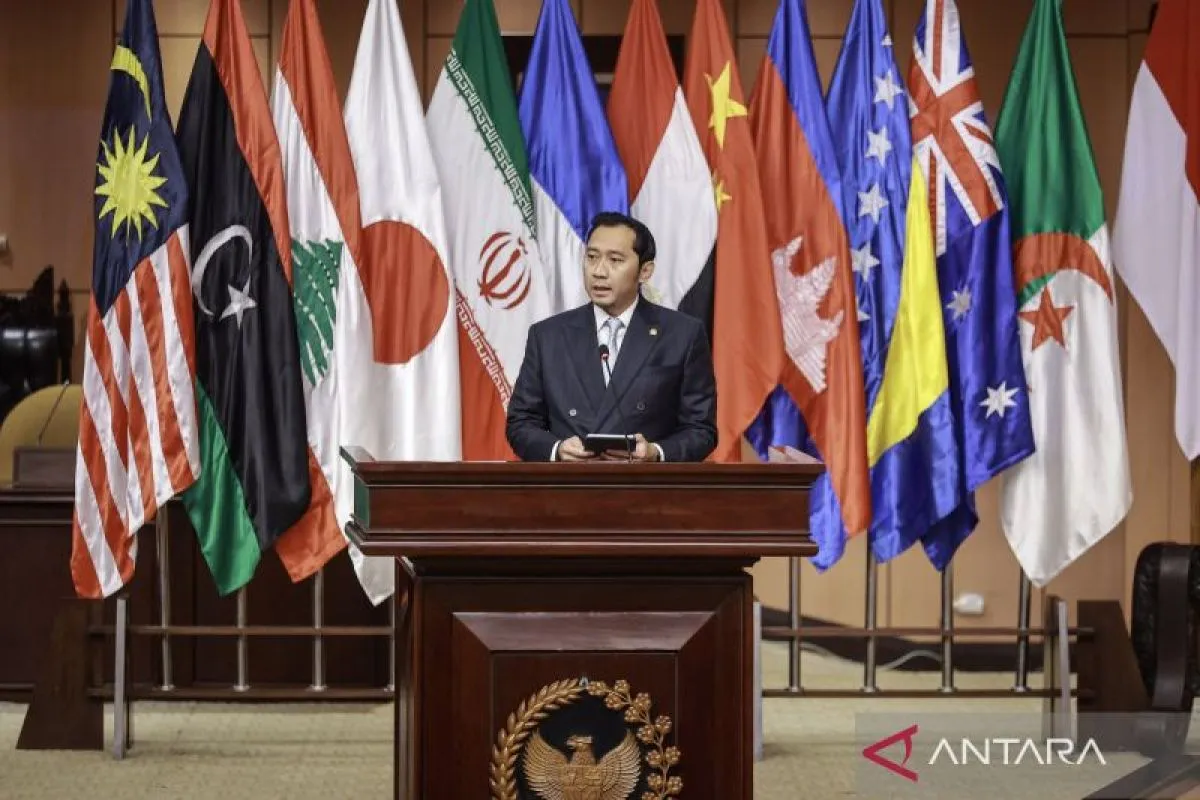
In a statement received here on Tuesday, he explained that the situation could potentially expand global geopolitical instability and place serious pressure on the global economy, including Indonesia.
"Today, the world is facing a situation of serious uncertainty. When armed conflict occurs at the world's energy hub, the impact spreads to every country, including Indonesia. We must be vigilant, responsive, and strategic," he said.
According to him, conflict in this strategic energy-producing region not only affects the countries directly involved but also carries broad consequences for energy stability, international trade routes, global inflation, and regional security.
He highlighted the Strait of Hormuz as a vital energy corridor. With Iran bordering the narrow passage, escalating conflict risks supply bottlenecks or a total closure.
The strait is the lifeblood for 20 to 30 percent of daily global oil consumption and a primary route for Qatari liquefied natural gas (LNG). If stability in the strait is disrupted, the world will face a massive supply shock.
This situation, he further said, poses a real threat to industrial operating costs and fuel availability at the retail level. Disruptions in the strait could also drive crude oil prices far above Indonesia's national budget assumptions.
In addition to crude oil, he noted that disruptions in the passage would have a systemic impact on global supply chains. Rising shipping insurance costs and the rerouting of tankers would significantly increase international logistics expenses.
This would trigger a ripple effect on the prices of imported goods and domestic industrial raw materials, ultimately impeding the growth of the national manufacturing sector.
As a country that still relies on imports for part of its energy needs, Indonesia is highly vulnerable to spikes in global oil prices.
Yudhoyono predicted that rising global energy prices could trigger pressure on the state budget, inflation in essential sectors, decreased purchasing power, and obstacles to both exports and imports.
In this regard, he stressed that Indonesia must take strategic measures, such as strengthening its energy security, economic stability, and protection for its people, as well as continuing its active diplomacy.
The MPR deputy speaker further reminded that the constitution mandates the Indonesian people to participate in maintaining world order, underscoring that the country must not be caught in global polarization.
"We are a great nation that consistently rejects war and violence. We must be a nation firm in our values, strong in our economy, and wise in our diplomacy," he said.
Related news: Indonesia tightens watch on migrant workers in Mideast
Related news: Indonesia backs mediation to ease U.S.-Iran tensions after strikes
Related news: Gov't assures protection for umrah pilgrims amid Middle East tensions
Translator: Fath Putra, Raka Adji
Editor: Azis Kurmala
Copyright © ANTARA 2026


