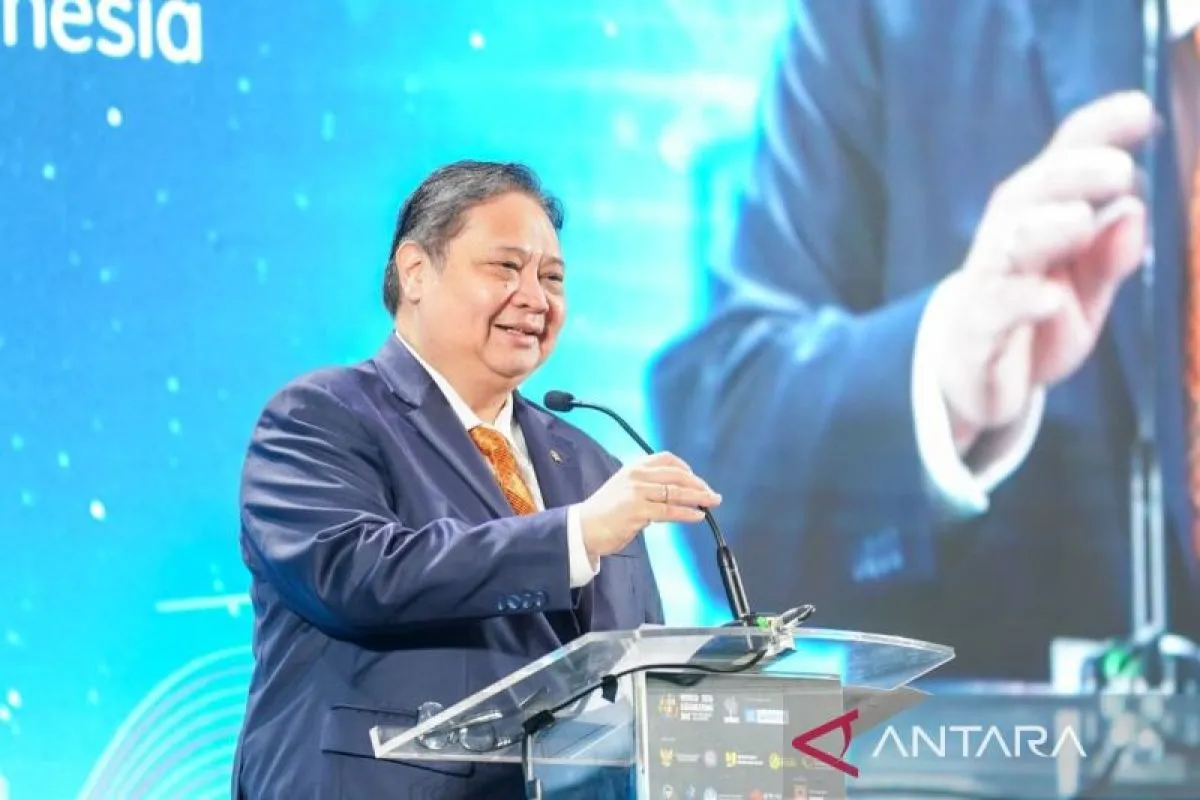
Coordinating Minister for Economic Affairs Airlangga Hartarto said this need is increasing specifically for several strategic sectors, for example, the semiconductor industry that needs around 15,000 engineers.
"We need an additional 45 percent of the current number of engineers. Specifically, we need around 15,000 engineers for the semiconductor industry. For the digital industry, we may need an additional 150,000 engineers within the next year to six years," he conveyed in a statement on Thursday (March 5).
In line with this need, the Ministry of Manpower is promoting vocational training programs to support workforce retraining and reskilling.
"Furthermore, with the program signed in London between Danantara and ARM Limited, training will be provided for 15,000 engineers within the ARM ecosystem. So, we are now more specifically targeting the engineering needs of industries promoted by the government," Hartarto pointed out.
Meanwhile, Indonesia has also demonstrated its preparedness in developing artificial intelligence (AI) technology, becoming the first country in the ASEAN region to complete the UNESCO AI Readiness Assessment, the minister added.
According to him, the accomplishment proves that the country is not merely adopting AI technology but is also preparing the legal, ethical, and social framework required to drive future innovation.
He outlined that industries that quickly adopt AI are recorded as achieving revenues up to three times higher than those that adapt slowly, with productivity increasing from 8.5 percent to 27 percent. Globally, AI is projected to contribute US$15.7 trillion to the world economy by 2030.
Meanwhile, for Indonesia, generative AI technology is estimated to increase its economic contribution by up to US$243.5 billion, he continued.
"Indonesia offers a huge potential market for the future, and the world is investing in Indonesia. While Indonesia is a major AI market, we must ensure that we are not just consumers of advanced technology, but also creators and owners of it," he emphasized.
He then drew attention to the important role of engineers in supporting sustainable development.
To achieve the Sustainable Development Goals (SDGs) by 2030, the world is estimated to require an annual investment of around US$4-7 trillion, particularly in technology-based and environmentally friendly sectors.
He therefore said that digitalization and sustainability are no longer separate concepts but have become integral to modern economic development.
Indonesia is currently one of the centers for digital innovation in the region, with its digital economy projected to reach US$124 billion by 2025, the largest in ASEAN.
By the same year, mobile connection penetration in Indonesia is estimated to reach 116 percent, with around 230 million internet users and 180 million social media accounts.
By 2030, Indonesia aims to rank among the top 45 in the Global Innovation Index.
Furthermore, data from the 2024 Cyber Security Index shows that Indonesia is already in Tier 1, or the "role model" category.
"Our role as engineers and policymakers is to spread the successes of Tier 1 regions across the country, ensuring balanced digital growth. We must go beyond innovation for its own sake. Tools like AI and Big Data should be used to tackle water shortages, optimize energy networks, and create resilient cities," Hartarto remarked.
Related news: Danantara, Arm Limited sign agreement to bolster chip industry
Related news: Dy Minister urges fair deal between platforms, media
Related news: Ministry collaborates with game industry on digital child protection
Translator: Bayu Saputra, Resinta Sulistiyandari
Editor: Azis Kurmala
Copyright © ANTARA 2026


