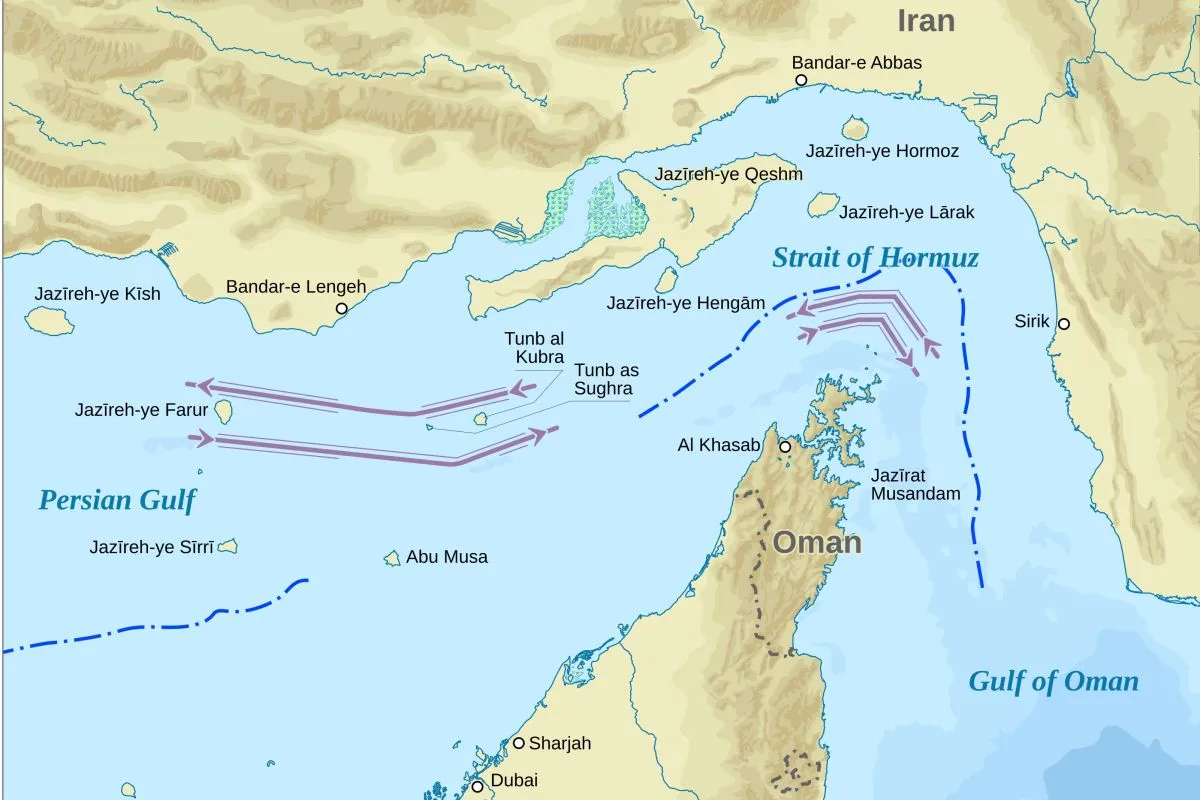
The joint attack that resulted in the death of Iran’s Supreme Leader Ali Khamenei led to the closure of the Strait of Hormuz, a strategic sea lane linking the Persian Gulf with the Gulf of Oman, located between Oman and Iran and serving as a main route for global energy trade.
Approximately 20 percent of global daily oil consumption, or nearly 20 million barrels, passes through the corridor, meaning any disruption could significantly impact international energy markets.
About one-fifth of global oil exports pass through this strait, including shipments from Gulf producers such as Saudi Arabia, the United Arab Emirates, Kuwait, and Iraq before reaching international markets.
These countries, along with Qatar, Bahrain, and Oman, are also the world’s leading gas producers.
Meanwhile, as a net energy importer vulnerable to swings in international fuel prices, Indonesia is closely monitoring and preparing mitigation measures to limit the risks this conflict may pose.
Energy and Mineral Resources Minister Bahlil Lahadalia on Wednesday (March 4), stated that the Middle East conflict has not yet disrupted Indonesia’s national energy supply, including domestic fuel.
While the country’s energy supply is expected to remain secure for the next one to two months, Lahadalia acknowledged that a prolonged conflict would inevitably impact global supply chains.
The government identified that approximately 25 percent of Indonesia’s crude oil imports come from the Middle East and pass through the strategic Strait of Hormuz, which is currently under heavy guard by Iran’s Islamic Revolutionary Guard Corps.
As part of mitigation, he explained, the government has started to shift some crude import sources to the US and other countries that do not use the Strait of Hormuz route.
Indonesia has begun gradually importing crude oil from the US—a move that is believed to remain profitable for Indonesia, despite surging global prices fueled by the Middle East conflict.
Brent crude traded on ICE rose to US$83 a barrel, compared with an average of US$64 in January 2026, highlighting a sharp rally in global oil markets.
Lahadalia said crude purchases from US suppliers would follow negotiations to secure favorable terms.
Such talks ensure Indonesia can still benefit from the transactions even as international oil prices climb amid heightened geopolitical tensions.
According to the minister, state energy company Pertamina has extensive experience negotiating crude contracts and is capable of securing competitive prices in global markets.
The company recently began shifting a portion of Indonesia’s crude imports away from the Middle East toward the US as part of an effort to diversify supply sources.
This strategy is expected to strengthen Indonesia’s domestic crude supply security and reduce reliance on a single region.
For refined fuels, Indonesia continues to rely heavily on imports of gasoline and diesel from Singapore, one of Asia’s largest refining and oil trading hubs.
Lahadalia explained that Singapore sources crude from various countries, allowing it to maintain stable fuel exports to Indonesia even if Middle Eastern shipments face disruption.
In addition to the US and Singapore, crude supplies can be sourced from diverse producers, including Angola in Africa, Brazil in South America as well as Malaysia in Southeast Asia. This diversification highlights that the global oil supply is not solely dependent on Middle Eastern producers, he said.
Boost storage
To strengthen energy security, according to Lahadalia, Indonesia plans to expand its crude oil storage capacity from the current 25–26 days of reserves to 90 days, in line with international standards.
The government has secured investors for a planned crude storage facility in Sumatra, he confirmed. The project is currently undergoing a feasibility study, with construction targeted to begin this year.
He noted that the parties involved in developing these facilities consist of both foreign and domestic entities, clarifying that the foreign investors are not from the US.
This indicates that private companies will play a significant role in developing Indonesia’s crude oil infrastructure, he added.
Meanwhile, Coordinating Minister for Economic Affairs Airlangga Hartarto claimed that Indonesia is much better prepared to face global uncertainty, having learned from the spike in energy prices caused by the Russia-Ukraine conflict.
According to him, this situation can be viewed from two perspectives. On the one hand, the government needs to maintain energy subsidies to avoid burdening the public. However, on the other hand, rising commodity prices can also increase state revenue.
In response to rising geopolitical tensions in the Middle East, he said, the government has decided not to increase the price of subsidized fuel despite a surge in global oil prices.
By utilizing the State Budget as a buffer to dampen price fluctuations, the government will continue to monitor developments in the conflict and its impact on global crude prices before taking further policy measures.
Airlangga also believes it is still too early to estimate the full impact of the Middle East conflict on the economy, although the government is preparing several scenarios to anticipate possible prolonged impacts from the conflict.
Energy expert from Padjadjaran University Yayan Satyakti predicted global oil prices could jump to US$100 per barrel from around US$72 per barrel if the Strait of Hormuz is closed.
He added that a surge in fuel prices could affect Indonesia, which still imports part of its oil needs from the Middle East.
Even without a closure of the Strait of Hormuz, the ongoing conflict could still push global oil prices up by around 10-25 percent.
Whether in a state of conflict or peace, every country—including Indonesia—must ensure its energy security by diversifying energy sources, mitigating import risks, and optimizing domestic energy.
Given that energy security is the foundation of economic stability, a secure and controlled supply will help control inflation and protect people’s purchasing power.
Related news: Indonesia seeks safe passage for Pertamina tankers in Hormuz
Related news: Indonesia seeks release of two Pertamina vessels in Hormuz Strait
Editor: Rahmad Nasution
Copyright © ANTARA 2026


