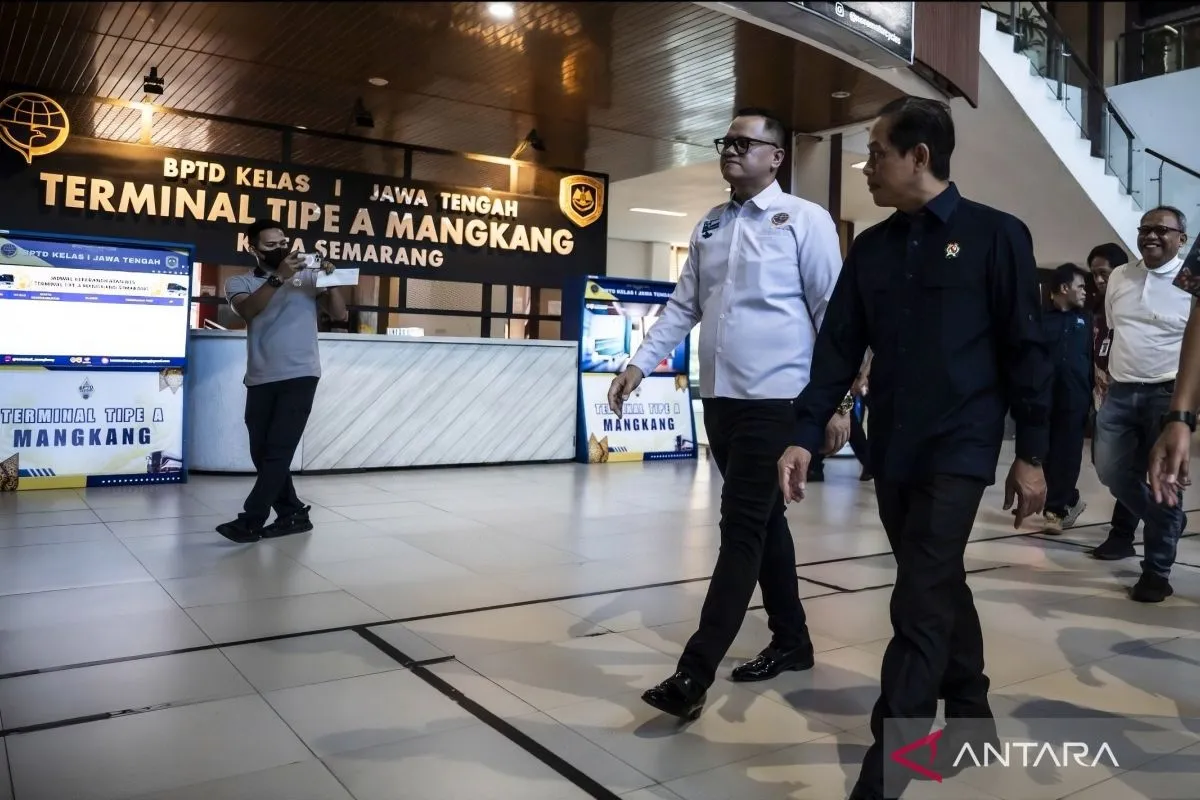
"We will ensure that by May, all rest areas will have waste processing facilities in place," he said during an inspection at the Mangkang Terminal in Semarang, Central Java, on Sunday.
The inspection is part of the "Low-Waste Homecoming" program ahead of the 2026 Eid al-Fitr holiday, aimed at keeping terminals clean and ensuring quality service for travelers.
In addition to terminals, the minister is also monitoring several toll road rest areas as the 2026 Eid homecoming flow begins.
"Some rest areas have already provided the facilities, but others are still slow to respond," he noted.
According to him, the volume of waste generated at toll road rest areas has been quite significant, reaching nearly half a ton to one ton per day.
"If it is not handled properly, it will become an environmental problem for the cities and districts passed by the toll roads," he added.
The minister stressed that for toll road rest area operators that do not have these facilities by May, his ministry will issue a formal enforcement order.
As for terminals, he noted that the waste management efforts should be coordinated with the local environment office, since the amount of waste is considered relatively small.
In this regard, the ministry is encouraging terminal operators to carry out waste sorting.
The Indonesian government has set addressing the waste issue as one of its priorities.
According to interim data from the Ministry of Environment’s National Waste Management Information System (SIPSN), waste generation reached 25.84 million tons in 2025, based on reports from just 253 of the country's 514 districts and cities.
Of the total, the amount of waste managed has only reached 34.56 percent.
Related news: Indonesia eyes 53 percent national waste management rate in 2026
Related news: Minister urges waste reform in Bali to safeguard Indonesia's tourism
Related news: Holistic approach needed to tackle Indonesia's waste crisis: minister
Translator: Zuhdiar Laeis, Raka Adji
Editor: Azis Kurmala
Copyright © ANTARA 2026


