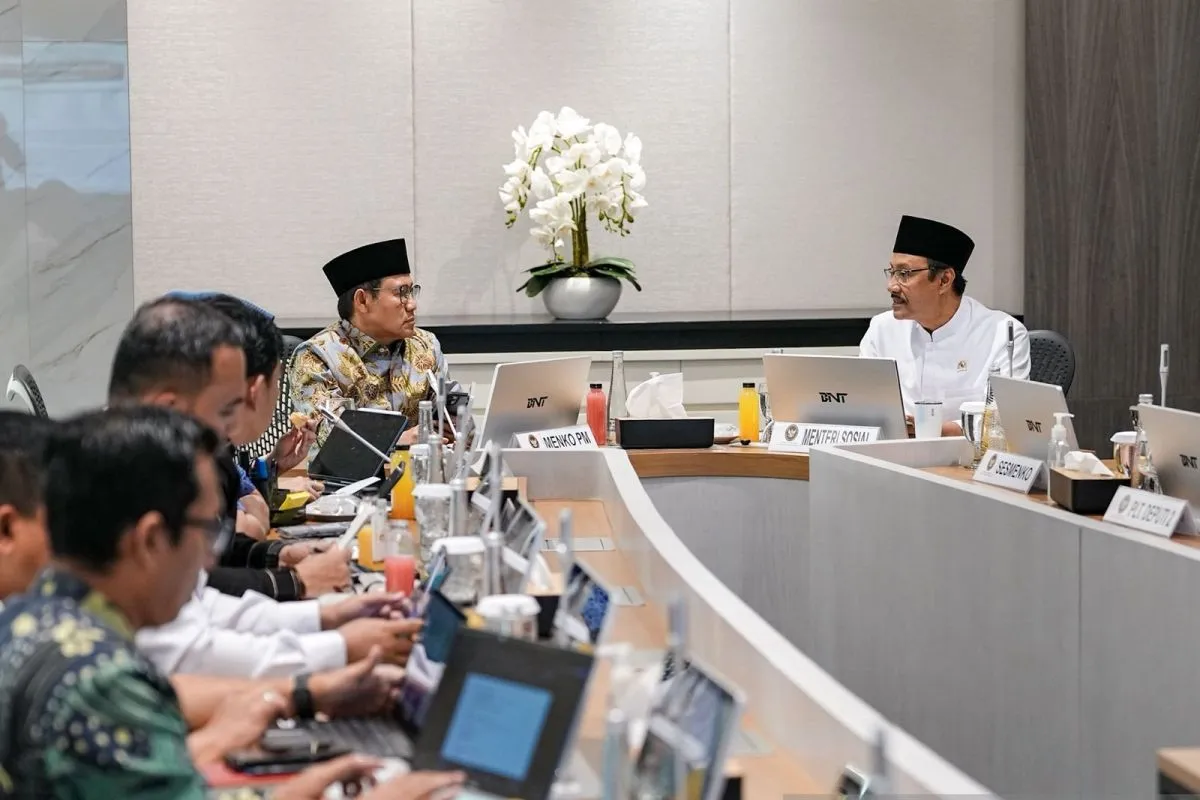
“In the second quarter of the year, more than 470,000 families become new beneficiaries of assistance; they did not receive aid in the previous quarter,” Minister of Social Affairs Saifullah Yusuf remarked, as cited from a statement on Saturday.
Speaking in a ministerial meeting in Jakarta on Friday (May 8), he explained that the expansion of social aid recipients is derived from the ministry’s ongoing collaboration with Statistics Indonesia (BPS) and regional governments to ensure the accuracy of DTSEN.
DTSEN has been designated as a primary guideline for assistance allocation and distribution.
The minister underlined that data accuracy largely hinges on the use of proper technology and the presence of capable human resources at the grassroots level.
“We already have more than 70,000 data operators across villages,” Yusuf said, noting that local systems have been linked to databases managed by the Ministry of Social Affairs and BPS, as well as district, city, and provincial governments.
He went on to say that data integration enables authorities to receive and weigh aid allocation and distribution suggestions while also monitoring developments in family economies in real time.
Furthermore, Yusuf praised village-level data operators for their role in providing assistance to residents requesting data updates.
Meanwhile, BPS Head Amalai Adininggar Widyasanti reported that the national poverty rate stood at 8.25 percent as of September 2025, with citizens classified as extremely poor making up only 0.78 percent of the population.
“As of the second quarter of 2026, the number of residents registered with both DTSEN and civil registration data had reached 289 million,” she stated.
Related news: Village officials key to updating social economic data: Minister
Related news: Villages minister stresses valid data for social welfare programs
Related news: Prabowo pushes data-driven strategy to cut poverty rate: minister
Translator: Anita P, Tegar Nurfitra
Editor: Azis Kurmala
Copyright © ANTARA 2026


