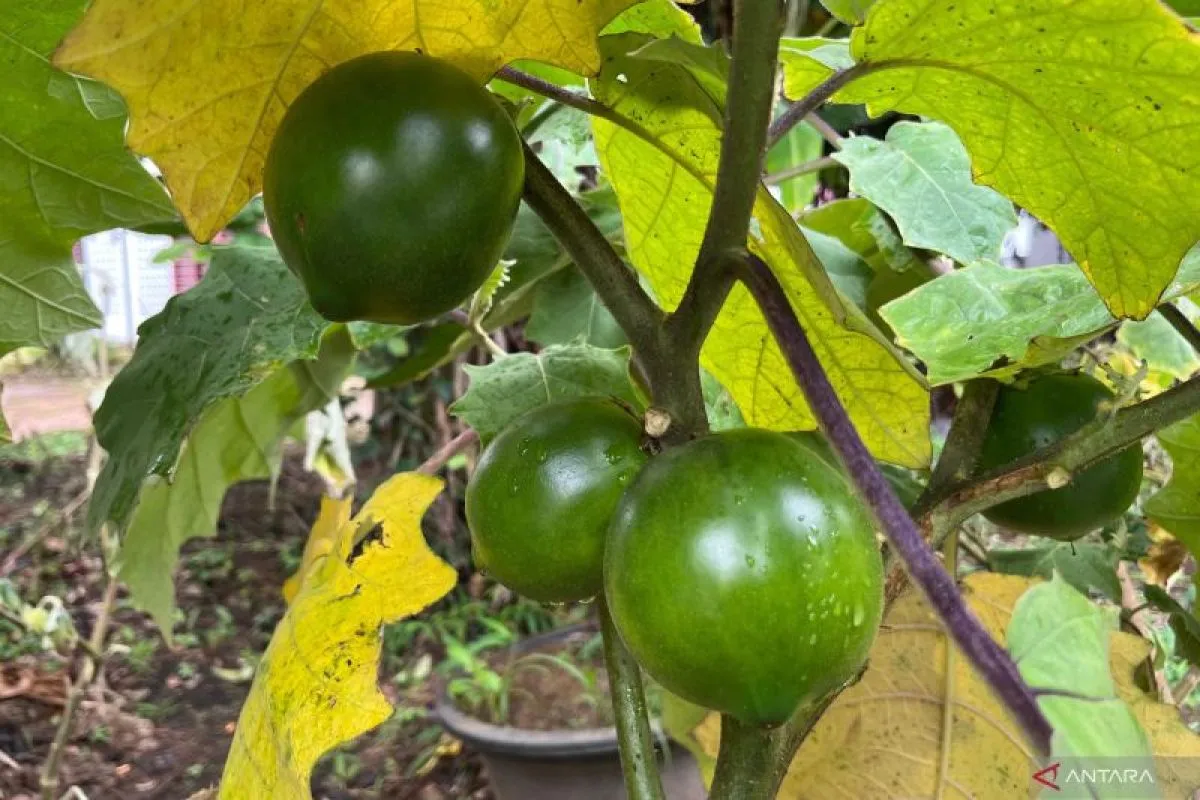
The species, named Solanum kalimantanense T. Djarwaningsih, E.L. Agustiani and M.R. Hariri, was identified by researchers from BRIN’s Research Center for Biosystematics and Evolution and the Research Center for Ecology.
The name honors the team’s scientists, including Research Center for Biosystematics and Evolution researchers Esthi L Agustiani, Tutie Djarwaningsih and Muhammad Rifqi Hariri, as well as Research Center for Ecology researcher Siti Susiarti.
In a statement issued in Jakarta on Sunday, Research Center for Biosystematics and Evolution researcher Muhammad Rifqi Hariri said the species has distinct morphological traits that set it apart from related species in the Solanum genus native to Southeast Asia.
Its characteristics include leaves with nearly equal length and width, very shallow leaf lobes, sparse fine hairs on mature fruit surfaces and larger fruit than Solanum lasiocarpum, Hariri said.
“This finding shows Indonesia still holds enormous biodiversity potential that has not been fully documented scientifically, including among plant groups already known and used by local communities,” he said.
He said DNA analysis using Internal Transcribed Spacer (ITS) markers confirmed significant genetic differences between the new species and its closest relatives.
Research Center for Biosystematics and Evolution researcher Tutie Djarwaningsih said local communities have long known the plant as “terong asam” or “terong dayak” and used it as food.
Its fruit is widely sold at Banjarmasin’s floating markets and commonly cooked as a vegetable dish in South Kalimantan.
In East Kalimantan’s Kenohan district, local residents also use the leaves and young fruit buds in traditional remedies known locally as “wikat” for cancer treatment.
Research Center for Biosystematics and Evolution researcher Esthi L Agustiani said Solanum kalimantanense grows across sandy loam to acidic black soils at elevations ranging from 9 to 1,700 meters above sea level.
The species has been recorded in parts of East and South Kalimantan and is found across diverse habitats.
Initial assessments indicate the species has a limited population and could qualify as vulnerable under criteria set by the International Union for Conservation of Nature.
“An integrative approach combining morphological observation and DNA barcoding allowed us to distinguish this species more accurately from its close relatives,” Agustiani said.
The findings were published in Volume 15, Number 1 of Taprobanica in 2026.
Related news: Indonesia urges conservation efforts ahead of COP17 biodiversity talks
Translator: Sean Filo Muhamad, Martha Herlinawati Simanjuntak
Editor: M Razi Rahman
Copyright © ANTARA 2026


