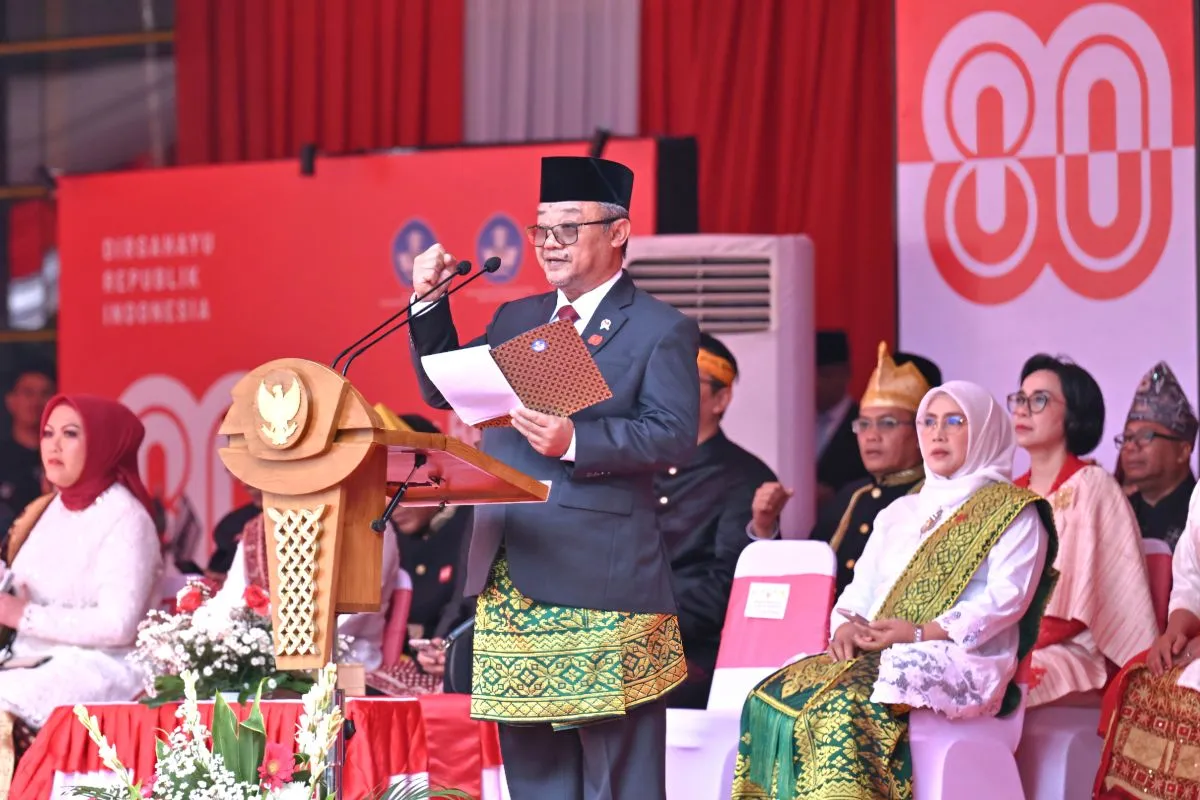
“With the President’s support, our education system will gradually improve. Facilities and infrastructure will be upgraded, teacher welfare will be strengthened, training programs will be enhanced, and student assistance through the Smart Indonesia Program (PIP) will continue,” Minister Mu'ti stated in Jakarta on Sunday.
He also affirmed that various education funds, including the School Operational Assistance (BOS), will continue to be distributed as intended.
“Hopefully, with this budget, our education system will improve further, allowing us to make significant strides in raising the quality of education in Indonesia,” he added.
In his address at the House of Representatives (DPR) plenary session in Jakarta on Friday (August 15), President Prabowo emphasized that education is key to developing globally competitive and high-quality human resources.
"The government is committed to fulfilling the constitutional mandate of allocating 20 percent of the national budget to education—amounting to approximately 757.8 trillion rupiahs for 2026, the largest in our history," Prabowo stated.
However, the president emphasized that the government must remain vigilant to ensure that education spending is well-targeted.
This substantial budget allocation will support a wide range of priorities, including improving school and university facilities, expanding scholarship programs, renovating thousands of schools, and enhancing the quality and welfare of teachers and lecturers.
Of the total budget, 178.7 trillion rupiahs has been earmarked for salaries, professional development, and welfare for educators.
Adequate funding is also being provided for professional allowances for both non-civil servant teachers and those appointed by regional governments.
Meanwhile, 150.1 trillion rupiahs will be allocated to upgrade educational facilities at schools and universities. This year, the government plans to renovate at least 13,800 schools and 1,400 madrasahs.
To support digital learning, 288,000 smart screens will be distributed to schools nationwide, enabling students in remote areas to access lessons from top educators virtually.
In line with these efforts, the government is also strengthening education assistance programs such as the Smart Indonesia Program (PIP), which supports 21.1 million students, and the KIP Kuliah scholarship program, which benefits 1.2 million university students.
Additionally, vocational education will be reinforced with a curriculum more closely aligned with labor market demands, ensuring graduates are well-prepared to meet the challenges of the modern industrial world.
Related news: Ministry calls on independence meaning for women and children
Related news: Indonesia reinforces patriotism among youth through new learning
Translator: Hana, Azis Kurmala
Editor: Aditya Eko Sigit Wicaksono
Copyright © ANTARA 2025


