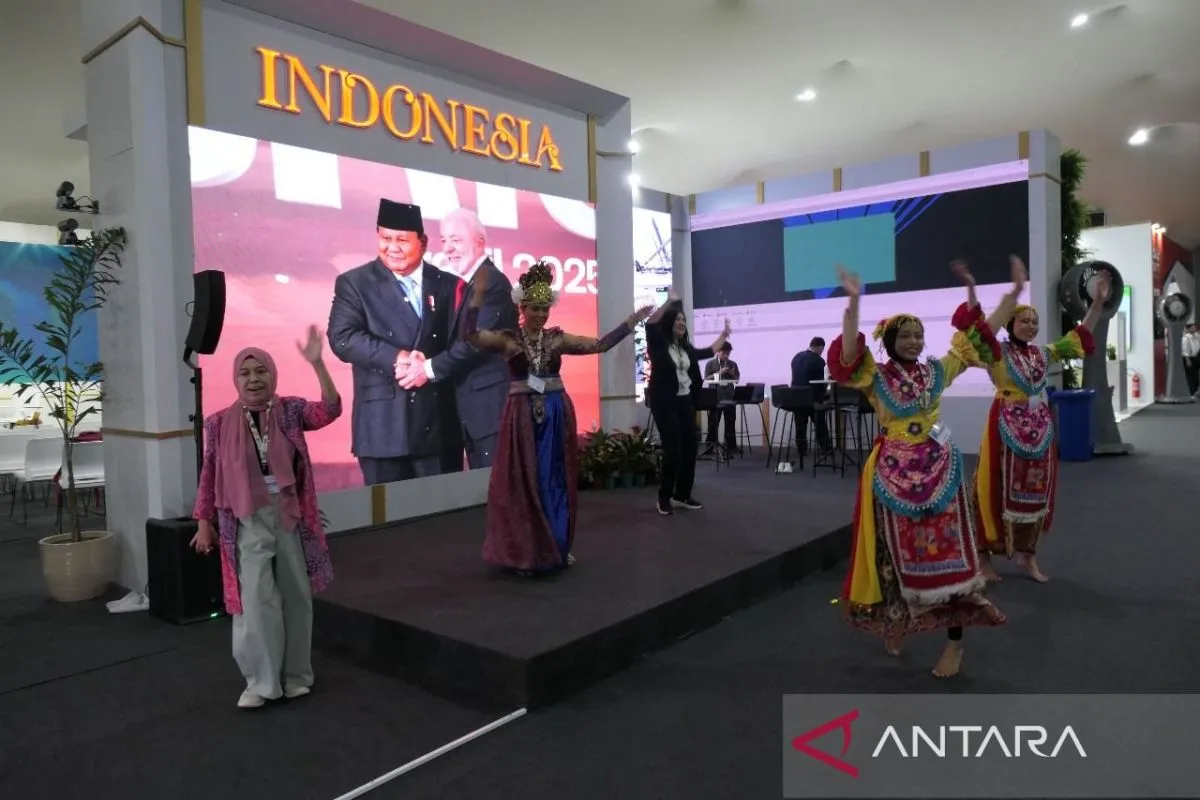
During the high-level series, marked by tough international negotiations and technical incidents, Indonesia managed to engage partners in fruitful diplomatic initiatives, both through the Indonesia Pavilion and conventional talks.
Throughout the two-week conference, the Indonesia Pavilion stood firm as a symbol of the country’s leadership and determination to foster a carbon market defined by integrity and accountability.
Beyond showcasing Indonesia’s ongoing environment-oriented initiatives, the pavilion was envisioned as a sophisticated and innovative diplomatic tool, designed to demonstrate the nation’s readiness to embark on a journey toward a low-emission economy.
“This pavilion serves as a platform for exchanging knowledge and ideas, realizing the shared goals established by the global community in the 2015 Paris Agreement and reaffirmed in subsequent accords,” President Prabowo Subianto's Special Envoy for Energy and Climate Change, Hashim Djojohadikusumo, said during the pavilion’s inauguration on November 10.
Green innovation
The Indonesia Pavilion has proven to be an effective magnet, attracting over five thousand visitors with an engaging display of the government’s green initiatives related to various fields, including the forestry sector, energy transition, eco-friendly industry development, and waste management innovation.
For roughly two weeks, the Indonesian exhibit featured more than 50 policy discussion sessions involving 60 experts and facilitated the country in forging strategic partnerships with over 100 stakeholders.
Among the most prominent sessions that the pavilion presented was a forum themed “Carbon Connection for Climate Action,” which was designed as a strategic venue to link domestic carbon projects with potential foreign partners seeking high-quality carbon credits.
The forum resulted in letters of intent for the trade of a total of 2,754,680 tons of carbon emissions, originating from 44 projects submitted by 28 proponents active in the energy, forestry and land-use (FOLU), and waste management sectors.
More than just a number, this achievement reflects the international community’s trust in the integrity of Indonesia’s carbon market, demonstrating that the country has moved beyond rhetoric in its commitment to balancing climate action with economic growth.
Additionally, Indonesia maximized the pavilion to enhance its cultural appeal and win the goodwill of international delegations through showcases of dance, music, traditional attire, and cuisine.
Bilateral advancements
Beyond the hustle and bustle at the Indonesia Pavilion, around 130 Indonesian negotiators went all out to formulate fair global climate action plans, all while safeguarding national interests.
In addition to joining the core events of COP30, the Indonesian delegation actively engaged foreign governments and international bodies, aiming to pave the way for meaningful progress and offset the sluggish, underwhelming journey toward consensus at the multilateral level.
“Our plan is to hold as many bilateral talks as possible because we cannot afford to stand idle while waiting for a global consensus to be achieved. We therefore aim to foster cooperation not only with countries but also with international bodies,” Environment Minister Hanif Faisil Nurofiq stated on the sidelines of the conference.
This approach led to prolific diplomatic engagements with Sweden, the Republic of Congo, Norway, Canada, the Democratic Republic of Congo (DRC), Japan, Brazil, the United Kingdom, Finland, China, Germany, Austria, and New Zealand, as well as with the UN Environment Programme and the Gold Standard.
Indonesia’s gains from these engagements went beyond talks or plans, as the country launched the operationalization of the International Tropical Peatland Center together with the Republic of Congo and the DRC.
During COP30, Indonesia recorded over US$400 million in carbon trading, including a deal for 12.5 million tons of carbon purchased by the Norway-backed Global Green Growth Institute from renewable energy projects of Indonesia’s state electricity company, PLN.
On top of that, the country launched its Blue Carbon Ecosystem Roadmap and Action Guidelines, reinforcing the integration of coastal and marine ecosystems into Indonesia’s Second Nationally Determined Contribution document, with the goal of positioning mangroves, seagrass beds, and tidal salt marshes as strategic components of emission reduction efforts and climate resilience building.
Climate and national interests
As stated earlier, Indonesia participated in a series of activities at COP30 to contribute to the global climate agenda without compromising its national interests and position. This was particularly evident when the country openly voiced opposition to certain provisions in the Belém Gender Action Plan adopted during the conference.
Ary Sudijanto, Deputy for Climate Change Control and Carbon Economic Value Governance at the Environment Ministry, stated that Indonesia’s national policy framework does not recognize the term “data disaggregated by gender and age” as outlined in the action plan. He argued that the term’s implementation should not undermine the national policies of signatory countries.
Nevertheless, Indonesia remains committed to supporting the execution of the global action plan, ensuring its implementation aligns with applicable regulations and the principle of common but differentiated responsibilities (CBDR) to promote fair and proportionate burden sharing.
Indonesia also voiced concerns over the omission of adaptation finance figures in the final decision text on adaptation, which forms part of the broader Belém Package adopted at COP30.
Equally notable is Indonesia’s call for concrete financing, technological support, and capacity-building assistance to help countries contribute effectively to achieving the Global Goal on Adaptation.
Unexpected hurdles
COP30, beyond its diplomatic proceedings, was also marked by two major non-technical disruptions, including a heated clash on November 11 between security officers and protesters attempting to force their way into the venue.
The incident left several protesters with minor injuries and prompted organizers to strengthen security protocols by deploying additional guards and expanding the sterilized perimeter.
As the conference drew to a close, a fire broke out on November 20. Firefighters managed to extinguish the blaze—believed to have started at a country pavilion in the Blue Zone—within six minutes, but the incident left 27 people requiring medical care and disrupted ongoing discussions. Fortunately, no one sustained burns.
Neither of these two incidents deterred the Indonesian delegation from carrying out its diplomatic duties. It is fair to say that while Indonesia successfully opened avenues for promising green initiatives, the delegation also returned home with several issues to address.
Despite the challenges, Indonesia managed to leverage the global conference to lay a solid foundation for a more ambitious, yet realistic, national climate action agenda.
Related news: COP30 ends as negotiations continue toward a final deal
Related news: Fire at COP30 Brazil: 21 treated after smoke fills blue zone in Belém
Related news: Indonesia outlines 12.7 million ha forest recovery target at COP30
Translator: Anita P, Tegar Nurfitra
Editor: Azis Kurmala
Copyright © ANTARA 2025


