Mu’ti stressed that student safety and uninterrupted learning are the ministry’s top priorities.
He said emergency-learning policies have been delegated to regional governments, which best understand local conditions.
“We understand that this is an unwanted situation,” he said.
Learning during emergencies, he added, will combine online instruction with limited in-person classes. Temporary classrooms, including tents, will be used where needed.
The ministry has adjusted school hours and set up makeshift learning spaces to maintain continuity.
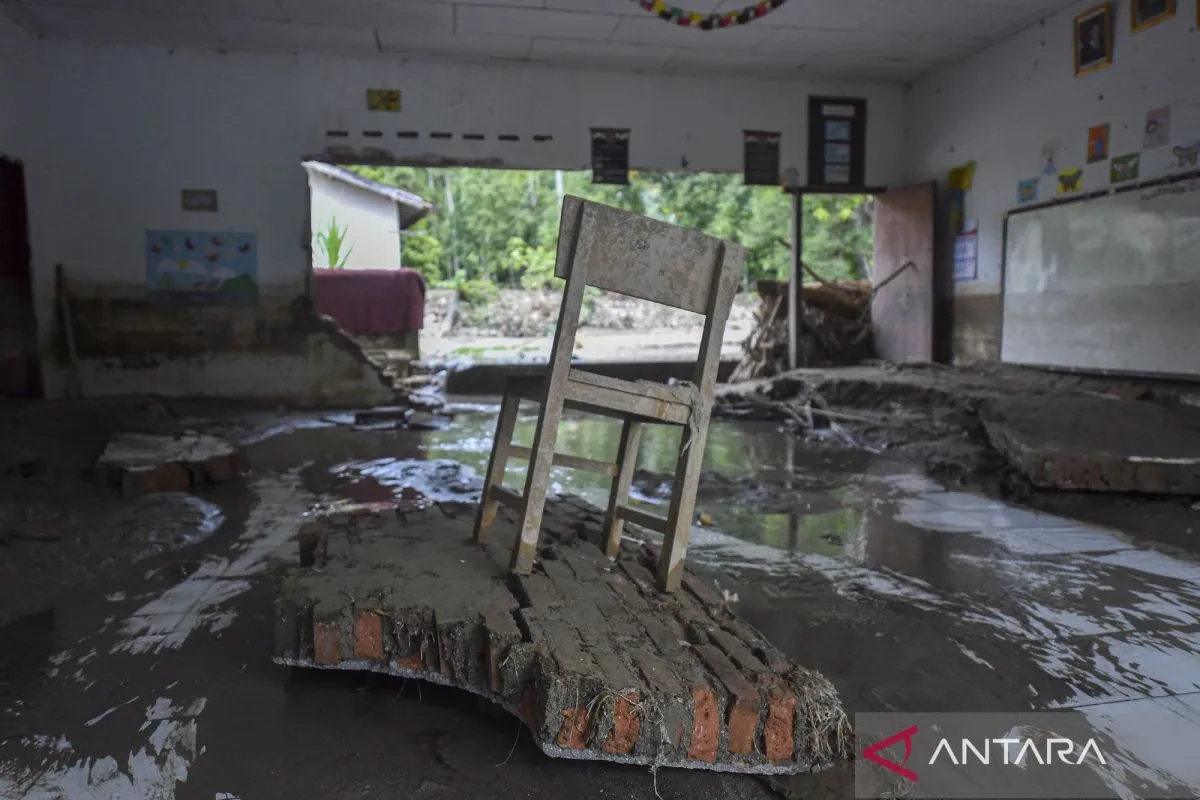
At Batang 1 State High School, 15 of 21 classrooms remain usable, prompting administrators to split classes into morning and afternoon sessions.
Around 25 tents have been prepared for severely damaged schools and will be distributed to the hardest-hit areas.
Online learning will serve as an alternative, though several schools have suspended classes temporarily to ensure safety, Mu’ti said.
Related news: Ed Ministry mobilizes US$800 thousand to rebuild disaster-hit schools
Regional governments will manage end-of-semester exams, which must be held flexibly to reflect local needs and capacity, he added.
The ministry has allocated funds to repair damaged facilities, with each school receiving between Rp 10 million and Rp 25 million (US$600 to US$1,500), depending on the level of destruction.
Additional data are being collected to guide budget priorities for 2026, Mu’ti said.
Other assistance includes Rp 6.4 billion (US$385,000) in Emergency Response Aid; Rp 293 million (US$17,600) for death benefits and medical support for students and teachers; 10,000 school supply kits; and 74 emergency tents.
Mu’ti said further aid will be deployed as necessary.
Related news: Govt races to reopen schools after floods leave one million displaced
Translator: Hana Dewi Kinarina Kaban, Mecca Yumna
Editor: Rahmad Nasution
Copyright © ANTARA 2025


