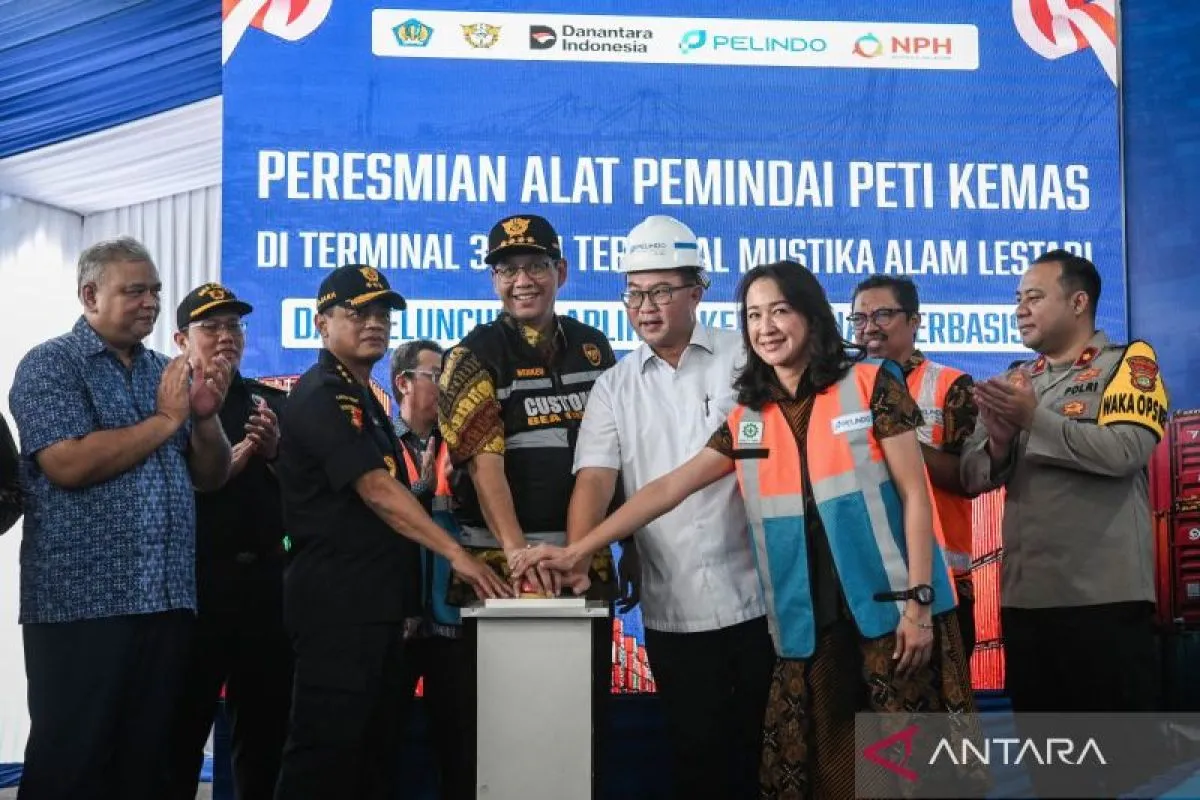
Digital transformation in customs is not an option; it is a necessity.Jakarta (ANTARA) - Indonesia's Minister of Finance Purbaya Yudhi Sadewa inaugurated three new technological innovations aimed at strengthening customs and excise surveillance at Tanjung Priok Port, Jakarta.
The three technologies introduced are: X-ray container scanners equipped with Radiation Portal Monitors (RPM), the Self Service Report Mobile (SSR-Mobile) application, and the Trade AI system.
Speaking at a press conference in Tanjung Priok on Friday, Sadewa emphasized the necessity of digital transformation in customs operations.
“Digital transformation in customs is not an option; it is a necessity. We must maintain public trust and safeguard economic competitiveness. Furthermore, we must combat smuggling in a more modern way," Sadewa said.
The new container scanners are fitted with RPM features, allowing them to detect nuclear materials and radioactive substances within cargo containers.
The RPM system ensures fast, accurate, and safe inspections without physically opening the container, which directly contributes to operational efficiency.
The implementation of these scanners also reinforces efforts to prevent import-export violations and fraudulent practices that could harm the economy.
Meanwhile, the SSR-Mobile is a self-reporting feature integrated into the CEISA 4.0 Mobile application.
This technology incorporates geotagging, real-time logging, and Artificial Intelligence (AI) integration to monitor the entry and exit of goods at customs facilities.
Through SSR-Mobile, companies can independently handle processes such as gate-in, stuffing, unloading, and gate-out, while the system’s integrated AI performs automatic risk analysis.
“With this transformation, bureaucracy will be reduced, compliance will increase, and opportunities for fraud will be closed,” Sadewa commented.
The final innovation, Trade AI, is designed to increase the accuracy of import analysis.
This technology is specifically developed for the early detection of fraudulent practices such as under-invoicing, over-invoicing, and potential trade-based money laundering—issues that severely erode state revenue.
The technology will be further developed to include features for analyzing customs value, classifying goods, and verifying documents, all integrated within the CEISA 4.0 system.
“Customs has been quite fast-moving in recent weeks. They are indeed quick-witted,” Sadewa concluded, praising the rapid adoption of these technologies.
Related news: Minister flags IMIP Airport missteps, offers to deploy officers
Related news: Indonesia to fine illegal secondhand clothes, bag importers
Translator: Imamatul Silfia, Aditya Eko Sigit Wicaksono
Editor: M Razi Rahman
Copyright © ANTARA 2025


