Professor of Chemistry at Pattimura University Hellna Tehubijuluw has underscored the strategic role of inorganic chemistry in transforming industrial waste and local natural resources into high-value functional materials that support sustainable development.
Over the past two decades, Hellna noted, inorganic chemistry has undergone a fundamental transformation. The discipline is no longer confined to studying compound structures; it has evolved into a practical solution to environmental, energy, and materials challenges.
This shift is particularly relevant for Indonesia—an archipelagic nation rich in natural resources yet still burdened by high levels of industrial waste and the underutilization of local materials.
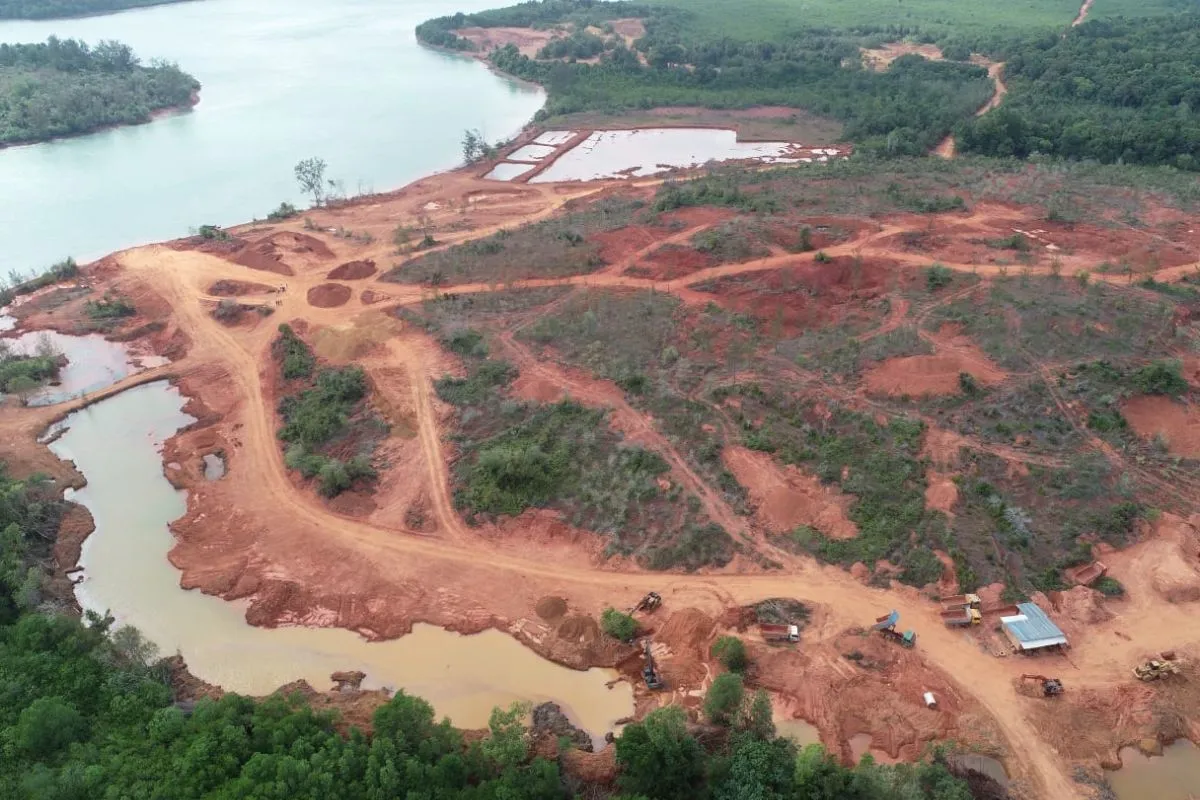
One clear example is red mud, a byproduct of bauxite extraction long regarded as an environmental burden.
From the perspective of inorganic chemistry, red mud can instead be seen as a valuable source of metal oxides with the potential to be transformed into functional materials.
Hellna explained that through inorganic synthesis methods such as hydrothermal processes, sol-gel techniques, impregnation, and coprecipitation, red mud has been successfully converted into synthetic zeolite ZSM-5 and metal oxide-based composite materials.
These materials feature controlled porous structures, high surface areas, and effective adsorption and photocatalytic activity.
They are not only capable of absorbing pollutants but also actively degrading them under light irradiation, making them highly relevant for domestic and industrial wastewater treatment.
The novelty of the research lies in the direct use of waste and local natural materials without complex, costly, and energy-intensive purification processes.
Iron-rich soils, including Humuturi soil in Maluku, have been simply modified into Fe-ZnO–based photocatalytic materials.
This approach reduces production costs while aligning with the principles of green chemistry and a sustainable economy.
From a scientific standpoint, the research contributes to controlling material morphology, understanding the synergy between adsorption and photocatalysis, and strengthening the relationship between material structure and reaction activity. Methodologically, the approach is practical and replicable in laboratories with limited facilities.
The benefits extend beyond academia, opening opportunities for downstream development of non-metallic minerals, the production of derivative products such as silica gel, zeolites, and wastewater adsorbent materials, as well as empowering local communities.
With synergy between universities, local governments, and communities, Hellna said Maluku has a strategic opportunity to develop into a center for inorganic materials research based on local resources in eastern Indonesia.
According to her, these achievements reaffirm that inorganic chemistry is a key instrument in waste transformation, local resource optimization, and sustainable development.
As a professor, she emphasized the moral and academic responsibility to ensure that scientific advances deliver tangible benefits for the people of Maluku, the nation, and the country.
Translator: Ode Dedy Lion Abdul Azis, Primayanti
Editor: Aditya Eko Sigit Wicaksono
Copyright © ANTARA 2026


