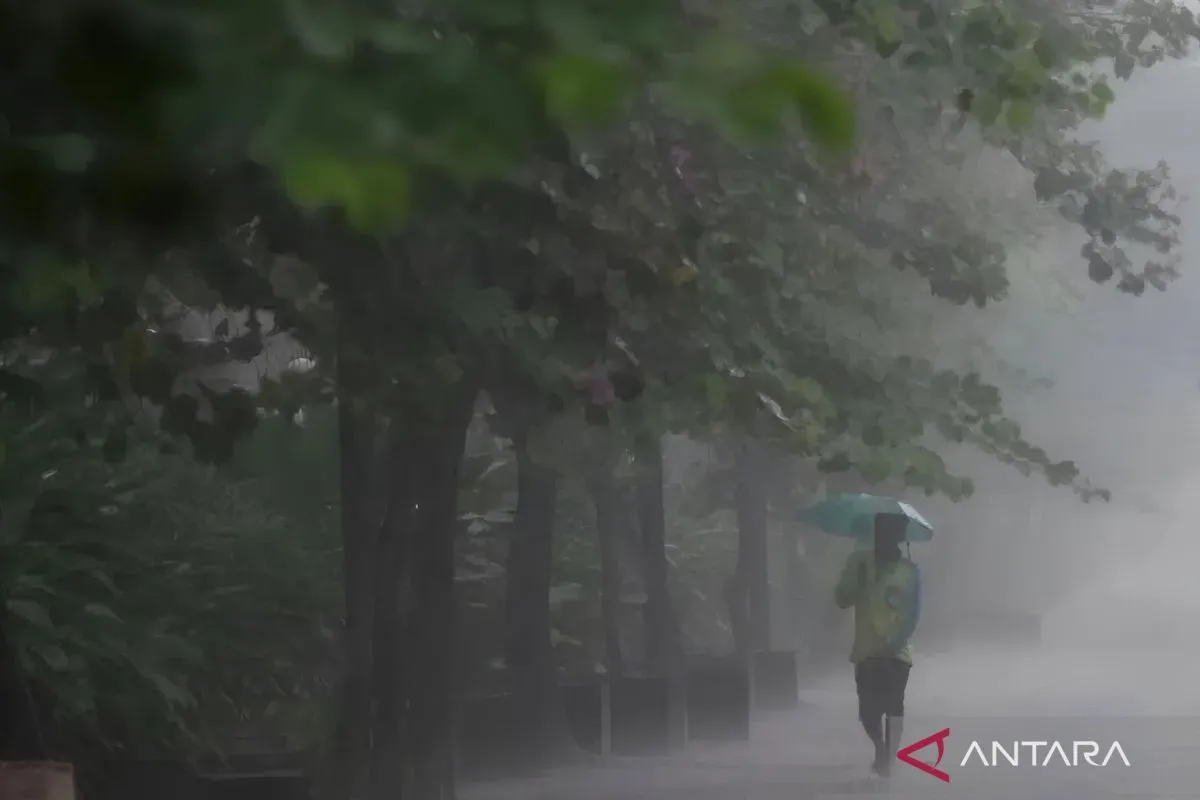
West Nusa Tenggara has fully entered the rainy season, with several areas approaching the peak period, according to Nindya Kirana, a forecaster at the BMKG West Nusa Tenggara Climatology Station, speaking here on Monday.
BMKG data show that rainfall intensity across the region declined during the first decade of January 2026, from January 1 to 10. This condition is associated with the monsoon break, a period of reduced rainfall that commonly occurs during the rainy season in Southeast Asia.
Despite the recent decrease, Kirana said the public should remain cautious, as heavy rainfall is still likely in the coming period during the peak of the rainy season.
She urged residents to maintain cleanliness and ensure proper water flow in drainage channels, while also remaining alert to the potential for sudden extreme rainfall and strong winds.
BMKG forecasts that high rainfall potential during the period of January 11 to 20, 2026 will be distributed relatively evenly across Lombok and Sumbawa islands.
Rainfall probability of 70 to 90 percent, with intensity exceeding 50 millimeters per ten-day period, is expected across Lombok Island, West Sumbawa District, Sumbawa District, and Bima District.
Areas including Tambora, Sanggar, Pekat, and Labuhan Badas are projected to have a 60 to more than 90 percent chance of experiencing rainfall exceeding 100 millimeters per ten-day period.
Meanwhile, the northern and southern parts of Lombok Island are forecast to have a 50 to 70 percent probability of rainfall exceeding 100 millimeters per ten-day period.
High rainfall with an alert-level indication in the second decade of January 2026 is expected in Pekat sub-district, Dompu District, and Tambora sub-district, Bima District, Kirana said.
During the first decade of January 2026, BMKG recorded rainfall characteristics in West Nusa Tenggara ranging from below normal to above normal. The highest rainfall was observed at the Donggo O'o rain observation post in Bima District, with rainfall reaching 378 millimeters per ten-day period.
The increase in rainfall is supported by several atmospheric factors, including a sea surface temperature anomaly of minus 0.7 degrees Celsius, indicating weak La Nina conditions that are projected to persist into early 2026.
In addition, prevailing westerly winds continue to transport moisture from the Indian Ocean into the West Nusa Tenggara region, while atmospheric wave activity is forecast to remain active over Indonesia through the second decade of January 2026.
Related news: Indonesia readies 5,755 heavy machines to prepare for rainy season
Related news: BNPB urges regions to prepare for potential flooding, extreme weather
Translator: Sugiharto Purnama, Katriana
Editor: Primayanti
Copyright © ANTARA 2026


