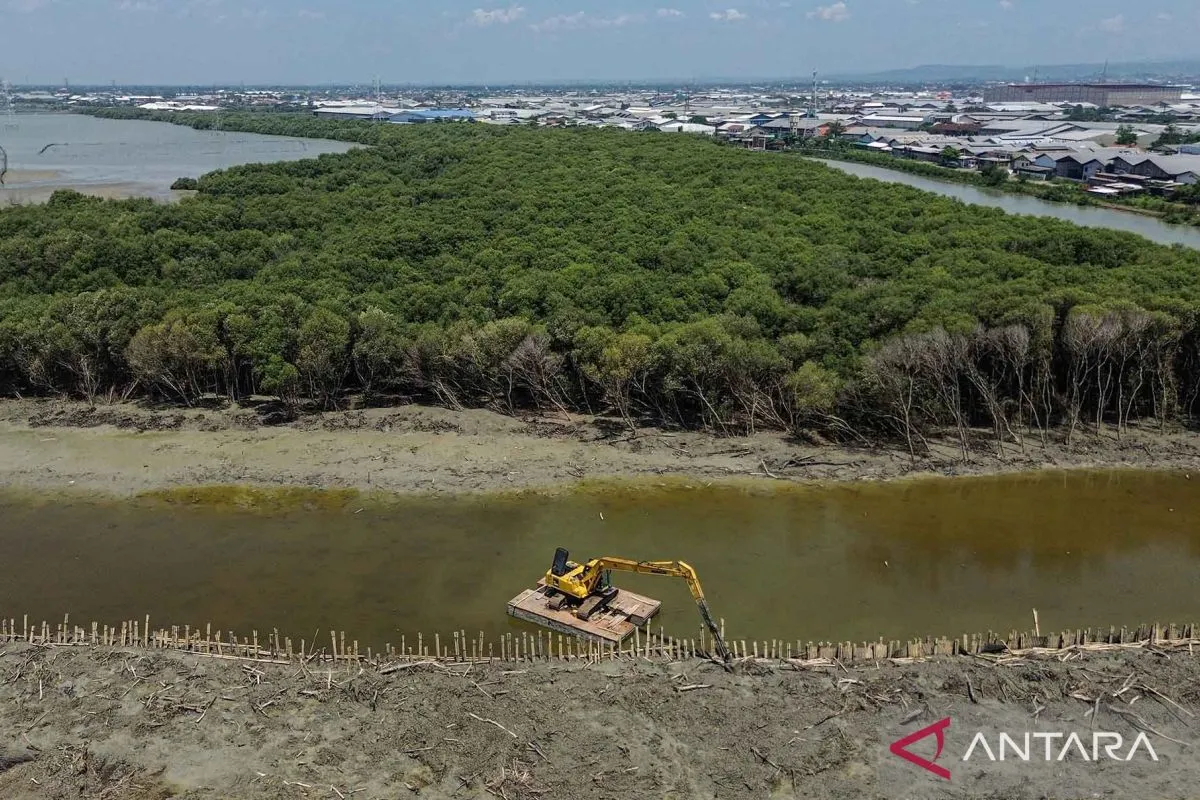
Aan Johan Wahyudi, a researcher at BRIN’s Oceanology Research Center, explained here on Saturday that degradation of seagrass beds in western Indonesia has the potential to release more carbon into the atmosphere than in other regions.
“When we talk about blue carbon, the focus has always been on absorption. However, in carbon accounting, what matters is not only what is absorbed, but also what is emitted,” he said.
Wahyudi used a carbon emission factor method, which quantifies how much carbon is released per unit area of the ecosystem annually due to degradation or disturbance.
“In seagrass ecosystems, the emission factor shows the rate of carbon loss previously stored in seagrass biomass and can indicate early carbon release from coastal systems,” he added.
He also applied chronosequence modeling, comparing relatively healthy seagrass beds with degraded ones to estimate carbon changes over time.
The analysis showed that seagrass carbon emission factors in Indonesia range from 0.53 to 3.25 tons of carbon per hectare per year, with the highest values in areas under high coastal pressure, particularly Java and parts of Sumatra.
Lower values were found in Nusa Tenggara, parts of Sulawesi, and Maluku. “Anthropogenic pressure in densely populated regions increases potential emissions,” Wahyudi noted.
He explained that carbon storage functions can change when seagrass is disturbed. Coastal human activities such as reclamation, dredging, and increased sedimentation can hinder growth, degrade ecosystems, and trigger carbon release.
“Simply put, when seagrass is healthy, it absorbs and stores carbon, but when it is damaged, the decomposition process releases carbon dioxide into the atmosphere,” Wahyudi said.
Related news: RI increases carbon stock by 34,478 Tons of CO2 via Norway partnership
Related news: Indonesia updates emission targets, sets peak for 2030
Related news: A closer look at Indonesia's green diplomatic gains at COP30
Translator: Sean, Kenzu
Editor: Azis Kurmala
Copyright © ANTARA 2026