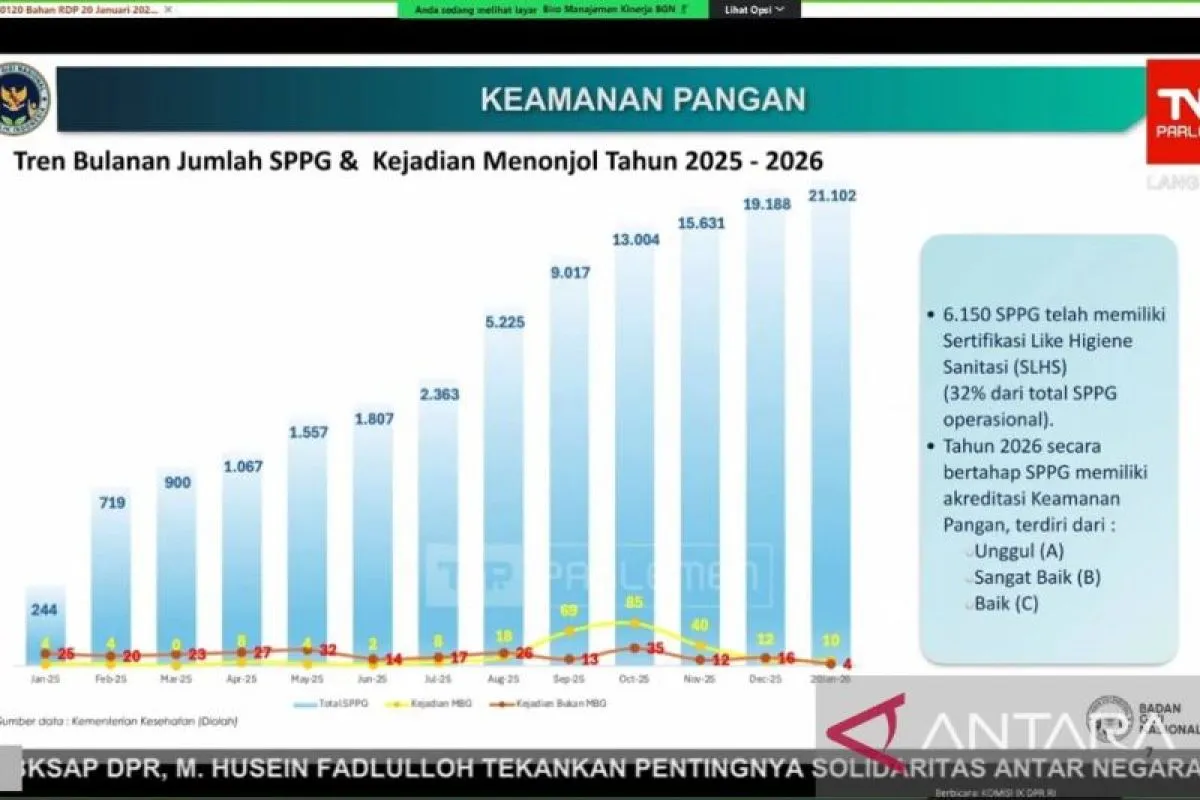
Head of the National Nutrition Agency (BGN) Dadan Hindayana said the number of reported cases has fallen steadily since peaking late last year.
“The peak occurred in October 2025 with 85 cases. It dropped to 40 in November and fell further to just 12 cases in December,” he told reporters.
In January 2026, 10 cases were recorded under the MBG scheme.
“Our target is zero incidents. But violations of standard operating procedures still occur,” Hindayana said, adding that stricter compliance remains a priority.
As of now, 6,150 Nutrition Fulfilment Service Units (SPPGs) — kitchens that prepare meals under the MBG programme — have received Hygiene Sanitation Eligibility Certification (SLHS), representing 32 percent of all SPPGs currently in operation.
He expressed hope that the proportion of certified units would rise significantly this year.
“The share of SPPGs with SLHS stands at 32 percent and we are working to raise it further. In 2026, beyond SLHS, we will also implement accreditation and certification,” he said.
According to Hindayana, these steps are aimed at lifting the overall quality of services delivered by the programme.
“Accreditation and certification are meant to improve service standards, so we will have SPPGs rated A for excellent, B for very good, C for good, and others that must work harder to meet accreditation,” he added.
Related news: Indonesia's free meals program engages over 18,000 MSMEs: minister
The government has made the Free Nutritious Meals programme a cornerstone of its social policy, seeking to combat malnutrition and improve health outcomes, particularly among children and vulnerable groups.
As of Tuesday, Indonesia had 21,102 SPPGs operating nationwide, serving around 59.86 million beneficiaries.
Daily operational spending for the programme stands at about Rp855 billion, or roughly US$50.4 million, underscoring its scale and fiscal significance.
Officials say tighter oversight, expanded certification and stricter enforcement of hygiene standards will be key to ensuring the programme’s credibility as it continues to expand.
Hindayana stressed that improving food safety remains central to maintaining public trust and ensuring that the ambitious scheme delivers its intended benefits without compromising health.
Related news: Some 55.1 million people receive free nutritious meal in 2025
Translator: Anita, Kenzu
Editor: Rahmad Nasution
Copyright © ANTARA 2026


