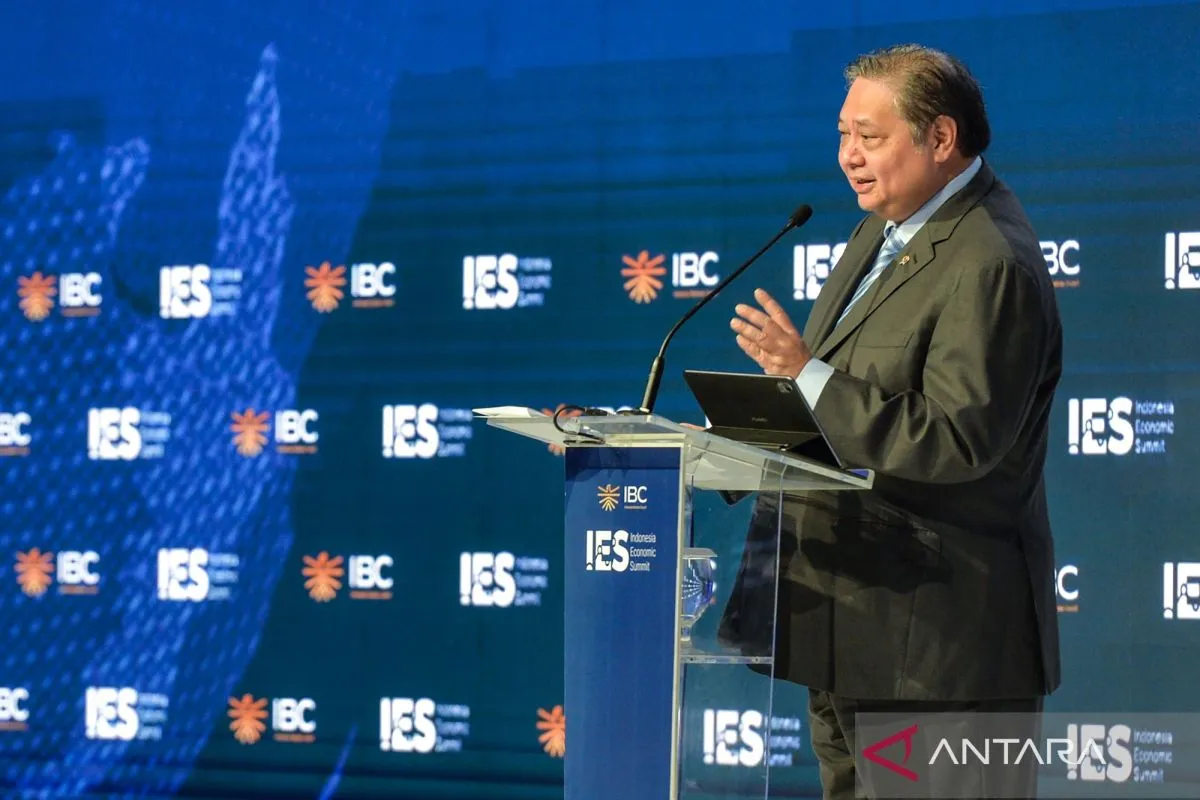
Coordinating Minister for Economic Affairs Airlangga Hartarto acknowledged Malaysia's advancement in developing the semiconductor industry.
However, in terms of new-generation chip technology, he considered the market is still open and provides room for collaboration between the two countries.
"Malaysia is more advanced than Indonesia in the semiconductor industry. However, in terms of new-generation semiconductors, the market is still open. Therefore, Indonesia asks Malaysia to assist in developing a new generation of semiconductors," he said at the 2026 Indonesia Economic Summit (IEC) in Jakarta on Tuesday.
According to Hartarto, cooperation with Malaysia is important since the country has more experience in the semiconductor ecosystem.
Therefore, Indonesia sees opportunities for collaboration while building human resource capacity.
He then emphasized Indonesia's potential in developing a new generation of semiconductors, especially with full government support, due to President Prabowo Subianto's commitment to supporting the development of a new generation semiconductor industry as part of the national industrialization strategy.
In his remark, the minister also informed that collaboration currently being initiated by the government with strategic partners encompasses the simultaneous development of three phases, thus saving years of research time.
The three phases are developing a startup ecosystem, industrial transformation, and developing chips for computing needs.
He addressed that the development of Indonesia's future chip industry will focus on the digital automotive and electronics sectors.
Hartarto added that regional collaboration is key to facing global competition in the chip industry.
The new generation of semiconductors is crucial for the development of technology for mobile devices, the internet of things (IoT), and personal computers, which still offers significant opportunities for developing countries, he continued.
Thus, he hopes that cooperation with Malaysia will encourage knowledge transfer, strengthen supply chains, and increase the added value of the domestic industry.
"Indonesia has strengths in the upstream sector. Starting with silica sand, a floating glass industry, and followed by the development of solar panels and in the water sector. With collaborative design, the printing process will be the next industry we can develop together," he concluded.
Related news: Chip design, talent key to semiconductor independence: Minister
Related news: Indonesia boosts semiconductor sector to strengthen competitiveness
Related news: Indonesia to set up new state-owned textile firm with US$6 billion
Translator: Bayu Saputra, Resinta Sulistiyandari
Editor: Azis Kurmala
Copyright © ANTARA 2026


