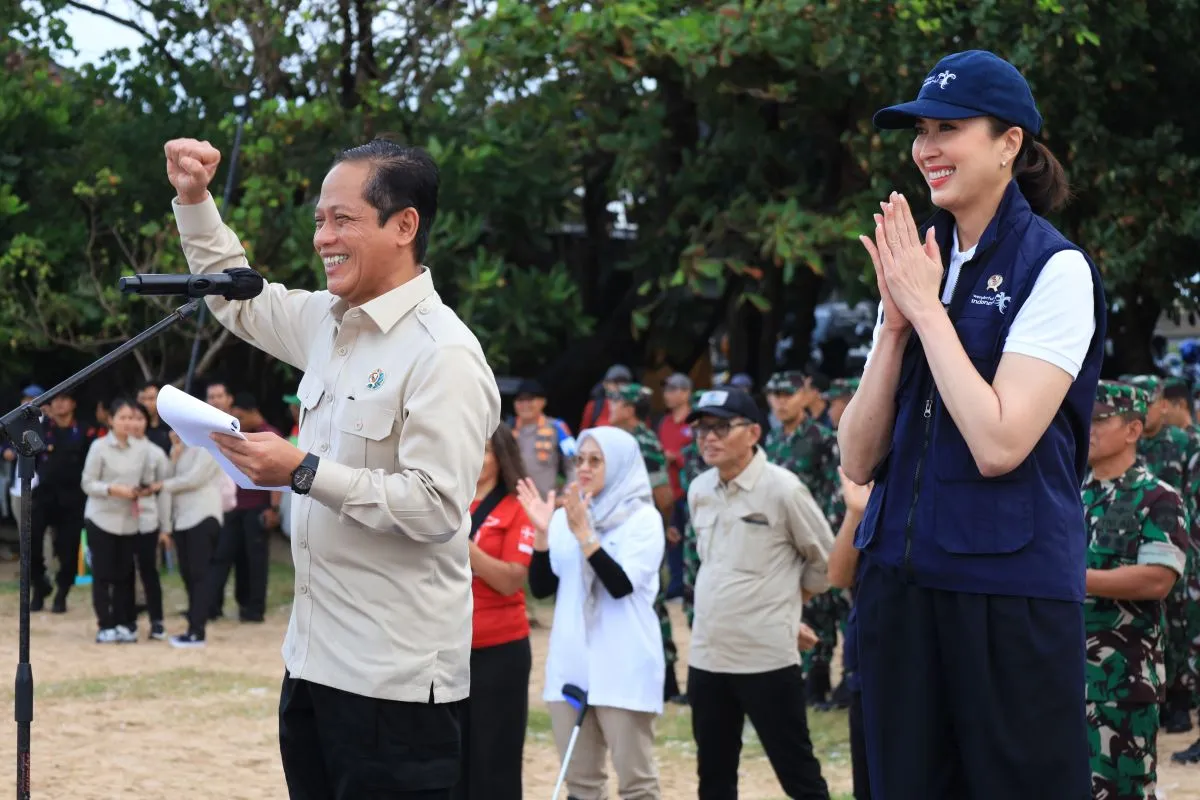
In a statement confirmed on Saturday, Nurofiq said Indonesia’s waste problem has entered a critical phase. Of the approximately 143,000 tons of waste generated daily nationwide, only about 24 percent is properly managed.
“The waste currently being handled includes specific types that do not originate from households and require special treatment. This waste emerges under certain conditions, including the impact of flooding, and therefore must be managed in a more appropriate and controlled manner,” he said.
According to the minister, these conditions directly affect environmental health, the coastal economy, and Indonesia’s image as a global tourism destination.
Following a waste clean-up operation at several beaches in Bali on Friday, February 6, Nurofiq noted that marine debris remains a serious challenge, particularly during the west monsoon season, when waste from surrounding waters is carried ashore along Bali’s coastline.
He said the clean-up effort was carried out as part of the National ASRI Indonesia Movement to reinforce integrated and sustainable marine waste management from upstream to downstream.
Nurofiq also emphasized that under Law No. 18 of 2008 on Waste Management, primary authority over waste management rests with regional heads, supported by the central government, the business sector, and active community participation.
Meanwhile, the ministry continues to promote stronger waste management systems through the development of waste banks, integrated waste processing facilities, and the use of environmentally friendly waste treatment technologies in urban and coastal areas.
Related news: Indonesia orders nationwide cleanup to tackle growing waste crisis
Related news: Indonesia turns to households to tackle waste emergency
Translator: Prisca, Kenzu
Editor: Primayanti
Copyright © ANTARA 2026


