If not cut, I believe the money would lead to corruption,Jakarta (ANTARA) - President Prabowo Subianto stated that the government could save up to Rp308 trillion (US$17,6 billion) in the budget after implementing efficiency policies by cutting unproductive spending.
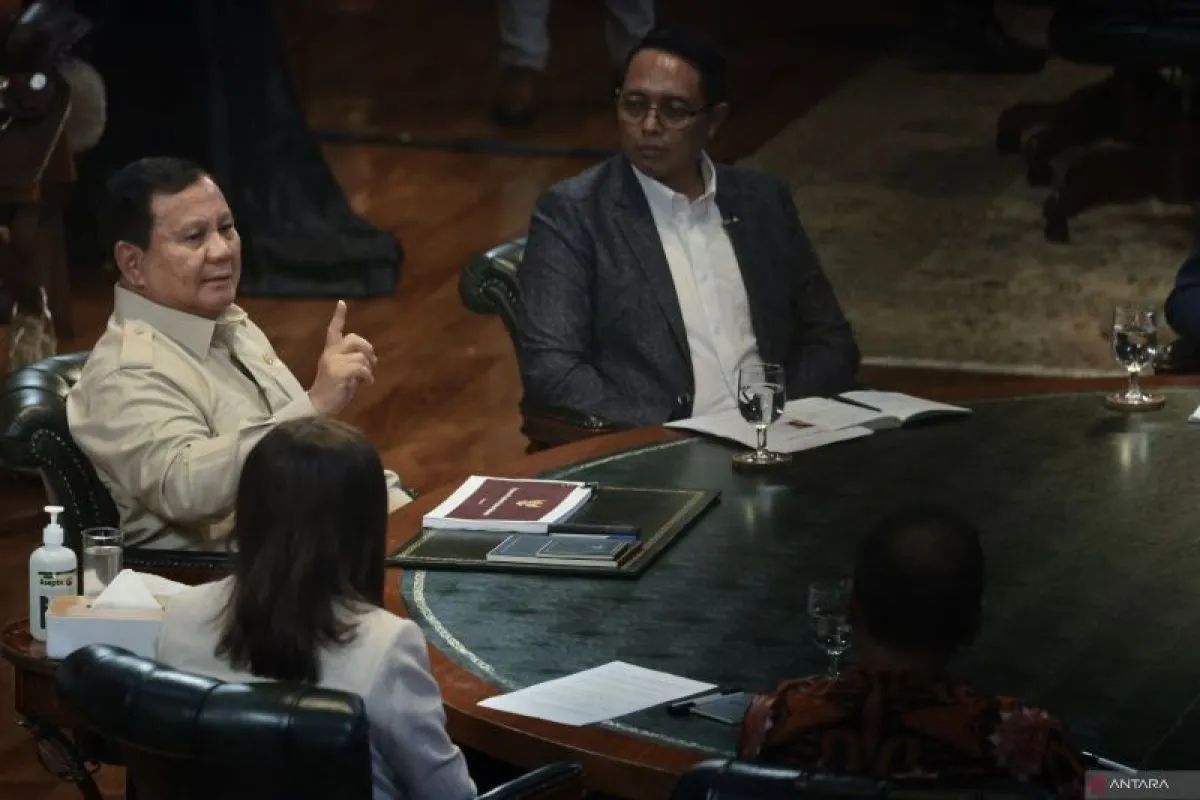
In a discussion with journalists and economists at his private residence in Hambalang, West Java, earlier this week, the head of state conveyed that the massive efficiency measures implemented in the state budget aim to protect public funds from potential corruption.
"When we first implemented efficiency measures, we were able to save Rp308 trillion from the central government. If not cut, I believe the money would lead to corruption," he said as quoted from an official broadcast by the Government Communications Agency (Bakom) in Jakarta on Thursday (March 19).
Prabowo also highlighted the need for efficiency considering Indonesia's ICOR score, which is higher than that of neighboring countries.
Incremental Capital Output Ratio (ICOR) is an indicator that shows how efficiently a country uses its budget. The lower the ICOR score, the more efficient the country is.
According to Prabowo, Indonesia's ICOR score is 6.5, while neighboring countries such as Thailand and Malaysia each scored 4, and Vietnam 3.6.
Reflecting on the state budget, which is approaching Rp3.700 trillion (approximately US$230 billion), Prabowo estimated budget inefficiency at approximately 30 percent, or around US$75 billion.
During the discussion, the president outlined unproductive spending items that had been cut, including purchases of office stationery, expenses for meetings and seminars outside the office, and annual procurement of goods such as computers and office equipment.
Prabowo also noted that some studies were conducted without addressing key issues, such as poverty and employment.
He emphasized that efficiency measures will remain in place, as many countries, including Indonesia, face potential crises.
Prabowo added that several countries had anticipated possible crises by implementing policies such as reducing the working week and allowing work-from-home systems.
"I have seen other countries, for example, reduce the working week from five to four days, such as the Philippines and Pakistan. We did it successfully during COVID. I think we can do the same—perhaps 75 percent of employees can work from home," he said.
Related news: Indonesia turns to efficiency to keep budget deficit below 3 percent
Related news: President Prabowo defends budget cuts to curb misuse risks
Related news: RI Govt to set budget cuts to offset Mideast risks
Translator: Genta Tenri Mawangi, Resinta Sulistiyandari
Editor: M Razi Rahman
Copyright © ANTARA 2026


