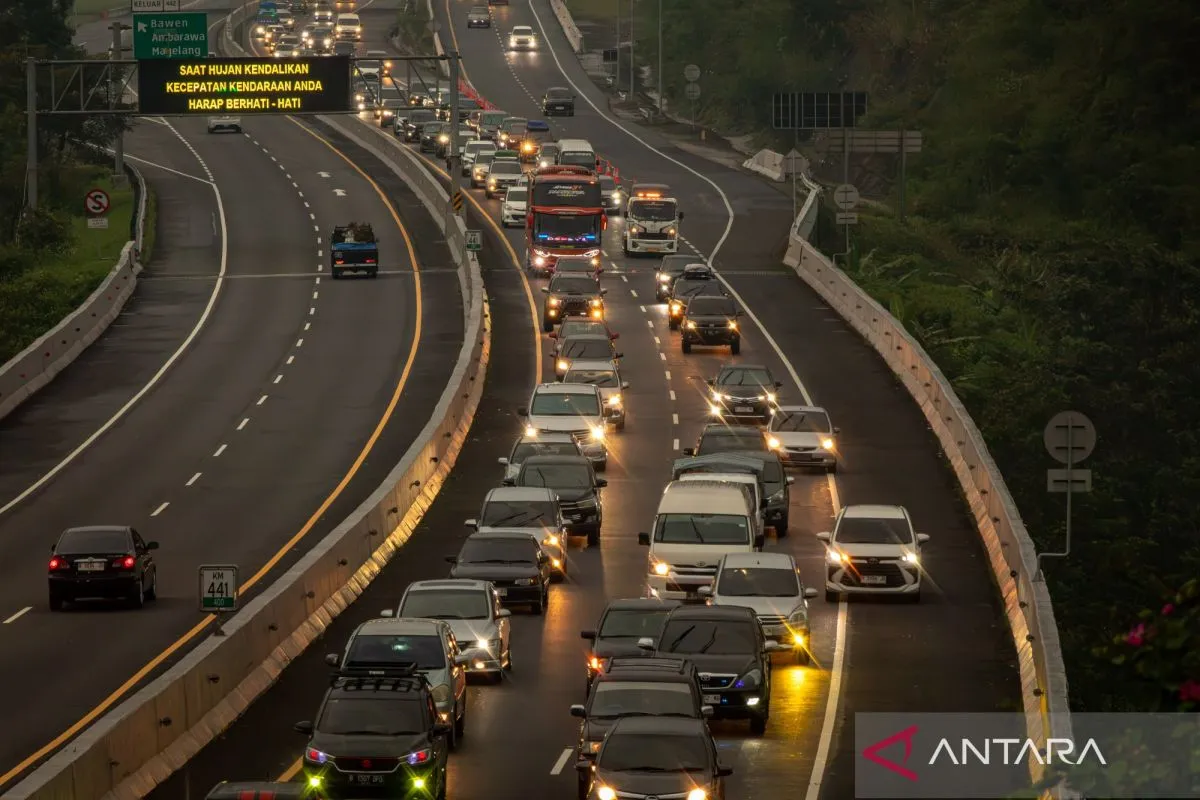
According to the Ministry of Transportation, the total number of travelers during the 2026 Eid al-Fitr travel season reached 147.55 million people across Indonesia.
Cumulative data from the ministry show that 10,887,584 passengers used public transport from March 13, 2026 (eight days before Eid al-Fitr) through to the Eid day.
This figure marks an 8.58 percent increase compared to the 2025 Eid travel period, which saw 10,027,482 passengers.
Based on the mode of transport, the number of rail passengers made up the largest share, with 3,349,343 people, up 13.46 percent from 2,952,055 in the previous year.
Meanwhile, air passengers stood at 2,397,192, reflecting an increase of 2.95 percent from 2,328,551 in 2025.
Ferry transport recorded 2,664,004 passengers, a 14.01 percent increase from 2,336,619, followed by bus transport with 1,693,931 passengers, up 9.37 percent from 1,548,874.
The surge across all modes of transportation underscores that the celebration of the 2026 Eid al-Fitr, falling on March 21, 2026, is more than just a tradition; it is an effective engine for economic growth.
This engine drives benefits from urban areas to the regions, revitalizing the local economy as a whole.
Those returning to their hometowns usually bring "sweeteners," such as cash and gifts, to share during the holiday.
The circulation of money, typically concentrated in major cities like Jakarta, shifts massively to the regions, creating a more equitable economic distribution.
Head of the Center of Macroeconomics and Finance at the Institute for Development of Economics and Finance (INDEF), M. Rizal Taufikurahman, noted that the Ramadan and Eid al-Fitr period will drive annual economic growth to between 5.1 and 5.2 percent (year-on-year/YoY) in the first quarter of 2026.
Meanwhile, the Indonesian government has set a target of securing a growth of around 5.5 percent to 5.6 percent (YoY) in the first quarter of 2026, one of which is expected to be supported by the Eid holiday season.
Spending on Eid essentials—ranging from new clothes and food to gifts for family—serves as the primary catalyst. Furthermore, expenses for transportation, accommodation, and tourism further amplify the flow of money.
Along the homecoming routes, villages and small towns transform into the main economic stage.
Restaurants are packed, traditional markets are revitalized, and small business owners enjoy a significant surge in customers.
According to INDEF, the boosted public consumption during Ramadan and Eid al-Fitr could contribute up to 0.5 percent to first-quarter economic growth.
Household consumption has also spiked sharply, with estimates suggesting a 15–20 percent increase compared to normal periods.
This surge establishes Eid al-Fitr as one of the primary drivers of the domestic economy, given that Indonesia’s economic structure remains heavily dependent on consumption.
Research firm NEXT Indonesia Center reported that the circulation of cash for the 2026 Eid period reached Rp1,370 trillion.
This figure represents a 10.4 percent increase, or Rp130 trillion, compared to the previous year. Additionally, disposable funds held outside the banking system reached Rp1,241 trillion, up Rp104 trillion from the same period last year.
The significant volume of cash held directly by the public indicates elevated economic activity expanding into various regions.
From the industrial side, business players assess that Eid offers a strategic momentum for the textile, footwear, and food and beverage subsectors, as well as the halal industry.
Industry players have even increased their production two months before the holiday to anticipate a surge in demand. Especially in the food and beverage subsector, production utilization reached approximately 80 percent this year.
For micro, small, and medium enterprises (MSMEs), the Eid holiday is like a harvest season that can drastically boost their turnover.
The Ministry of MSMEs stated that this year's Eid festivities could drive sales for small business owners up to four times higher than on regular days.
This phenomenon is clearly visible at the local level. The Chairperson of the South Sumatra Cake and Culinary Entrepreneurs Association, Bunda Rayya, noted that MSMEs in Palembang have seen a surge in Eid gift basket orders since the beginning of Ramadan.
This year, the increase in orders reached around 40 to 50 percent, with the majority of consumers coming from Greater Jakarta, Bandung, and Surabaya.
In addition to consumption, the tourism sector also experienced a boost, since many people use the holiday as an opportunity for leisure travel.
Local tourist destinations were packed with visitors, opening enormous potential for regions to increase revenue.
Researcher of Digital Economy and SMEs Center of INDEF Nur Komaria noted that the effect on the tourism sector reaches various supporting sectors, from accommodation and food to local transportation.
The economic activities are not temporary; they contribute to strengthening the regional economic ecosystem.
Furthermore, the smooth flow of the Eid homebound and return travels is a key factor in ensuring optimal economic activity.
Various efforts, such as increasing the transport fleet, implementing traffic management strategies, and upgrading facilities, have been instrumental in supporting public mobility.
As a result, travelers have reported that this year’s journey was more comfortable and seamless.
This smooth travel has a direct impact on economic activity. The easier it is for people to move, the greater the opportunities for commercial transactions.
The government's remote work policy—aimed at reducing congestion—has allowed people to stay longer in their hometowns, thereby extending the period of economic circulation in regions.
The 2026 Eid al-Fitr has created optimism that Indonesia's economy is in a strong position. The Eid homecoming served as a catalyst for natural economic circulation from cities to villages.
Villages that are typically calmer have suddenly become hubs of economic activity, while cities continue to benefit from the surge in consumption leading up to the holiday.
Amid global economic challenges, this momentum serves as a vital pillar for the national economy.
With the right strategy, Eid can serve as a foundation for sustainable economic growth that transcends its seasonal nature. From the journeys of millions of home-bound travelers, business opportunities are emerging, and economic momentum continues to build.
Related news: Eid holiday boosts leisure travel, drives economy: Tourism Ministry
Related news: Local tourists to drive economy during Eid holiday: Tourism Ministry
Related news: Indonesia govt transport discounts, WFA to boost Eid economy
Translator: Ahmad Muzdaffar, Raka Adji
Editor: Azis Kurmala
Copyright © ANTARA 2026


