Imran Pambudi, Director of Health Services for Vulnerable Groups at the Ministry of Health, said here on Tuesday that the theme of this year's commemoration is "Together for health. Stand with science."
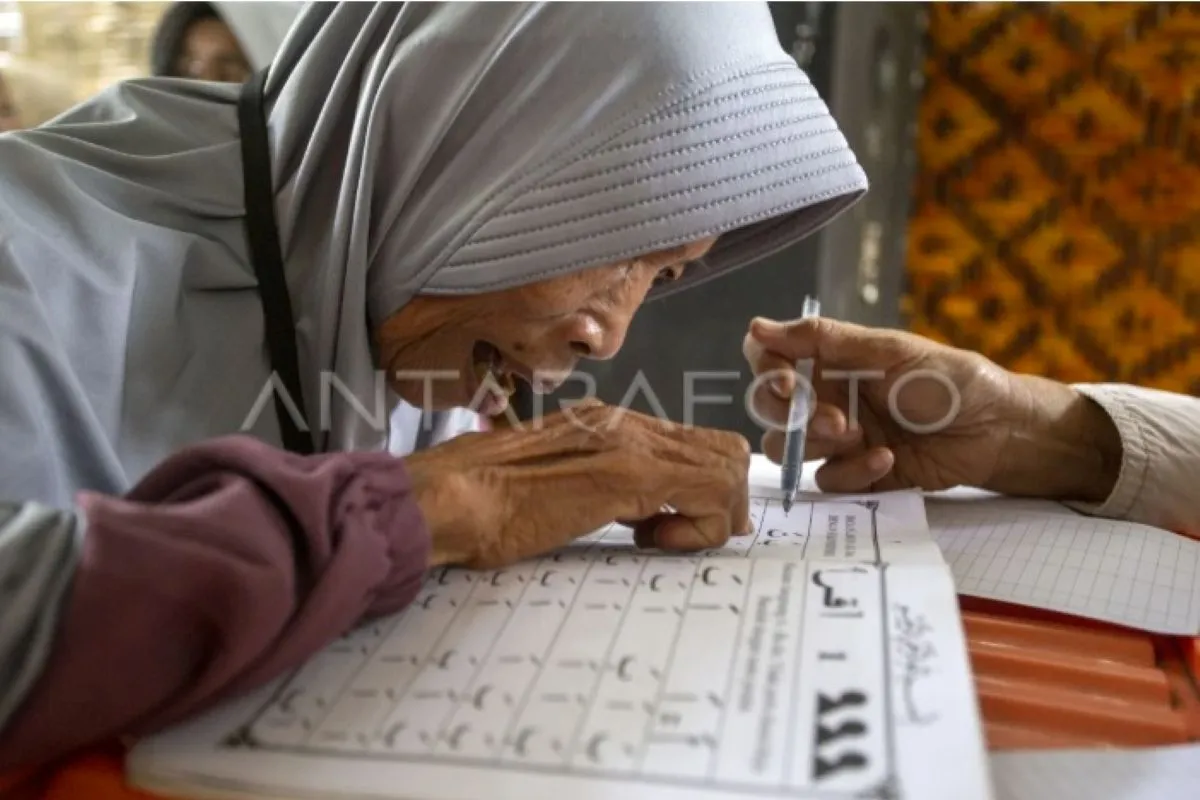
He said more than half of the provinces in Indonesia have entered the era of an aging population, with the proportion of elderly people exceeding 10 percent.
"The elderly population ratio is expected to increase sharply, from 11 percent in 2025 to 22.8 percent in 2050. The health conditions of the elderly in Indonesia show an increase in chronic diseases and disabilities as they age," he said.
"Around 66 percent of respondents to the Indonesia Longitudinal Aging Survey (ILAS) reported having multiple medical conditions, such as digestive problems, hypertension, and cholesterol," he added.
The prevalence of symptoms requiring primary care services (PJP), he said, increased from 11.6 percent overall to 41.9 percent in the over-80 age group.
Data from the 2024 National Socioeconomic Survey (Susenas) show that the majority of elderly people, or 36 percent of them, live in households, or even live with three generations in their family.
Therefore, it is estimated that the caregivers for the elderly are generally their own families.
The study of Transforming Care: Global Innovations in the Care Economy in Australia confirms that the care economy is a large part of the socio-economic structure that is often under-measured and under-funded.
Globally, the combined value of paid and unpaid care is estimated to be around US$11 trillion per year, with unpaid care equivalent to around 9 percent of global GDP and total unpaid care hours reaching 16.4 billion hours per day.
In some countries, the care sector accounts for around 15 percent of the workforce, yet median wages in this sector remain lower than the industry average.
Meanwhile, working hours in the Health Care & Social Assistance sector have increased by 20.1 percent since 2016.
This represents a rapidly growing workload without a proportional increase in rewards and support.
"Some important lessons learned from this Australian study are that integrating services through multidisciplinary teams and a customer-centered model reduces fragmentation and improves outcomes," he said.
Home support programs are showing a surge in demand, with home care service users increasing from around 71,900 in 2017 to 275,000 in 2024, a 283 percent increase.
Meanwhile, reforms emphasizing rights-based quality standards strengthen the accountability of service providers. These figures illustrate the urgency of investing in the workforce, training, and long-term financing.
Pambudi stated that Australia's experience offers several practical lessons that can be adapted. First, the service integration model reduces fragmentation and improves continuity of care.
"Indonesia can adapt this model by making community health centers (Puskesmas) and community health posts (Posyandu) for the elderly into integration hubs that coordinate screening, referrals, and rehabilitation services," he said.
The second is a preventive and early detection approach such as WHO ICOPE and rapid screening tools that have been proven to help identify functional risks earlier.
Implementing a simplified and contextualized version in primary care will reduce hospitalizations and dependency.
"Third, Australia is emphasizing domestic workforce development through cross-sector training, micro-credentialing, and career pathways -- a strategy relevant to addressing the projected shortage of care workers in Indonesia," he said.
Fourth, digitalization and data to strengthen coordination between providers. Pambudi believes that Indonesia needs to accelerate the development of disaggregated databases and system interoperability.
Fifth, long-term financing models and recognition of informal caregivers are key to service sustainability.
"When policies and practices are grounded in science, preventive interventions, and early detection, person-centered care can prevent functional decline and prolong the independence of the elderly," Pambudi said.
Related news: Indonesia to extend free meals program to elderly, disabled in 2026
Related news: Indonesia prioritizes pregnant women, toddlers in free meal program
Related news: Ministry asks families to ensure elderly comfort during Eid
Translator: Mecca Yumna Ning Prisie, Katriana
Editor: Azis Kurmala
Copyright © ANTARA 2026


