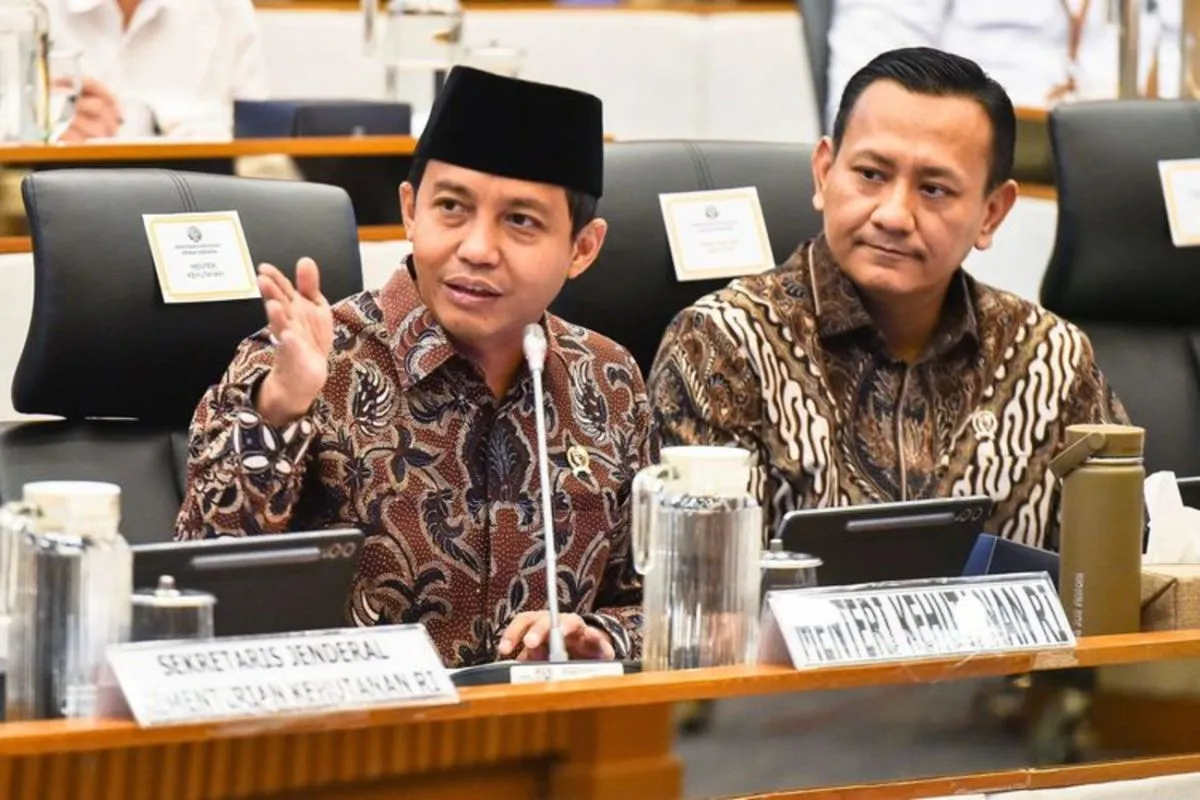
The new regulation is outlined in Minister of Forestry Regulation (Permenhut) No. 6 of 2026 concerning Procedures for Carbon Trading through the Greenhouse Gas (GHG) Emission Offset Scheme in the Forestry Sector.
“The issuance of this regulation is a concrete step by the government to strengthen governance of carbon trading in the forestry sector to make it more credible, transparent, and inclusive,” he said.
The new regulation follows Presidential Regulation No. 110 of 2025 on carbon economic value and is intended to strengthen implementation while supporting Indonesia’s emission reduction targets.
Through this regulation, the government is introducing fundamental changes in the management of carbon trading in the forestry sector.
One of these is the development of a clearer road map, covering emission reduction targets, the size of the areas involved, and strategies to achieve them in alignment with national commitments to addressing climate change.
Participation in carbon trading has also been broadened beyond companies to include social forestry groups, indigenous communities, private forest owners, and carbon service managers.
“We want to ensure that the economic benefits of carbon contribute not only to achieving national climate targets, but also deliver tangible impacts for communities and the sustainability of Indonesia’s forests,” Antoni said.
From a legal perspective, Antoni stated that the regulation provides greater certainty for stakeholders. Each carbon unit traded must go through standardized processes, such as validation and verification by independent institutions, and be recorded in the national system to prevent double counting.
The regulation also streamlines administrative processes, with document submissions, assessments, and certification now conducted electronically under defined timelines.
“The regulation also governs international carbon trading. Every international transaction must receive government approval to ensure alignment with national emission reduction targets,” he added.
In its implementation, companies are required to meet environmental and social safeguards, including involving local communities, protecting indigenous rights, and preserving biodiversity.
Conservation areas hold significant potential for carbon trading through ecosystem restoration in deforested and degraded lands, covering approximately 1.27 million hectares across Nature Reserves, Conservation Areas, and Game Reserves, with a carbon sequestration potential of 4.5–50 tons of CO2e per hectare per year.
The ministry said conservation areas offer significant potential for carbon trading through ecosystem restoration on about 1.27 million hectares across nature reserves, conservation areas, and game reserves, with carbon sequestration estimated at 4.5 to 50 tonnes of CO2 equivalent per hectare annually.
Related news: Indonesia's carbon market offers climate opportunity: minister
Related news: Indonesia, Japan to boost forestry and carbon trading cooperation
Related news: Govt pushes carbon scheme to restore 12 million hectares critical land
Translator: Arnidhya Nur, Kuntum Khaira
Editor: Azis Kurmala
Copyright © ANTARA 2026


