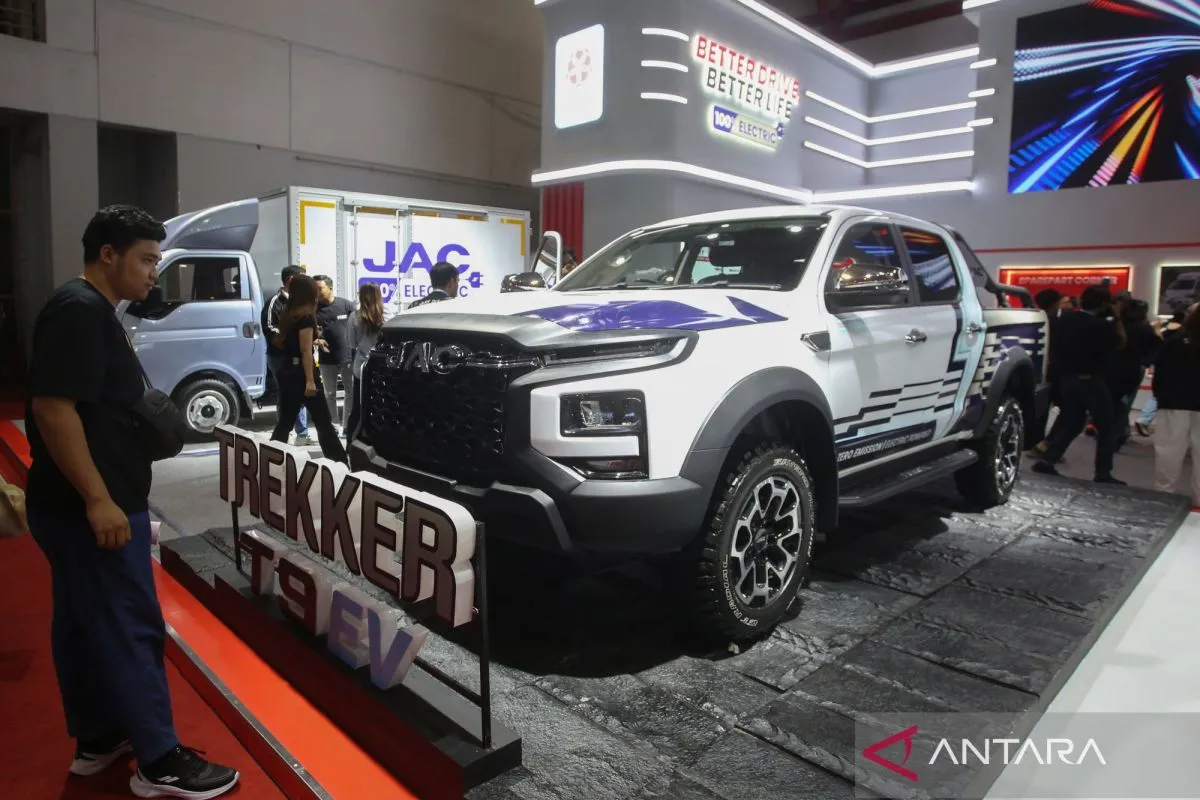
The policy aligns with a directive from the Home Affairs Ministry, which calls for regional governments to provide tax exemptions for battery electric vehicles, according to a statement from Jakarta Revenue Agency Head Lusiana Herawati on Tuesday.
"The Jakarta government remains consistent in providing incentives in the form of PKB and BBNKB (Motor Vehicle Tax Transfer and Motor Vehicle Title Transfer Fee) exemptions for battery electric vehicles," Lusiana said, referring to motor vehicle tax and vehicle title transfer fees.
She added the policy supports the development of a renewable energy vehicle ecosystem and encourages wider adoption of environmentally friendly transportation in the capital city.
Related news: Minister urges governors to waive taxes for electric vehicles
Jakarta’s administration had previously considered a tiered incentive structure based on vehicle value, ranging from 25 percent to 75 percent reductions, designed to reflect affordability and fairness across income groups.
Under that earlier proposal, electric vehicles priced up to 300 million rupiah would receive a 75 percent incentive, while those above 700 million rupiah would receive 25 percent, Lusiana said.
However, the final policy was adjusted to comply with Home Affairs Ministry Circular Number 900.1.13.1/3764/SJ, which mandates full tax exemptions for electric vehicles at the regional level.
The regulatory framework also reflects broader changes introduced under Home Affairs Regulation Number 11 of 2026, which revised the tax treatment of motor vehicles, including making electric vehicles taxable for the first time.
Related news: President Prabowo inspects electric bus at new factory in Magelang
Despite the shift, the ministry reaffirmed its support for electric mobility by instructing regional governments to maintain full fiscal incentives to avoid slowing adoption.
Other regions are adopting similar approaches. Bali, for example, plans to fully exempt electric vehicles from motor vehicle tax, citing rising global fuel prices and alignment with its clean energy policy.
Bali’s Revenue Agency Head I Dewa Tagel Wirasa said the policy is currently being processed, as the province seeks to expand electric vehicle use in line with its development agenda.
As of April 6, 2026, Bali recorded around 14,301 electric vehicles in operation, reflecting growing consumer uptake across Indonesia’s tourism-driven economy.
Related news: Banten waives electric vehicle tax to support clean energy
Translator: Lia WS, Rahmad Nasution
Editor: Fransiska Ninditya
Copyright © ANTARA 2026


