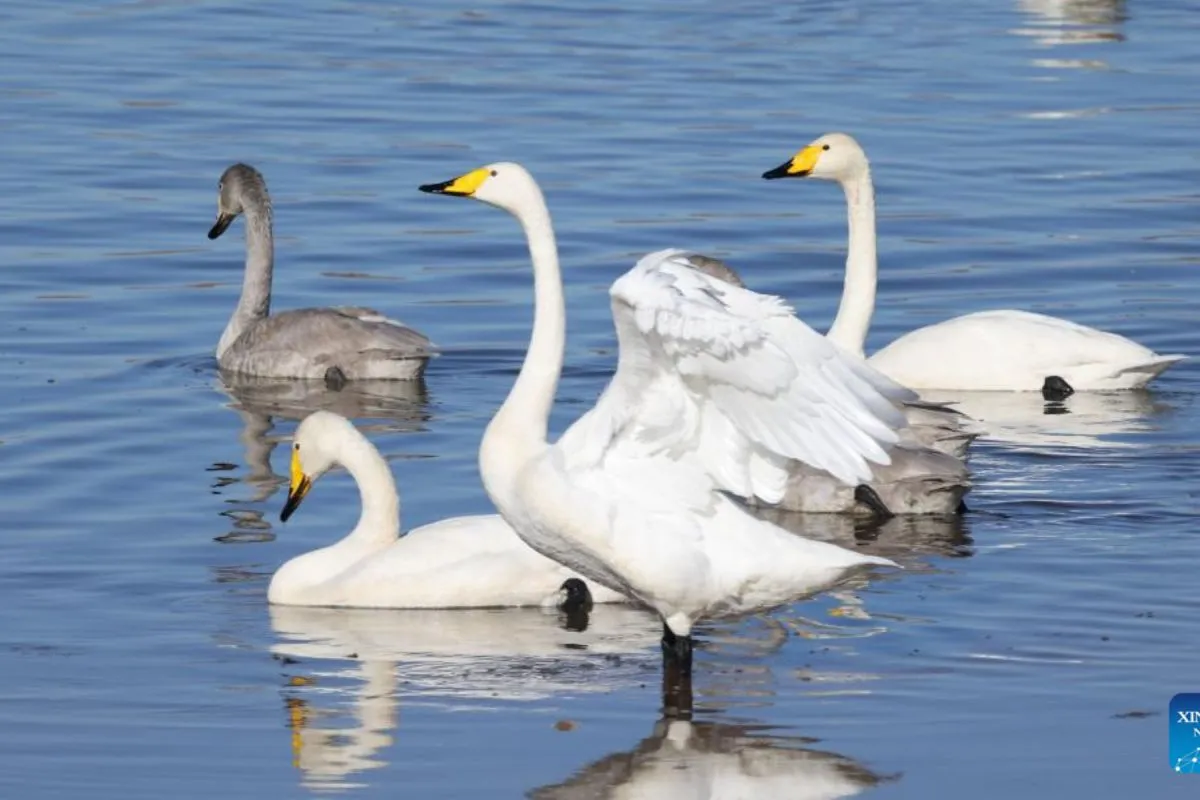
According to the bureau, during the 14th Five-Year Plan period (2021–2025), the city saw steady improvements in its ecological environment.
A total of 151 types of natural and semi-natural ecosystems and 7,121 species were documented through citywide surveys, demonstrating remarkable progress in biodiversity conservation and placing Beijing at the forefront of global megacities in this regard.
By international standards, a city recording 3,000 to 5,000 species is considered to have a high level of biodiversity, while more than 5,000 species represents an extremely high level.
Over the past five years, Beijing has continuously strengthened biodiversity conservation efforts.
The city has enforced regulations on ecological protection and green development in its ecological conservation areas and issued its first medium- and long-term biodiversity conservation plan. A joint meeting mechanism has also been established to facilitate cross-department coordination on key tasks.
Beijing has designated ecological conservation redlines covering 27.5 percent of its land area and protected natural areas spanning about 19 percent, providing effective spatial safeguards for biodiversity.
In urban areas, more than 700 nature zones, including biodiversity demonstration zones and ecological conservation communities, have been created to expand habitats and breeding spaces for flora and fauna.
Regular inspections are conducted within protected natural areas and ecological redlines to ensure that ecological issues are promptly addressed.
In terms of species and genetic resource conservation, Beijing has strengthened its conservation system centered on botanical gardens, zoos, and wildlife rescue centers.
The China National Botanical Garden has collected and preserved more than 18,000 plant species, while technical systems for the assessment, preservation, breeding, and utilization of more than 20 nationally protected wild plant species have been established.
Meanwhile, pilot surveys on traditional knowledge related to biological genetic resources have been conducted in Beijing’s Fangshan and Huairou districts, documenting more than 700 items of biodiversity-related traditional knowledge.
Cao Zhiping, an official at the bureau, said Beijing’s biodiversity conservation efforts as a megacity have gained international recognition. During the 16th meeting of the Conference of the Parties to the UN Convention on Biological Diversity, Beijing was named a “Biodiversity Charming City,” showcasing to the international community a model of harmonious coexistence between megacities and biodiversity.
Reporter: M Razi Rahman
Editor: Primayanti
Copyright © ANTARA 2026


