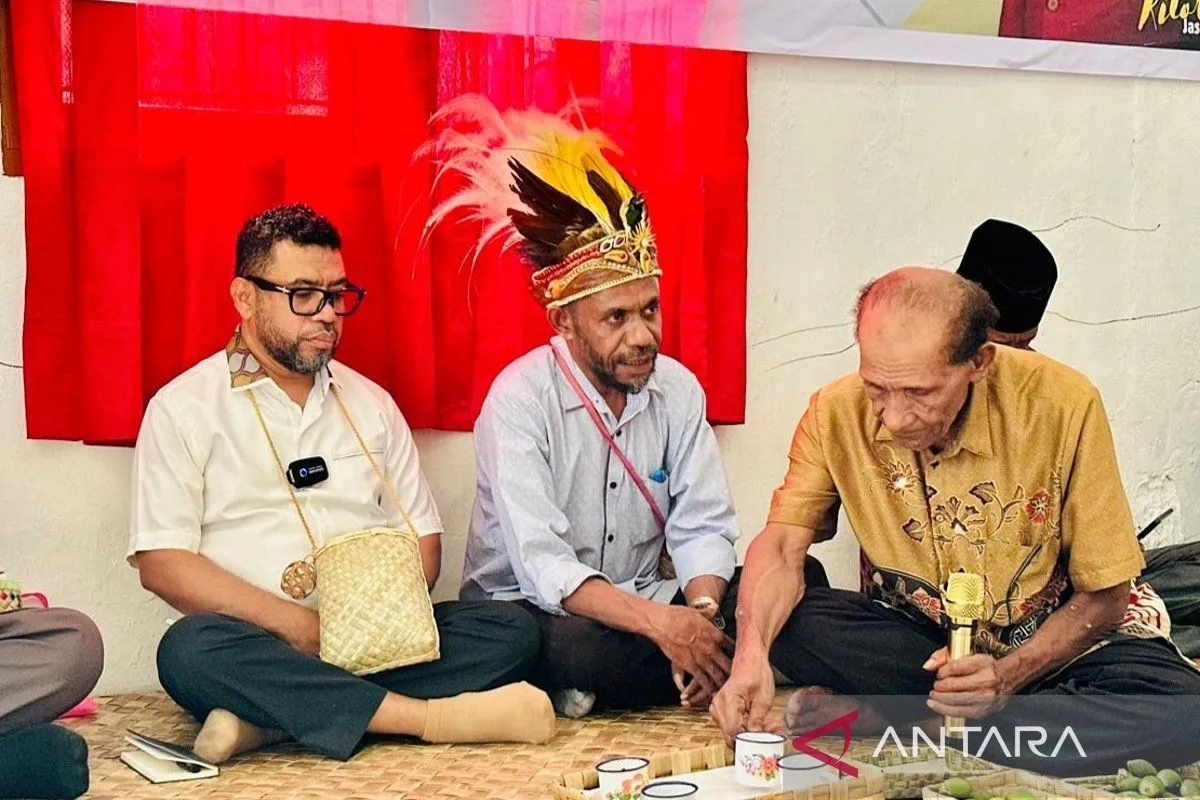
DPD member Filep Wamafma said indigenous communities should not hesitate to advocate for their rights and aspirations because the state guarantees recognition, protection, and legal certainty for customary institutions.
"The state provides guarantees, protection, and recognition for the existence of indigenous communities and customary institutions," Filep said in a statement received in Manokwari, West Papua Province, on Sunday.
He said state recognition is enshrined in Article 18B Paragraph 2 of the 1945 Constitution and is further strengthened in Papua through Law No. 2 of 2021 on Special Autonomy.
Filep welcomed the Fakfak regency government's issuance of Regional Regulation No. 3 of 2023 on the Recognition, Protection, and Empowerment of the Mbaham Matta Indigenous Law Community.
He said such regulations are important instruments to ensure constitutional recognition is translated into practical and equitable regional development policies rather than remaining a purely normative provision.
Filep also urged the Papua Customary Council to strengthen its institutional capacity through the establishment of customary courts, saying the initiative aligns with restorative justice principles promoted within Indonesia's legal system.
He said the legal legitimacy of customary institutions must observe key limitations, including compliance with human rights standards, consistency with the unitary state framework, and implementation by qualified customary law practitioners.
"Conflict resolution based on restorative justice should provide broader space for customary institutions. They need clear judicial mechanisms, organizational structures, and procedures for resolving disputes," said Filep, who also chairs the DPD's Committee III.
He also highlighted challenges in managing customary land, noting that overlapping claims among clans and tribes often trigger internal disputes and are compounded by limited professional administrative systems.
All customary councils across Papua should improve their organizational structures and internal decision-making processes so that customary rulings carry stronger legitimacy and are less vulnerable to challenges through formal legal channels.
"We must ensure that indigenous rights guaranteed under the Special Autonomy Law are fully implemented by regional governments and used for the benefit of indigenous communities," Filep said.
Related news: Vice President Gibran joins Mansorandak ritual in Raja Ampat debut
Related news: Foreign tourists visit Papua village to see local culture
Related news: Culture Minister Fadli Zon calls for reviving traditions in Raja Ampat
Translator: FS Weking, Rahmad Nasution
Editor: Azis Kurmala
Copyright © ANTARA 2026


