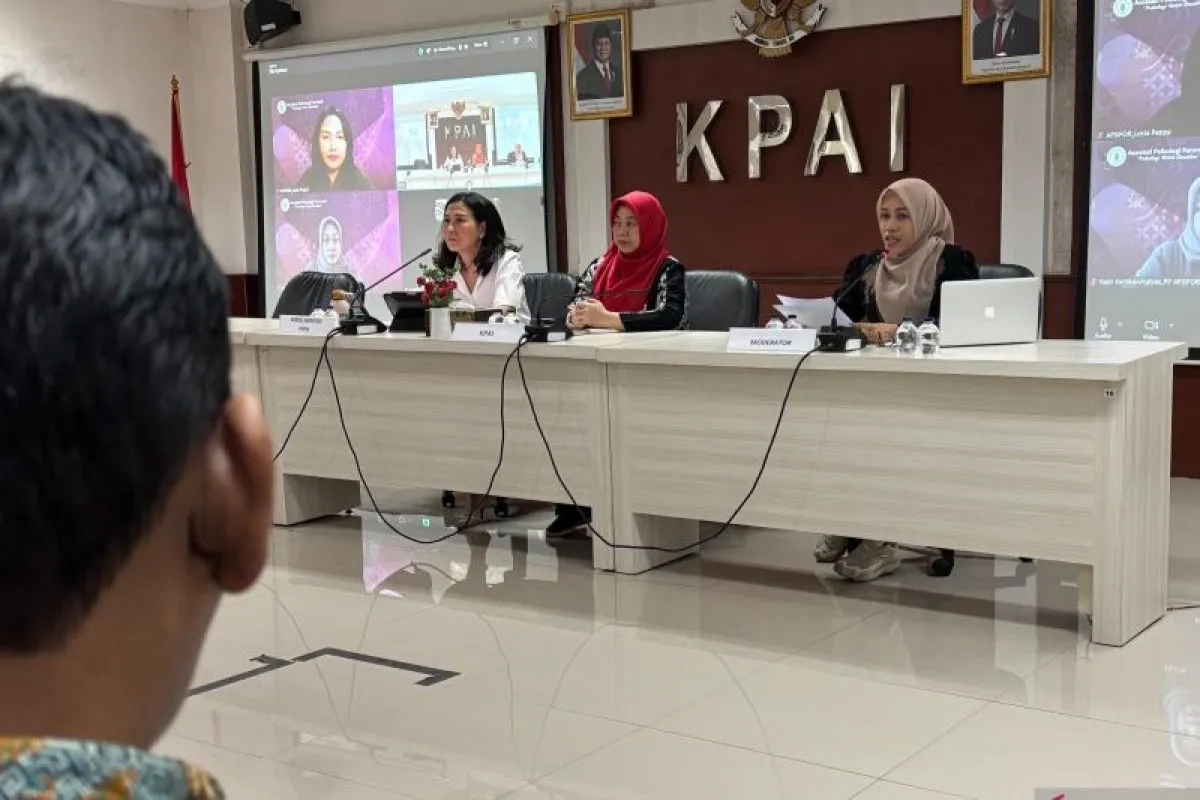
“These children are a vulnerable group due to their underdeveloped psychological, moral, and social capacities, including their ability to control emotions, make decisions, and resist influence,” KPAI Chairperson Margaret Aliyatul Maimunah said during a media briefing.
“This makes them susceptible to involvement with the law, whether as offenders, victims, or witnesses,” she added.
Maimunah stressed that children facing legal conflicts often experience significant trauma, and public narratives—including media coverage—can either intensify pressure or help relieve psychological stress.
“Children in this group need all of us to help prevent them from entering a cycle of criminality,” she said.
Related news: Minister urges full probe into bullying case at SMPN 19 Tangsel
Under Indonesia’s Child Protection Law, safeguarding the rights of these children is a shared responsibility, Maimunah noted, involving not just the government but society and the media.
She reminded media outlets to comply with regulations prohibiting the disclosure of a child’s identity, including personal details such as address, school, or other information that could reveal their identity.
“The presence of media in reporting has great potential to help build a positive self-identity for children, strengthening them rather than harming them,” Maimunah said.
Deputy Minister for Women’s Empowerment and Child Protection Veronica Tan highlighted the importance of protecting children in viral content.
Tan said all parties—including government, media, schools, and communities—must ensure public narratives prioritize children’s best interests.
“Public communication should always safeguard the well-being of children, particularly those who are victims or witnesses in legal cases,” she added.
Related news: Indonesia to sanction platforms violating child protection rules
Translator: Prisca, Kenzu
Editor: Rahmad Nasution
Copyright © ANTARA 2025