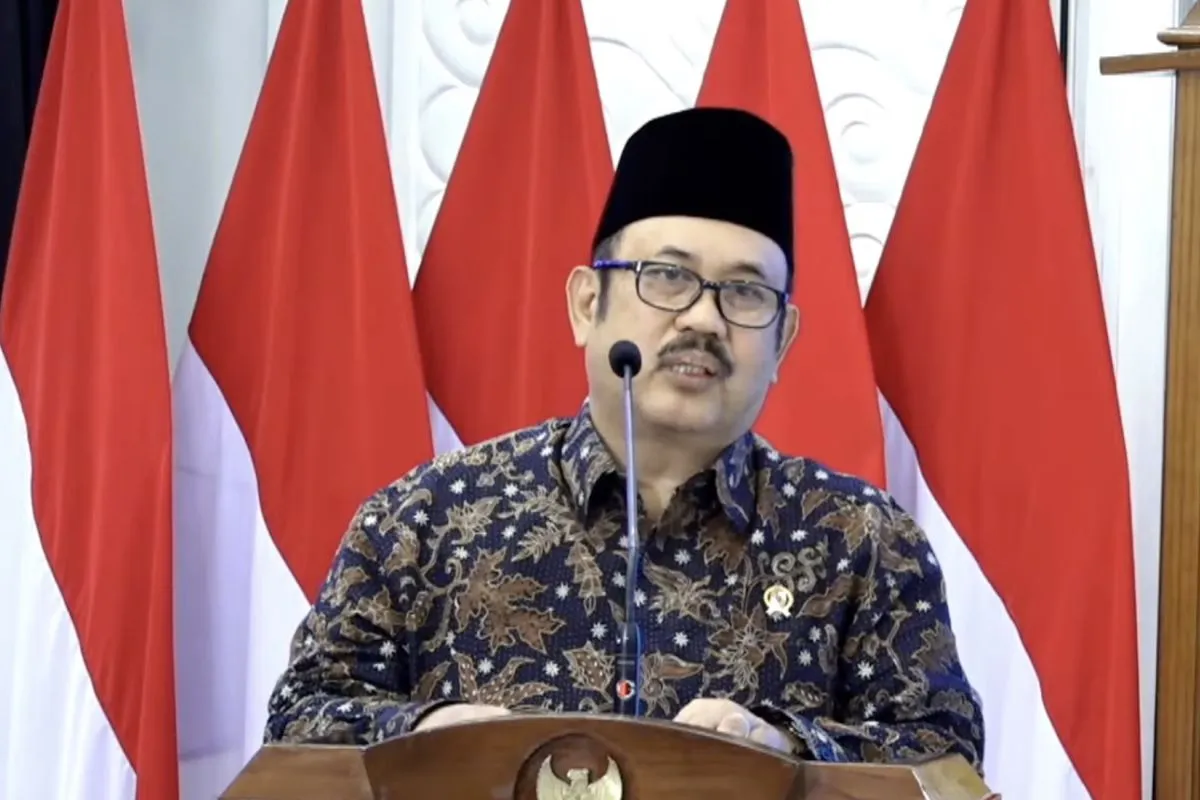
“Throughout history, the capacity to manage water, energy, and food has shaped the fate of civilizations. We can learn from ancient societies, including those who built the Dujiangyan irrigation system in China in 150 BC, which reflected an early understanding of the balance between water, land, food, and fuel,” he said during the launch of Indonesia’s Water, Energy, Food (WEF) Nexus Roadmap here on Wednesday.
He noted that in today’s industrial era, the interdependence of water, food, and energy has grown stronger worldwide. Food and energy production require substantial water resources, increasing pressure on Indonesia’s limited natural assets.
He said Indonesia therefore needs to integrate the management of these sectors to achieve sustainable development goals, including eliminating hunger and ensuring equitable access to clean water and energy.
Under the leadership of President Prabowo Subianto, the government has adopted the AstaCita mandate to strengthen national sovereignty and security, recognizing food, energy, and water self-sufficiency as key elements of national resilience.
To align the objectives of AstaCita with policy, he said Indonesia is implementing a 'trisula', three-pronged development approach focused on eradicating extreme poverty, improving human capital, and accelerating sustainable economic growth.
“The critical question is how Indonesia can achieve these targets. Today’s event is important, but it requires collaboration and involvement from all of us. I want to emphasize how closely linked water, energy, and food are in our daily lives,” he said.
Through cooperation with the United Kingdom and the United Nations Development Programme (UNDP), Bappenas launched the Water, Energy, Food Nexus Roadmap to support national and global goals.
The roadmap is supported by a digital decision-making tool designed to help optimize resource allocation through data-based analysis.
He said the initiative offers a model that other countries can adopt to address interconnected resource challenges, promote green innovation, and advance sustainable development.
“By championing this integrated approach, Indonesia strengthens its future while contributing significantly to global sustainable development,” he added.
UN Secretary-General’s Special Envoy for Water, Retno Marsudi, described the roadmap’s launch as a milestone in shifting development planning paradigms.
She said progress in the past was often pursued sector by sector, but such siloed approaches are no longer sufficient given the reality that water, energy, and food must be addressed together.
“The complexity we face today requires integration and coherence. When we fail to connect the dots, people bear the consequences. This is why the water-energy-food nexus is so essential,” Retno said.
Related news: Indonesia champions food, energy security for sustainability: AHY
Related news: One Data Indonesia policy key to development planning: Bappenas
Translator: Baqir, Azis Kurmala
Editor: Primayanti
Copyright © ANTARA 2025


