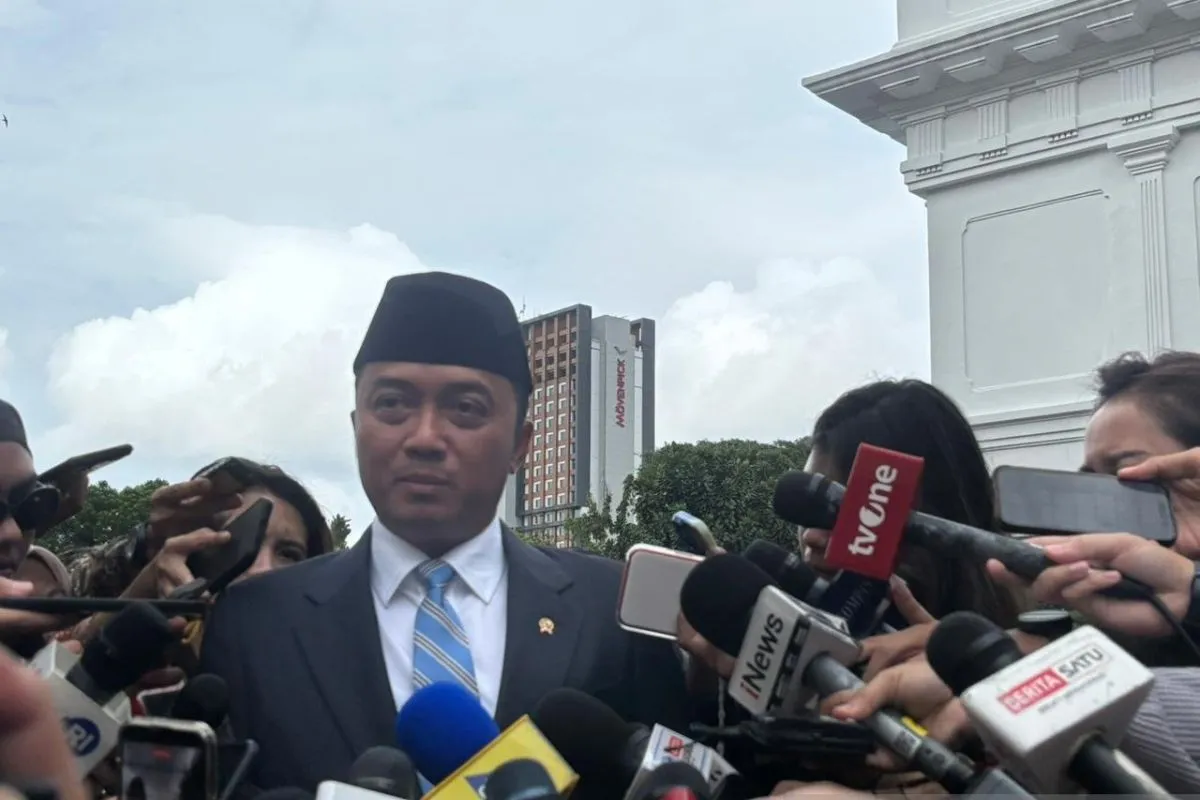
Ahead of the inauguration of DEN members for the 2026-2029 term at the Presidential Palace complex here on Wednesday, Hadi explained that, technically, the council will strengthen efforts toward energy self-sufficiency that have previously been initiated by relevant ministries and agencies.
“The hope is that with the inauguration of the National Energy Council today, we can accelerate the processes needed to pursue several priority programs,” he said.
He acknowledged that managing the energy sector is a complex challenge, as the government must address various issues ranging from efforts to increase oil lifting and develop new and renewable energy to shifting toward alternative energy sources.
According to him, Indonesia has significant potential for solar energy development due to its geographical location along the equator, making it one of the key focuses in future energy policy formulation.
“It is about how we plan for new and renewable energy, and how we also plan the transition to other energy sources,” he said.
Regarding DEN’s work targets, he noted that the President has set specific short-term goals, with one of the main priorities being the increase of national oil lifting to strengthen domestic energy security.
In addition, the government is encouraging changes in energy consumption patterns toward alternative energy sources such as biofuel and biosolar.
Hadi said the program is considered strategic, as the energy sector requires a long time to balance national energy demand with domestic production capacity.
“That is what we want to speed up through the inauguration of the National Energy Council (members),” he stated.
Related news: Indonesia declares diesel self-sufficiency after refinery expansion
Related news: Indonesia targets ending fuel aviation imports by 2027
Translator: Andi, Kenzu
Editor: M Razi Rahman
Copyright © ANTARA 2026


