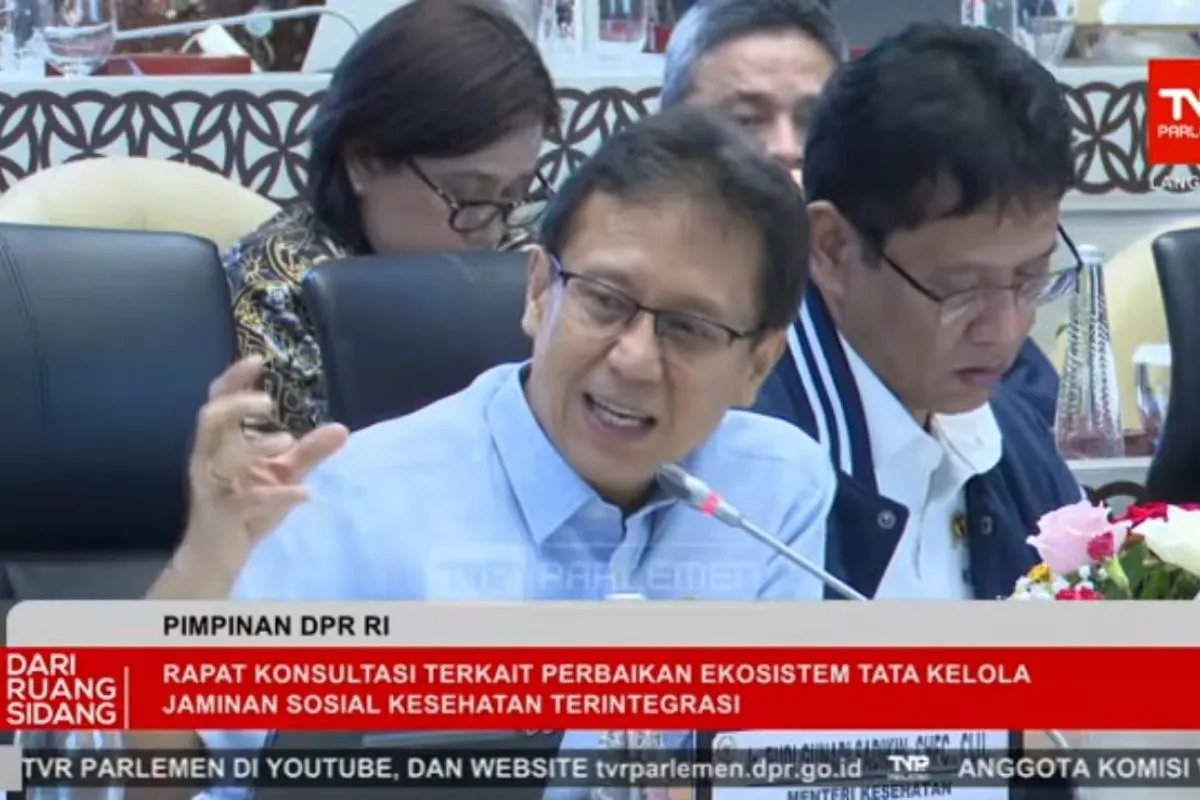
“These three months will be used for comprehensive revalidation. This process can be carried out by Statistics Indonesia (BPS), regional governments, and the Ministry of Social Affairs to verify the poverty status of the recipients,” Sadikin said during a meeting with the Indonesian House of Representatives (DPR RI) in Jakarta on Monday.
Of the 11 million participants whose JKN coverage was revoked, around 120,000 have a history of catastrophic illnesses, including approximately 12,000 patients undergoing hemodialysis, he added.
Indonesia has an estimated 200,000 dialysis patients nationwide, with about 60,000 new cases recorded each year. Without timely treatment, which requires dialysis two to three times a week, these patients face a high risk of death.
The minister said other catastrophic conditions also require urgent attention, including cancer patients who need chemotherapy, individuals with heart disease requiring long-term medication, and children with thalassemia who depend on regular blood transfusions.
Sadikin stressed that temporary reactivation is crucial to ensure that those who genuinely need assistance continue to receive state support.
He explained that the reactivation could be implemented through a decree (SK) issued by the Ministry of Social Affairs.
During the three-month validation period, the public would be informed that government-funded JKN coverage is intended strictly for those who meet eligibility criteria, he said.
Under the proposed mechanism, beneficiaries would not need to visit healthcare facilities to reactivate their membership, as the process would be carried out automatically.
In addition to the reactivation plan, Sadikin proposed that BPS, regional governments, the Social Security Agency for Health (BPJS Health), and the Ministry of Social Affairs jointly update the National Single Social and Economic Data (DTSEN) and make it accessible to the public.
He also said the Ministry of Social Affairs’ decree should be valid for two months and coordinated with the Supreme Audit Agency (BPK) to prevent data discrepancies and misrepresentation.
On February 4, BPJS Health stated that the deactivation of JKN memberships was carried out in accordance with Ministry of Social Affairs Decree No. 3/HUK/2026 to improve the accuracy of beneficiary targeting.
BPJS Health Head of Public Relations Rizzky Anugerah said the decree included adjustments under which some deactivated participants were replaced with newly eligible beneficiaries.
“The Ministry of Social Affairs regularly updates beneficiary data to ensure accurate targeting. Deactivated participants may have their JKN status reactivated if they meet the required criteria,” he said.
PBI participants are eligible for reactivation if they were deactivated in January 2026 and, based on field verification, are classified as poor or vulnerable. Eligibility also applies to individuals with chronic illnesses or life-threatening medical conditions.
Related news: Finance Minister asks careful PBI JKN updates to protect beneficiaries
Related news: Indonesia targets 99 percent JKN coverage by 2029
Translator: Mecca Yumna, Resinta Sulistiyandari
Editor: Primayanti
Copyright © ANTARA 2026


